PSG vs Monaco: A Strategic Battle Analysis
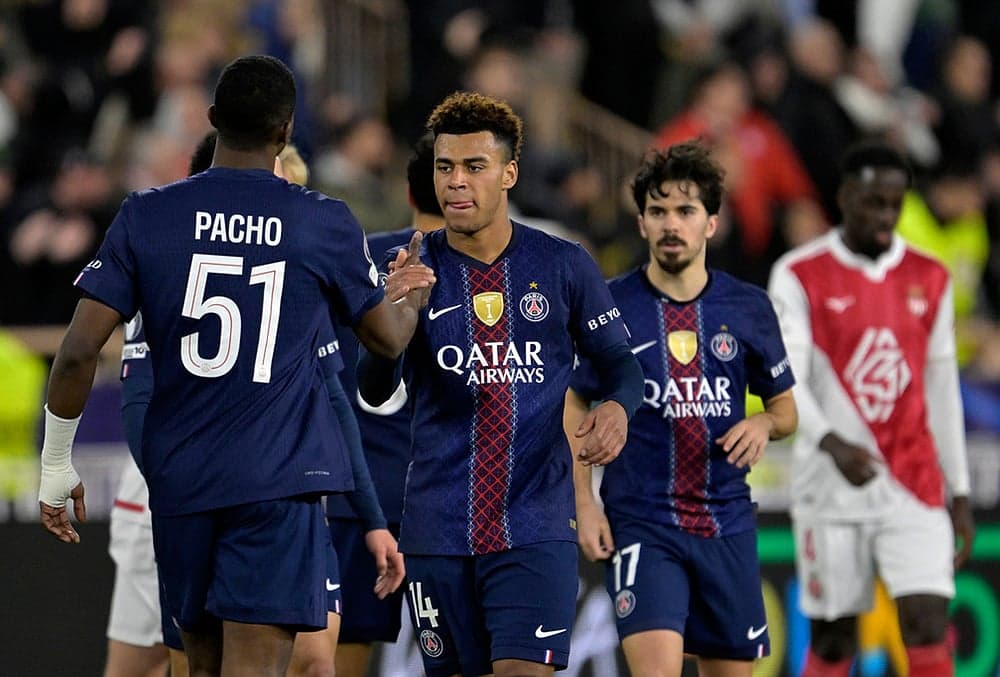
This was a textbook case of domination versus direct threat. Paris Saint Germain monopolized the ball with an extraordinary 80% possession, circulating it through their 4-3-3 and completing 734 of 795 passes at 92% accuracy. Monaco, in a 4-2-3-1, accepted an ultra-reactive role, finishing with just 20% possession and 197 total passes.
Yet the scoreline of 3–2 underlines that control of the ball did not equal control of the game’s emotions. Monaco’s plan was clearly to attack early and vertically, then retreat into a compact block. PSG controlled territory and tempo, but Monaco controlled the transitions and the scoreboard for long stretches, especially before the red card shifted the balance definitively toward the visitors.
Offensive Efficiency
The contrast in attacking volume is stark: PSG produced 30 total shots to Monaco’s 7. Within that, PSG’s 10 shots on goal and 10 blocked efforts show constant pressure around the box, supported by 8 corners and a high expected_goals value of 3.09. Their approach was patient but relentless: long spells of circulation, then repeated final-third entries, reflected in 13 shots inside the box and 17 from outside.
Monaco, by contrast, embodied ruthless efficiency. With only 7 shots in total and 4 on target, they turned limited possession into high-quality situations, generating 1.19 expected_goals from very few attacks. Five of their shots came inside the box, indicating that when they did progress, it was via direct, incisive moves rather than speculative efforts. One corner for the entire match underlines how little sustained pressure they applied; their threat was almost entirely in open-play transitions.
The red card to Aleksandr Golovin at 48 minutes forced Monaco to abandon any residual ambition with the ball. After that, PSG’s attacking volume swelled further, and the numerical superiority allowed them to convert their statistical dominance into the decisive goal, aligning their xG superiority with the final 3–2 outcome.
Defensive Discipline & Intensity
Defensively, Monaco had to absorb enormous pressure. They committed 11 fouls to PSG’s 4, a sign of a more disruptive, survival-oriented approach rather than high pressing. Two yellow cards and one red underline how stretched they were protecting space with so little of the ball. Their compactness is also reflected in PSG’s 10 blocked shots, indicating a deep block throwing bodies in front of efforts.
Goalkeeping numbers reinforce this siege narrative: P. Kohn made 7 saves, compared to just 2 for M. Safonov. Monaco’s defensive plan relied heavily on last-ditch interventions and their goalkeeper’s shot-stopping. PSG, meanwhile, defended mostly in rest-defense mode, rarely exposed in transition due to their territorial control and low foul count, which hints at controlled, rather than chaotic, counter-pressing.
PSG’s volume and quality of chances (30 shots, 3.09 xG, 80% possession) overwhelmed Monaco’s early, clinical counter-attacking. Monaco’s low-possession, high-efficiency blueprint nearly worked, but once reduced to ten men, their compact block and goalkeeper heroics could no longer contain PSG’s sustained pressure. Efficiency bowed to sustained domination.