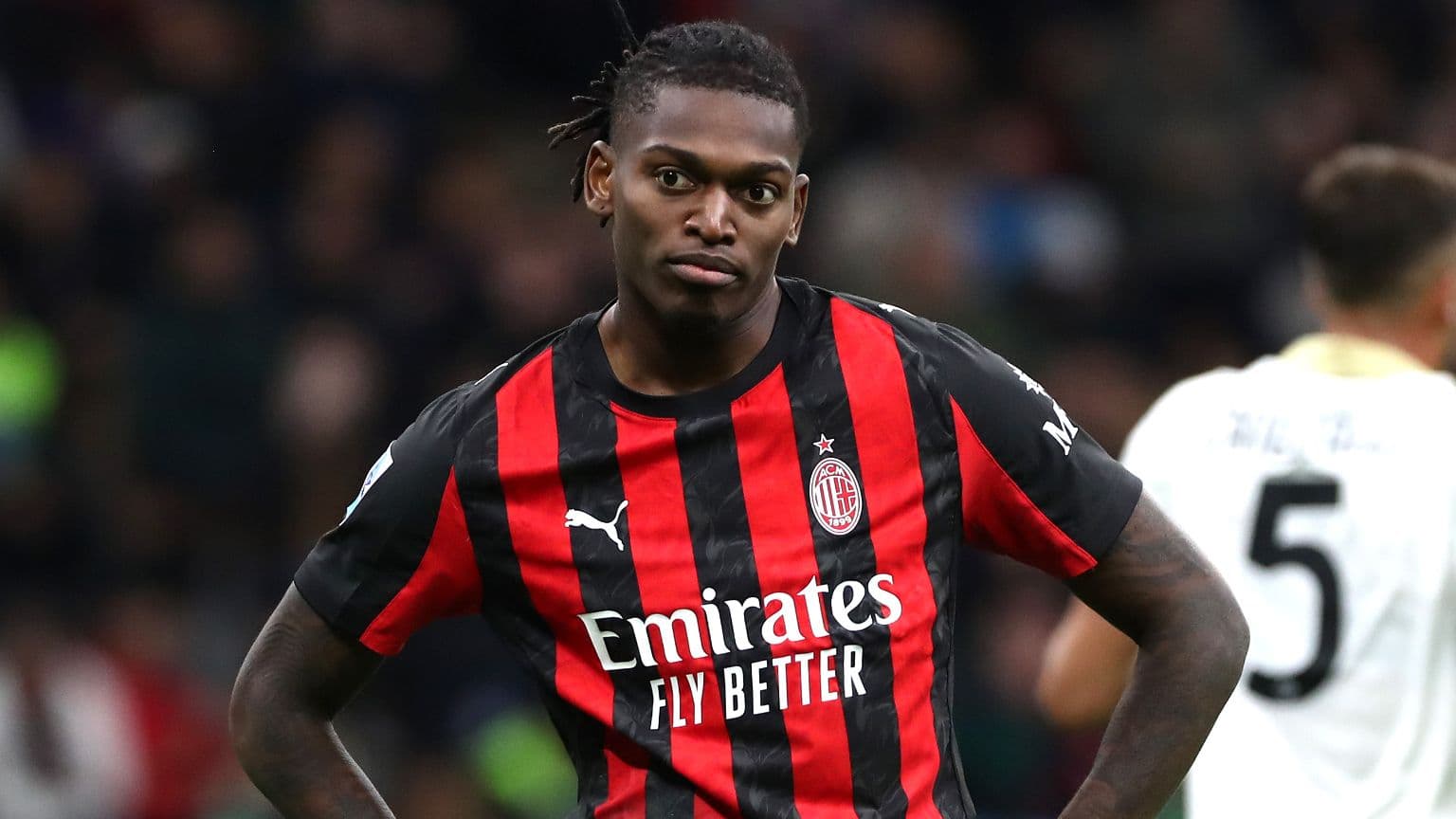
Rafael Leão's Future: Seeking a New Challenge in Premier League or La Liga
Rafael Leão has never been one to hide behind clichés. This time, he has gone a step further, lighting a fuse under his future at Milan and making it clear: he wants out, and he wants a league that fits his football.
The Portugal international, speaking openly to Sport TV, admitted that Serie A’s tactical straitjacket no longer suits him and that the time has come for a “new challenge” away from San Siro. At 26, entering what should be his peak, he sounded less like a player flirting with possibilities and more like one drawing a line.
“I need a new challenge,” he said. No ambiguity there.
Premier League dream, La Liga temptation
Leão did not dance around his preferred destinations. He pointed directly at the Premier League and La Liga as the stages where he believes his talent would truly be appreciated, where the rhythm of the game and the space on the pitch better match his instincts.
For him, England holds a particular pull.
“In Italy, the league is evolving, but for my style of football, the Premier League or La Liga would better showcase my talent and me as a player,” he explained. “If the opportunity in the Premier League were to come my way, I would be very happy: I think I would be able to match my talent with players who are at a very high level.”
It is the sort of comment that will echo loudly in boardrooms across England and Spain. A player of his profile, openly stating that he is ready to move and already picturing himself in a different shirt, changes the tone of any transfer window.
A draining season at San Siro
These remarks don’t come in a vacuum. They follow a bruising campaign for both Milan and their star forward, a season defined by tactical friction, physical pain and a sense that something vital had been lost.
Leão described a year where he often felt misused and physically stretched to the limit.
“It was a difficult season. I played injured for 4-5 months with groin pain, in a position that isn’t my style,” he admitted. “The tactical system didn’t help me. I felt I could make a difference, but the way the team played didn’t put me in a position to do so. In the end, it becomes exhausting.”
That word — exhausting — cuts through. Not just tired, not just frustrated. Worn down by a campaign in which his individual qualities, the very things that made him a star in Milan, were blunted by a system that never quite bent to him.
Searching for his best role
Beneath the transfer noise lies a more nuanced football question: where does Rafael Leão truly belong on the pitch?
He has long been associated with the left wing, where his pace, power and one-on-one ability can unhinge defences. Yet he made it clear he sees himself differently, and that his career has already offered clues.
“I’ve often played as a second striker in my career, and I think it’s my favorite position. And I can also play as a false 9, especially in a team like Portugal,” he said.
The contrast he drew between roles was striking. As a winger, he feels time is on his side: “After dribbling, I have more time to think about whether to shoot, dribble again, or cross.” As a second striker, that luxury disappears. He is closer to goal, forced into sharper, quicker decisions.
“Playing as a second striker, I’m closer to the goal and I have to be more concrete: either I make assists or I shoot. It’s a detail I need to work on. Ultimately, football is based on numbers, and it’s the last step I’m missing.”
That self-critique underlines his mindset. He is not only blaming systems or tactics; he is aware that the elite forwards in the Premier League and La Liga live off end product, off goals and assists stacked relentlessly season after season. If he wants that stage, he knows what will be demanded of him.
A crossroads for player and club
For Milan, Leão’s words land at a delicate moment. The club is already navigating a period of transition, with questions over direction and identity. Now their most explosive attacker has publicly questioned both his role and the league’s suitability for his game, while openly courting a move abroad.
For Leão, the crossroads is just as stark. Stay in a league and system he feels constrains him, or leap into the ferocious pace of the Premier League or the technical theatre of La Liga, where there will be no excuses and nowhere to hide.
He has made one thing crystal clear: he does not want to stand still. The next move he makes will define his prime years. The only real question left is which club, and which league, is willing to build the stage he believes his talent deserves.