Rafael Nadal's ATP Finals Struggles: A Missing Trophy
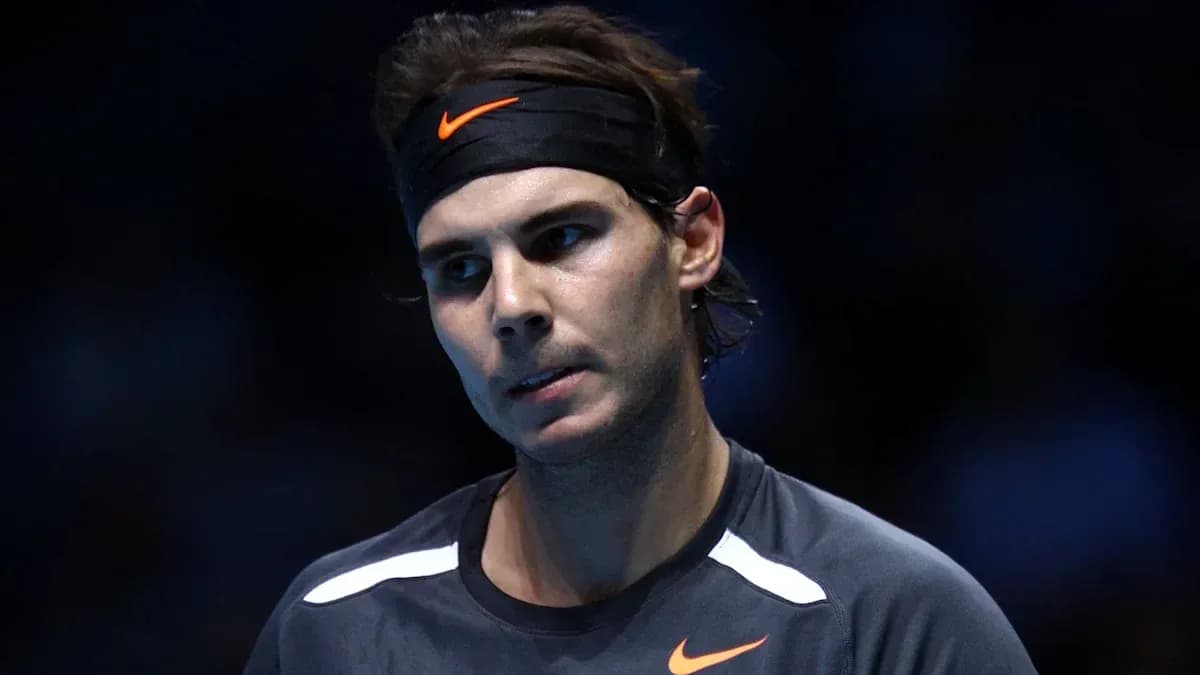
Rafael Nadal has 22 Grand Slam titles, 36 Masters 1000 crowns and two Olympic gold medals. He has conquered clay, grass, outdoor hard courts and generations of rivals. Yet one tournament always sat just out of reach, like a final, stubborn riddle at the end of a glittering career: the ATP Finals.
He qualified 17 times. He played 11 of those editions. He never lifted the trophy.
The one gap in a giant’s résumé
For all his dominance elsewhere, the year-end championships became Nadal’s permanent outlier. Novak Djokovic and Roger Federer turned the event into a private battleground, stacking up 13 titles between them. Nadal, so often the immovable force on the sport’s biggest stages, kept running into a wall under the indoor lights.
The story began in 2005, when he qualified for the first time but never made it to the court. A foot injury ruled him out and delayed his debut until 2006. When he finally walked into the tournament a year later, he immediately showed he belonged. He fought through his group, beating Nikolay Davydenko and Tommy Robredo despite a loss to James Blake, and reached the semi-finals.
Waiting for him there was Federer.
The Swiss would become Nadal’s recurring tormentor at this event. Federer stopped him in that 2006 semi-final, then again and again as the years rolled by. Across Nadal’s ATP Finals career, no opponent hurt him more often: four defeats to Federer, more than against any other player at the tournament.
Their 2010 final distilled the pattern. Nadal arrived at the O2 Arena after one of his great seasons, having completed the career Grand Slam in New York. Indoors, though, the balance tilted. Federer took the title 6-3, 3-6, 6-1, ripping through the decider as Nadal chased but never quite caught up.
Nadal would reach just one more final, in 2013, only to run into Djokovic at full throttle. The Serb denied him the title as well, closing another window that never opened again.
Brutal weeks and bad conditions
The numbers tell a harsher story than the headlines. Across his ATP Finals campaigns, Nadal lost to 12 different players. Some defeats were narrow, some routine, one year was simply brutal.
In 2009, he endured his worst showing at the event. Three matches in the round-robin stage, three straight defeats, not a single set won. For a player defined by resistance and comebacks, it was a stark reminder of how unforgiving this tournament can be when the surface and timing cut against you.
Indoor hard courts have always been Nadal’s least comfortable territory. The low bounce, the quick conditions, the lack of natural elements to disrupt rhythm – all of it blunted his heaviest weapons just enough to give his rivals a foothold. On clay, he could grind them down. Outdoors, he could adjust and adapt. Indoors, the margin for error shrank.
Nadal never hid from that reality. In 2013, he went public with an idea that had been simmering for years: change the nature of the ATP Finals themselves.
“I know it's not going to happen for my generation,” he said then. He wasn’t pleading for himself. He was arguing for the structure of the sport.
He wanted the season-ending showpiece to rotate surfaces, to reflect the diversity of the calendar that leads players there in the first place. His vision was simple: if a player qualifies four or five times, at least once he should have a chance to play the event on his favourite surface. For the fans, he argued, that variety would add intrigue; for the players, it would be fairer.
The history of the tournament underlined his point. For its first 26 years, the ATP Finals lived mostly on carpet courts, with a one-off edition on grass in 1974. Then came the hard-court era. Since 2007, the event has been staged exclusively on indoor hard courts, a consistency that suited big servers and flat hitters more than a man who built his empire on topspin and attrition.
A final bow in Turin
By the time the tournament moved to Turin in 2021, Nadal’s window there was already closing. His last appearance came in 2022, and again the pattern held. He fell in the round-robin stage, beaten by Felix Auger-Aliassime and Taylor Fritz, and exited before the weekend.
No fairy-tale ending. No late-career correction of the record books. Just another reminder that even the greatest careers have blind spots they never quite erase.
The ATP Finals remain on indoor hard courts, locked in Turin for now and showing no sign of adopting Nadal’s rotating-surface dream. The sport has moved on, the calendar remains heavy, and the year-end stage still looks much the same.
Nadal’s legacy will never hinge on this missing trophy. His place in history is secure, carved deep into Roland-Garros clay and etched across every major stage. Yet the absence of that one title, at the event where the best of the best are supposed to settle accounts, lingers as a fascinating twist.
In an era he helped define, the season’s final word almost never belonged to him.