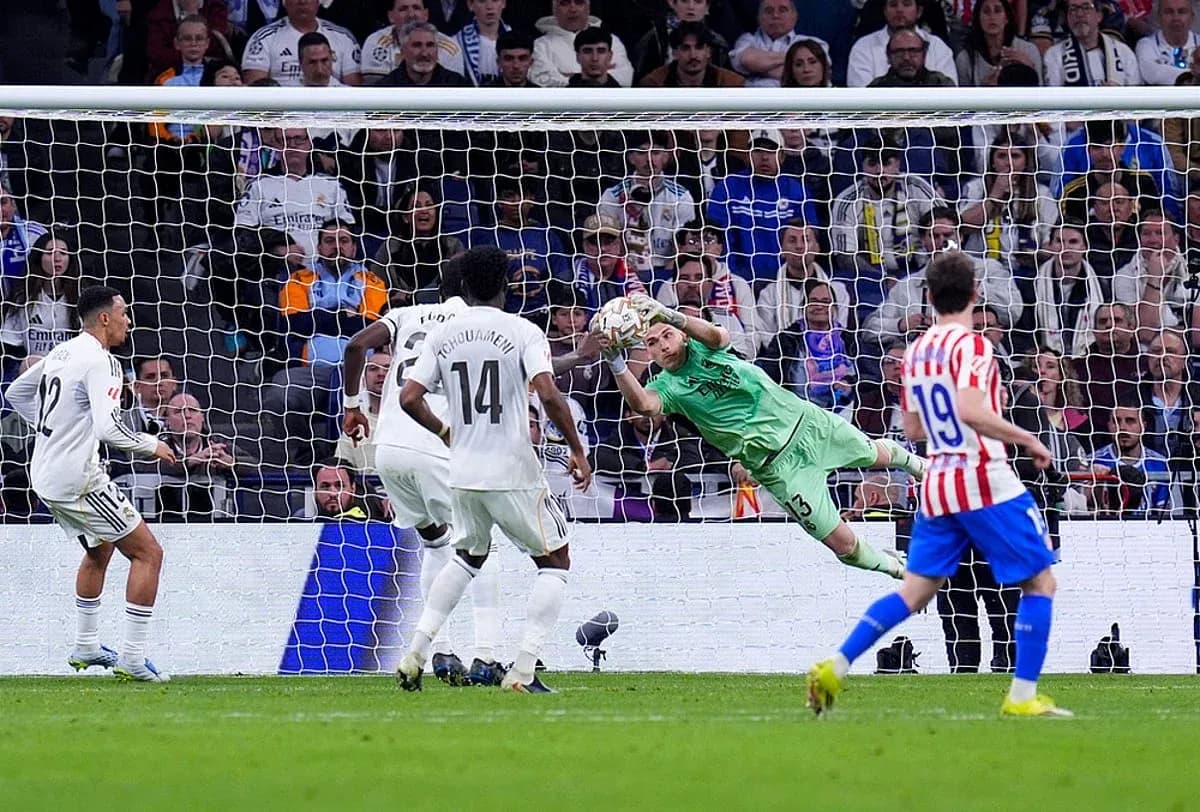
Real Madrid vs Malaga: Tactical Analysis of La Liga Clash
The Bernabéu under late-summer sun stages a meeting between two clubs living very different La Liga realities. Real Madrid, perfect so far and sitting 2nd with 9 points, have begun this 2026 campaign with a ruthless edge: overall they have scored 10 and conceded 2, giving them a goal difference of +8 after 3 matches. Malaga, by contrast, arrive as early-season strugglers at the foot of the table in 20th, with just 1 point, 1 goal scored and 7 conceded for a goal difference of -6.
I. The Big Picture – Structures of power and survival
Jose Mourinho has already imprinted a clear identity. Heading into this game, Real Madrid have leaned heavily on a 4-2-3-1 that has been used in all 3 league fixtures. At home, that structure has produced 8 goals and allowed just 1, an average of 4.0 goals scored and 0.5 conceded per match at the Bernabéu. It is a system built to dominate territory, compress the pitch, and let their stars decide games in the final third.
Malaga’s season has been about adaptation and damage limitation. Their statistics tell a stark story: on their travels they have lost both matches, scoring 0 and conceding 6, an away average of 0.0 goals for and 3.0 against. Juan Funes has alternated between a 4-1-4-1 and a 4-4-2, and for this trip he settles on a 4-4-2 that hints at old-school compactness and counter-attacking, but also risks being outnumbered centrally.
The fixture itself is already in the books – a 4-0 Real Madrid win in regular time – but the tactical shapes and season-long tendencies explain why the scoreline felt almost inevitable.
II. Tactical Voids – Absences and the fault lines they create
Real Madrid come into this match with a long injury list that would cripple most squads. R. Asencio, Eder Militao, Endrick, F. Mendy, T. Pitarch, Rodrygo and A. Tchouameni are all ruled out. That removes a starting-calibre centre-back, a natural left-back, two high-ceiling forwards and a key holding midfielder.
Mourinho’s response is telling: D. Huijsen partners A. Rudiger at centre-back, with M. Cucurella filling the left-back role and T. Alexander-Arnold on the right. In midfield, the double pivot is F. Valverde and E. Camavinga, a pairing that trades some pure screening for dynamism and press resistance. The absences push Real further toward a front-loaded, aggressive posture; they lean on their ability to keep the ball high rather than sit in a low block.
Malaga are also depleted. F. Calero, M. Diarra, D. Murillo, A. Nino and A. Ochoa all miss out, stripping depth from their defensive and midfield rotations. For a side that has yet to keep a clean sheet overall and has conceded 7 goals in 3 matches, those missing defensive pieces are more than a detail; they are a structural vulnerability.
Disciplinary patterns deepen the contrast. Real Madrid’s yellow cards are evenly spread across the match, with 25.00% of their cautions in each of the 0-15, 31-45, 61-75 and 91-105 minute ranges. They do not have a particular meltdown phase. Malaga, however, cluster their bookings late: 16.67% between 46-60 minutes, then 33.33% from 61-75, another 33.33% from 76-90, and 16.67% in added time. As legs tire and pressure mounts, they become ragged – a dangerous trait against a side that thrives on late surges.
III. Key Matchups – Hunter vs Shield, Engine Room vs Enforcer
The headline duel is straightforward: Kylian Mbappé against Malaga’s fragile defensive record. Overall, Mbappé has 4 goals in 3 appearances, with 18 shots and 14 on target, operating as the spearhead of this 4-2-3-1. He is not just finishing; he is relentless in volume. Malaga’s defence, meanwhile, has allowed 7 goals overall and 6 on their travels, with no clean sheets in any context. It is a classic “Hunter vs Shield” mismatch, where the shield is already cracked.
Behind Mbappé, the creative axis is anchored by J. Bellingham and Vinicius Junior. Bellingham arrives as both scorer and architect: 2 goals, 2 assists, 7 key passes, and a passing accuracy of 94 overall. He also brings 6 tackles and 1 blocked shot, making him the all-action engine between lines. Vinicius contributes 1 goal and 2 assists, with 7 key passes and 13 fouls drawn overall, constantly destabilising defensive shapes.
Malaga’s midfield response leans on work rather than stardust. I. Merino, R. Rodriguez, D. Larrubia and J. Munoz form a flat four, with forwards Chupe and C. Dotor asked to press and run channels. From the bench, Ramón Enríquez (R. Enriquez in the squad list) is emblematic: 2 yellow cards in just 26 minutes overall, and a rating built on energy and simple passing rather than control. If he is introduced, his task is clear – disrupt Bellingham’s rhythm, even at disciplinary risk.
On the flanks, T. Alexander-Arnold and M. Cucurella are key to pinning Malaga back. With Malaga’s full-backs C. Puga and Rafita already stretched by Vinicius and B. Diaz, Real’s overlapping threat turns the visitors’ 4-4-2 into a de facto back six. That compresses Malaga’s counters into hopeful balls toward Chupe and C. Dotor, both likely to be swallowed by Rudiger’s aggression and Huijsen’s aerial presence.
IV. Statistical Prognosis – Control, pressure and inevitability
Heading into this game, Real Madrid’s averages painted a clear forecast: overall they were scoring 3.3 goals per match and conceding 0.7, while Malaga were scoring 0.3 and conceding 2.3. Real had yet to fail to score in any fixture; Malaga had already failed to score twice, both times away. Real’s penalty record is neutral – no spot-kicks taken or missed – while Malaga have converted their only penalty overall, so there is no edge from the spot to rescue the underdog.
Defensively, Real’s single clean sheet at home before this game hinted that they could occasionally be opened up, but Malaga’s anaemic attack, especially on their travels, offered little evidence they could exploit that. With Mourinho’s side controlling territory and Malaga’s card profile skewing toward late fatigue, the match was always likely to tilt further toward Madrid as minutes passed.
The 4-0 scoreline that followed is less a surprise than a confirmation. The numbers, the shapes, and the absences all pointed in the same direction: a one-sided evening at the Bernabéu, with Real Madrid’s attacking trident and Bellingham’s engine room mastery overwhelming a Malaga side still searching for both identity and resilience in La Liga’s harshest arenas.