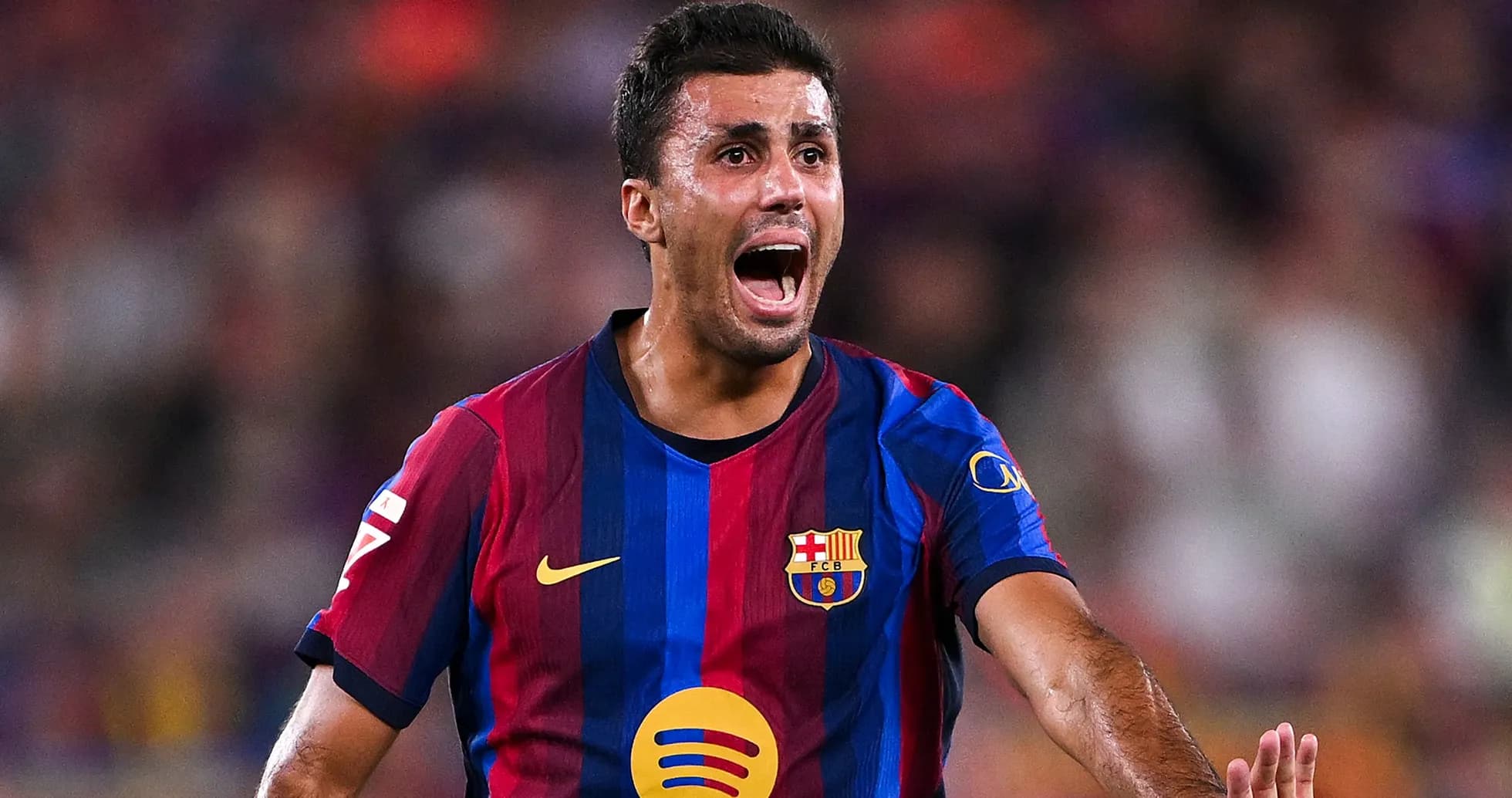
Rodri Chooses Barcelona Over Real Madrid: A Sporting Decision
Rodri’s decision to walk away from Manchester City, the club he helped turn into a modern juggernaut, was the transfer that bent the summer market out of shape. At 30, a reigning Ballon d'Or winner at the peak of his powers, he didn’t chase a new league or a bigger paycheque. He chose a project. He chose Barcelona.
Not just any Barcelona, either. Hansi Flick’s Barcelona. Deco’s Barcelona. A club still wrestling with its own recent past, yet selling him a future that felt clearer than anything Real Madrid could put on the table.
A process, not a decision
Rodri didn’t dress it up as a dramatic break. Speaking to Mundo Deportivo, he described his City exit as something that unfolded gradually rather than exploded overnight.
“It’s been a process, rather than a decision,” he said. “First, you have to realise that your time there has come to an end and that you might want a new challenge. From there, the moment the opportunity at Barcelona arose, I realised it was the best thing for me for many reasons.”
That line matters. The best thing for him. Not the loudest, not the richest, not the most glamorous. The best.
City lose a metronome; Barcelona gain a fulcrum. And Madrid, who pushed hard to bring him to the Bernabeu, are left staring at a player who has just chosen the other side of the Clasico divide.
Turning down Madrid
Real Madrid wanted him. Badly. A Ballon d'Or-winning Spain international, schooled under Pep Guardiola, in his prime. For Los Blancos, he looked like the next long-term pillar of their midfield.
Instead, he crossed the rivalry line and walked into Camp Nou.
Rodri didn’t pretend it was a simple call.
“I had to weigh up a lot of things and make such an important decision between two of the best clubs in the world,” he admitted. “In the end, I made my decision based on sporting considerations - on what sparked a bit more enthusiasm in me and on understanding where I could win and develop the most as a player. It wasn’t an easy decision at all; saying no to Madrid wasn’t easy, especially as they treated me exceptionally well.”
The key word there is “enthusiasm”. Not comfort. Not safety. The club that lit the fire a little more won.
For Madrid, the rejection stings. For Barcelona, it’s a statement that their sporting pitch still carries weight with elite players, even in an era when the financial muscle has shifted elsewhere.
Flick, Deco and the “generation” that sold Barca
When Rodri explains why Barcelona won the race, the pattern is clear. He keeps returning to the pitch, to the dressing room, to the men drawing the lines on the tactics board.
“I’ve always based my decisions on sporting considerations - where I believe I’ll be able to win, be happy and, above all, develop as a player,” he said. “And that’s why I’ve chosen Barca - also because of the generation of players they have and what Hansi is building there. Ultimately, Deco and Hansi, at the top of the organisation, convinced me.”
The “generation of players” line is telling. This isn’t just about a coach’s whiteboard. It’s about being the anchor for a core that includes some of Europe’s most exciting young talent, about leading a group that can grow around him rather than stepping into a fully finished machine.
Flick and Deco, meanwhile, emerge as the architects. They didn’t simply flash a badge; they sold him on a structure, a role, a dressing room that needed his brain as much as his boots.
A family club, not a hard sell
Rodri also made it clear Barcelona’s approach struck a different tone. No ultimatums. No pressure. No race-against-the-clock theatrics.
He described the environment as “very homely, like a family club”, and the courtship as respectful rather than aggressive.
“At no point did they put any pressure on me whatsoever; everyone expressed their desire to have me on board, to work together, and to see what I could bring to the team,” he said. “It was more about the football itself - what they understood I could bring both on and off the pitch, and I really liked that.”
That matters for a player who has just come from the relentless, high-performance world of Manchester City. Barcelona didn’t try to out-City City. They offered something different: responsibility, trust, and a club that, in his words, felt like home.
Blocking out the noise
All of this played out against a noisy backdrop. Real Madrid had boycotted the Ballon d'Or ceremony where Rodri beat Vinicius to the award, a political sideshow that only added more spice to any transfer narrative involving the two clubs.
Rodri brushed that aside.
“Anyone who knows me knows that I try to distance myself from that sort of thing, like the media hype,” he said. “I focus on football. In that sense, I’m very English, aren’t I? The Premier League is football and little else.”
It’s a revealing comparison. Years in England have shaped him: tunnel, pitch, training ground, repeat. He’s brought that mentality with him to Spain, even as he steps into the most emotionally charged rivalry in world football.
Now he becomes the heartbeat of Flick’s Barcelona, the player Deco and the dressing room will look to as the club tries to climb back to the very top. He has turned down Madrid, left behind a dynasty at City and bet on a project still under construction.
If this is the “sporting decision” he wanted, the next question is simple: can Barcelona live up to the vision they sold him, or will this be remembered as the moment Rodri took the biggest gamble of his career?