Rodri's Transfer to Barcelona: A Shift in Power
Rodri to Barcelona already feels bigger than a simple change of shirt. It is a statement, a shift in power, and a reminder that the battle between Barcelona and Real Madrid is as much about persuasion as it is about money.
According to MUNDO DEPORTIVO, the Spain midfielder weighed up offers from both clásicos giants before committing to Barça. His reasoning cuts through the usual transfer noise. No childhood dream, no emotional swerve. He spoke about analysis, about needing time after a turbulent break while two of the game’s superclubs tried to pull him away from Manchester City.
In the end, he went where he believed the football made the most sense.
He chose what he felt was the strongest sporting project, the place that stirred just a little more excitement, where he believed he could win and grow more completely as a player. In a market often reduced to salary figures and social media reach, that matters. This was a football decision.
Inside Barcelona’s pitch
Barcelona’s hierarchy did the heavy lifting. Deco and Hansi Flick convinced Rodri that their project fit him best. That is where these deals are often decided – not in the headlines, but in the rooms where plans are laid out in detail.
How will you play? Where will you stand when the ball is lost? How do we build a team around your strengths? Those are the questions that sway elite players now, and Barça had the answers he wanted to hear.
They did not simply wait for circumstances to fall their way. They argued their case, and they won it.
Respect for Real Madrid – and for Mourinho
Rodri made sure nobody mistook his decision for a casual rejection of Real Madrid. He spoke with respect about the club and the way they handled the talks, underlining how hard it is to say no to that white shirt. He treated the choice with the scale it deserved.
His comments about José Mourinho, who tried to lure him to the Bernabéu, added weight. Rodri said:
"Bueno, no creo que sea lo suyo desvelar una conversación privada, pero evidentemente expresó sus ganas de que fuera y de lo que podía aportar al equipo. El trato fue muy bueno. Cuando tomé la decisión también le llamé para agradecer el interés y el trato. Me parece un grandísimo entrenador, ya lo ha demostrado allá donde ha ido en sus grandes etapas y el Real Madrid va a ser un duro rival para esta Liga."
Diplomatic. Warm. It was the answer of a player who understands the business but refuses to discard courtesy. He appreciated the effort, chose another path, and still made the call to close the loop properly.
A choice for Barça, not against City
There is another angle Barcelona fans will cling to. Rodri did not present this move as an escape from Manchester City or as a reaction to some grievance elsewhere. He framed it as a pull towards Barça.
That distinction gives the transfer more weight. Barcelona are not just the beneficiaries of a messy situation. They are the club that convinced one of the world’s premier midfielders that their pitch, their structure, their future suited him best.
He also brushed aside the off-field theories swirling around Madrid’s interest. No appetite for the theatre. He spoke instead about staying focused on football, on Spain, on his own career path. That is the voice of a player who has lived at the top for years and learned to keep his distance from the circus around it.
His observation that in England football is largely kept to football landed neatly too. It hinted at a player moulded by the Premier League’s relentlessness, but perhaps now seeking a different kind of pressure and a different kind of spotlight.
La Liga’s balance of power
If Rodri plays at his usual level, this move can tilt the biggest games. Barcelona have imported control, intelligence and steel into the heart of their midfield – and done it by beating Real Madrid to a player many view as the most complete holding midfielder in the game.
That is bigger than one signing. It speaks to pull, to planning, to the enduring magnetism of the Barcelona name even in a period of financial strain and rebuilding.
Madrid will feel frustration, not humiliation. They went hard, made their case, behaved with class, and were acknowledged for it. Sometimes you do almost everything right and still lose the race.
For Barcelona, that is precisely what makes this so satisfying: they landed a player who knew exactly what the alternative looked like and still walked into Montjuïc and, soon enough, the new Camp Nou.
Manchester City’s void
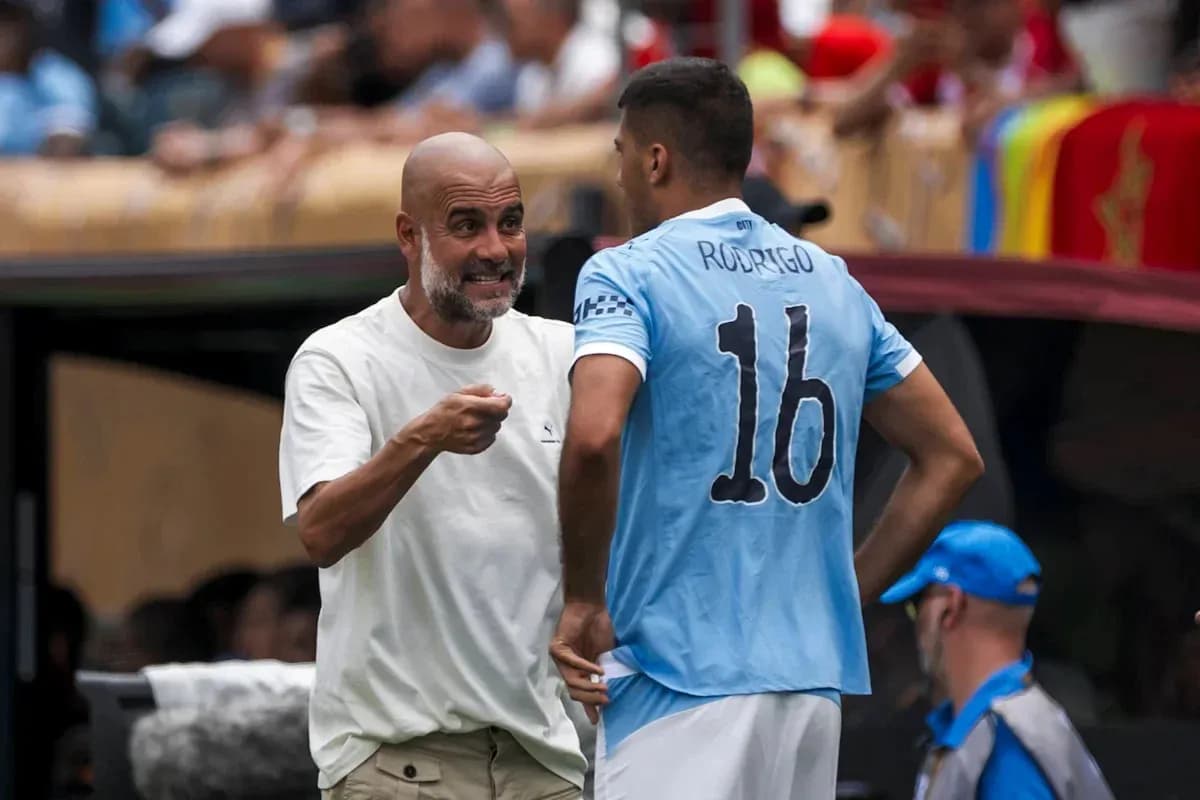
From Manchester City’s side, the emotions are tangled. On one level, there is pride. Rodri is now openly discussed as the midfielder Barcelona and Real Madrid both wanted most. That says everything about the level he reached in Manchester.
He became the calm in the storm, the organiser in possession, the fulcrum that made a great team feel balanced. Under the Premier League’s harsh floodlights, he evolved into one of the most influential midfielders in world football.
But there is also that familiar irritation for City supporters: the sense that Europe’s traditional giants still treat their stars as if they are naturally destined to end up in Spain. Rodri became this version of himself in Manchester, not Madrid or Barcelona. He sharpened his game there, carried huge responsibility there, won everything there.
If he really has gone, many City fans will probably wish him well while staring at the tactical board and asking the only question that matters to them: who controls games now?
Who dictates tempo? Who slows the chaos when matches fray at the edges? Who gives that feeling of certainty when everything else is slipping?
That is Rodri’s real legacy at City. He leaves a vacuum in the middle of the pitch, and all the glamour of his return to Spain does nothing to fill it.