Shakira's World Cup Performance: Conspiracy Theories Explored
The 2026 World Cup began on Thursday 11 June with exactly the kind of spectacle FIFA craves. Mexico City lit up, the fireworks did their job, and a parade of Latin music heavyweights took turns owning the stage. J Balvin, Maná, Lila Downs – and, inevitably, Shakira, the woman who has now outlasted not just generations of players but even her ex, Gerard Piqué, on football’s biggest stage.
The show was designed to dominate timelines. It did, but not for the reasons the organisers might have expected.
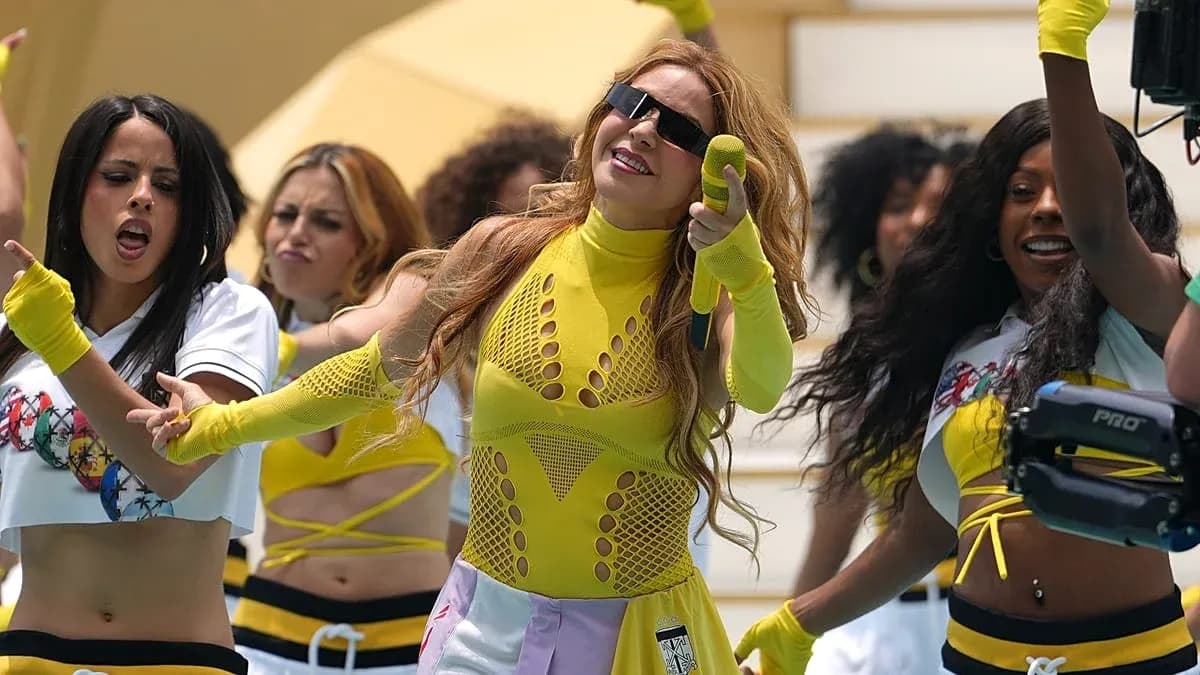
Within hours, the performance of the tournament’s official anthem, ‘Dai Dai’, had morphed from a slick centrepiece into the subject of a full-blown online conspiracy. On X, TikTok and every platform in between, fans began insisting that the woman in yellow was not Shakira at all.
“That’s not Shakira,” one user posted. “Look how she misses the step when she sings ‘Dai Dai’. That’s a double. Shakira lied to everyone.” The comment captured the mood. Suspicion spread at speed.
The “evidence” was almost entirely visual. Shakira sprinted onto the pitch in a vivid yellow top, white shorts, chunky platform trainers and oversized dark sunglasses that swallowed half her face. Her hair, some argued, looked a slightly different shade from the one they had stored in memory from previous World Cups, videos and red carpets.
A different tone of blonde. A new styling choice. Big glasses. For sections of the internet, that was enough to open the door to the idea of a body double fronting the World Cup anthem in place of one of the most recognisable pop stars on the planet.
Clips of the performance were slowed down and dissected. Users highlighted a step here, a gesture there, a moment where the choreography didn’t quite line up with what they expected from a woman whose movements have been replayed and mimicked for two decades. With each repost, the theory grew another layer.
Shakira’s camp, at least for now, has chosen silence. No statement, no denial, no weary dismissal of the idea that a global tournament would risk its credibility by swapping out its headline act for a lookalike.
There is, though, a detail that cuts through the noise far more convincingly than any grainy screen grab or speculative thread.
Shakira has a small, distinctive scar on her forehead. It has been visible in countless photographs over the years, including images distributed by the Associated Press from an event in New York in May 2026. The mark is subtle but clear enough once you know where to look – a tiny, permanent signature on a face that has been under cameras for most of her career.
The same mark appears in the high-definition images from the World Cup opening ceremony.
To accept the body-double theory, you have to go a long way. You have to imagine a stand-in who not only spent months studying Shakira’s choreography, stagecraft and micro-gestures, but who also turned up with an identical hairstyle, a perfectly matched build and a painstakingly replicated forehead scar, all to deceive millions of viewers and dozens of ultra-sharp broadcast lenses.
Possible? In the most literal sense, perhaps. Plausible? Hardly.
The simpler explanation is the one staring back from the photos. Styles evolve, hair colours shift, outfits change, and sunglasses hide half a face. The scar does not move. It does not lie.
Neither, as Shakira herself once reminded the world, do those hips.