Spain's Midfield Dilemma: Pedri vs. Fabian Ruiz
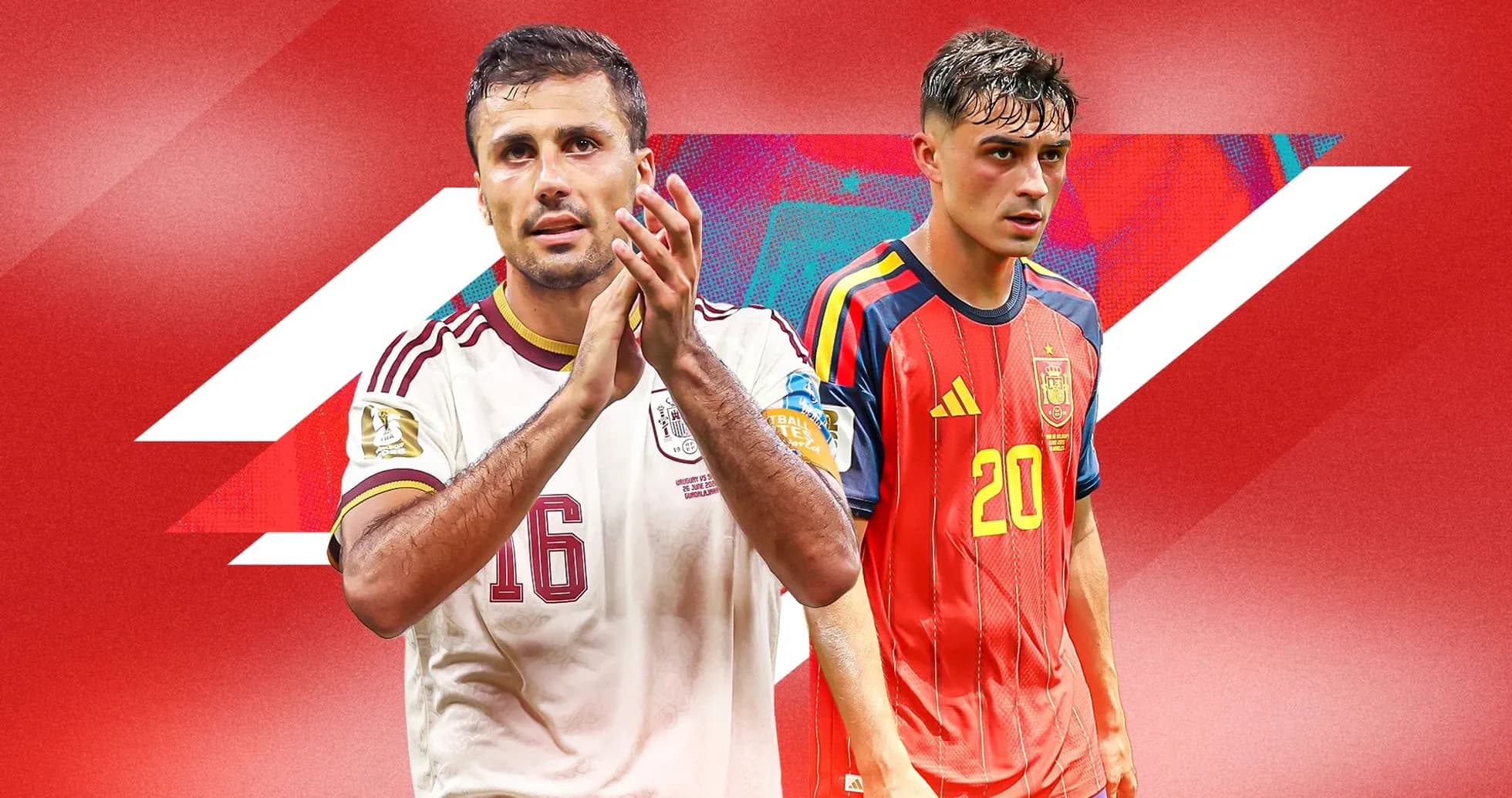
Spain came to North America with a midfield blueprint that felt almost unfair: Rodri dictating the tempo, Pedri threading the game together, a partnership good enough – on paper – to turn a European champion into a world champion.
Half of that plan has worked to perfection. The other half has become a national argument.
Rodri has glided through this World Cup like a Ballon d'Or winner in waiting, the metronome and the shield in one. Pedri, by contrast, has spent the tournament under a microscope, every touch weighed against the version of himself that dazzled Europe and every quiet game amplified by the noise from Madrid and Barcelona.
It started innocently enough. In Spain’s goalless draw with Cape Verde, Pedri created five chances, more than anyone else on the pitch. On any other day, in any other shirt, that output earns applause. Instead, it triggered criticism. The expectation around him is so inflated that five key passes and no victory translated as failure.
Cape Verde’s subsequent results softened the verdict on that stalemate, but not on Pedri. As the games piled up, the questions grew sharper: where were the goals, where were the assists, where was the player who once seemed destined to own every big stage he stepped onto?
The comparison with Jude Bellingham has only turned up the heat. It is an imperfect parallel – different players, different roles, different teams – but it has become irresistible fuel for the rivalry between Real Madrid and Barcelona. Bellingham is filling highlight reels with decisive moments, dragging games towards him with goals and assists. Pedri, playing deeper and asked to knit rather than finish, has not.
Nuance has little space in that kind of debate. The bottom line rules. Bellingham is deciding matches; Pedri is not.
Even so, Luis de la Fuente’s decision to drop Pedri after five consecutive World Cup starts still jolted Spain. This is a player who, dating back to Qatar, had become a fixture in the XI. Yet De la Fuente did not flinch. He leaned on the depth that might yet win him the trophy.
Spain’s midfield options run absurdly deep, and the coach made a point of saying so. He highlighted Mikel Merino as the hard-luck story, a player who scored a late winner against Portugal, stayed on the bench again, and refused to sulk. Merino simply came on against Belgium and did it again, sealing a 2-1 win with another decisive goal.
“It’s unfair that Mikel doesn’t play from the start, but it would also be unfair if someone else were left out,” De la Fuente said. “Only 11 can play, and they understand that – the role they have to play at any given moment. When they take to the pitch, they know what they have to do; that’s why it’s a pleasure to be their manager.
“What matters is the team. It doesn’t matter who starts the match. Everyone is important, even those who haven’t played.”
That message has reached Pedri. There has been no sign of tantrums, no hint that the Barcelona midfielder has taken his demotion personally. Goalkeeper Unai Simon lifted the curtain slightly after the Belgium game.
“He’s taken it well,” Simon said. “We all want to play but, in the end, there isn’t room for everyone.
“How must David (Raya) and Joan (Garcia) feel knowing they’re world-class goalkeepers? Everyone wants to play, but everyone wants to win the World Cup. So, when it’s your turn to accept that role, you do it.”
The role, though, remains the great tactical question of Spain’s semi-final against France.
Pedri did little to strengthen his case off the bench in Los Angeles. Spain were breaking late, Belgium stretched, the game there to be killed. Pedri, usually so precise, misjudged a simple pass and squandered the chance. It was a small moment, but it felt symbolic of a tournament in which his radar has been just a fraction off.
Fabian Ruiz, by contrast, played as if he owned the stage. He scored Spain’s opener, controlled long spells of the match and, as Simon reminded everyone, arrives in the United States as a Paris Saint-Germain midfielder who has just “won two Champions Leagues in a row.” His form gives De la Fuente a genuine dilemma.
On his day, Pedri remains one of the most elegant footballers on the planet. He wins the ball back more often than his slight frame suggests he should, then releases it with an economy and clarity that few can match. But De la Fuente has been clear: the Pedri who shines at Barcelona cannot simply be copy-pasted into this Spain side.
“Pedri is a class player, one of the best in the world, if not the best,” the coach said. “But Fabian is also one of the best players in the world if not the best.
“But Pedri can’t play like he does for Barca, because we play differently. We have similarities, but it’s not the same. We don’t have the same players either.
“We have Rodri, so of course his partner in midfield is different. For me, Pedri could play as a 6, 8, or 10, but we have to make decisions that are always very elaborate, very analysed, very tailored to the opponent.”
France are that opponent now, and they will test every one of those decisions.
De la Fuente could load his midfield and start both Fabian and Pedri alongside Rodri, as he did against Cape Verde. If Spain have a clear advantage over Didier Deschamps’ side, it lies in that central trio. Put three technically supreme midfielders in there and La Roja can try to smother the game, hoard possession and starve France’s devastating front four of the ball.
The trade-off is brutal. Fielding Rodri, Fabian and Pedri likely means sacrificing Dani Olmo, who has carved out a place for himself in the No.10 role during the knockout rounds. Olmo’s final ball still frustrates at times, but his movement between the lines and his knack for finding pockets of space have given Spain a different dimension.
De la Fuente has often described Pedri as a “special talent” and has been explicit about where he sees the 21-year-old doing the most damage: closer to the opposition box, combining, slipping through passes, turning tight spaces into opportunities. He has also praised Pedri for “always setting a very good tone, whether he’s in top form or not,” a nod to his work without the ball and his capacity to guide the press.
Yet the coach’s recent comments hint at a plan that keeps Pedri on the bench at kick-off. After Belgium, De la Fuente spoke of the idea that Pedri could “benefit from Fabian’s work,” a clear suggestion that the Barcelona midfielder might again be used as a closer, thrown into a game where the opposition legs are heavy and the spaces between the lines are wider.
“It’s essentially teamwork,” he said. The phrase sounded simple, but it captured Spain’s greatest strength in this tournament: a squad willing to suppress ego for the collective good.
So Pedri, once the automatic starter, now finds himself as part of a rotation that includes Merino, Fabian, Olmo and others, all orbiting around Rodri. It is a strange sight for those who had already anointed him the face of Spain’s future, yet it is entirely logical when you look at the resources De la Fuente has at his disposal.
France will arrive with all their usual menace. “France have already shown some extraordinary, exceptional potential, but we have too, so I think the game is very open,” De la Fuente said. “It will require fresh, energetic players, and it will require us to be the best version of ourselves.”
Spain know exactly what their best version looks like. The lingering doubt, the one that hangs over this semi-final, is whether that version still includes the Barcelona Pedri – or whether this World Cup will belong to a different incarnation of Spain’s quiet genius.