Sporting CP vs Bodo/Glimt: A Defining UEFA Champions League Clash
Sporting CP’s Lisbon second leg against Bodo/Glimt is a season-defining checkpoint in their UEFA Champions League campaign, with the broader landscape of the competition heavily shaped by what happens on 17 March in the 1/8 final.
From a table perspective, Sporting CP arrive as one of the competition’s higher-performing sides. They sit 7th in the overall Champions League ranking snapshot with 16 points, a goal difference of +6 and a strong record of 5 wins, 1 draw and 2 defeats from 8 matches. Their description line – “Promotion - Champions League (Play Offs: 1/8-finals)” – underlines that they are already operating in the tier of clubs expected to reach and compete in the knockout phase.
Crucially, their home profile is elite: 4 home matches, 4 wins, 11 goals scored and only 3 conceded. An average of 2.8 goals for and 0.8 against at home in the season statistics confirms that Lisbon has been one of the more hostile destinations in the competition. For Sporting, this tie is not just about survival; it is about validating their status as a genuine quarter-final contender and justifying their top-10 position in the competition’s performance hierarchy.
Bodo/Glimt, by contrast, come into this tie from a lower competitive band. They are 23rd in the Champions League table snapshot with 9 points and a goal difference of -1, having won 2, drawn 3 and lost 3 of their 8 matches. Their status line – “Promotion - Champions League (Play Offs: 1/16-finals)” – shows that they have already overachieved relative to many clubs at their level by navigating the earlier knockout barrier. Their away record is competitive but not dominant: 1 win, 2 draws and 1 defeat, with 7 goals scored and 8 conceded. The season stats reinforce that profile: 2 away wins from 6, averaging 1.7 goals scored but 1.8 conceded per away match.
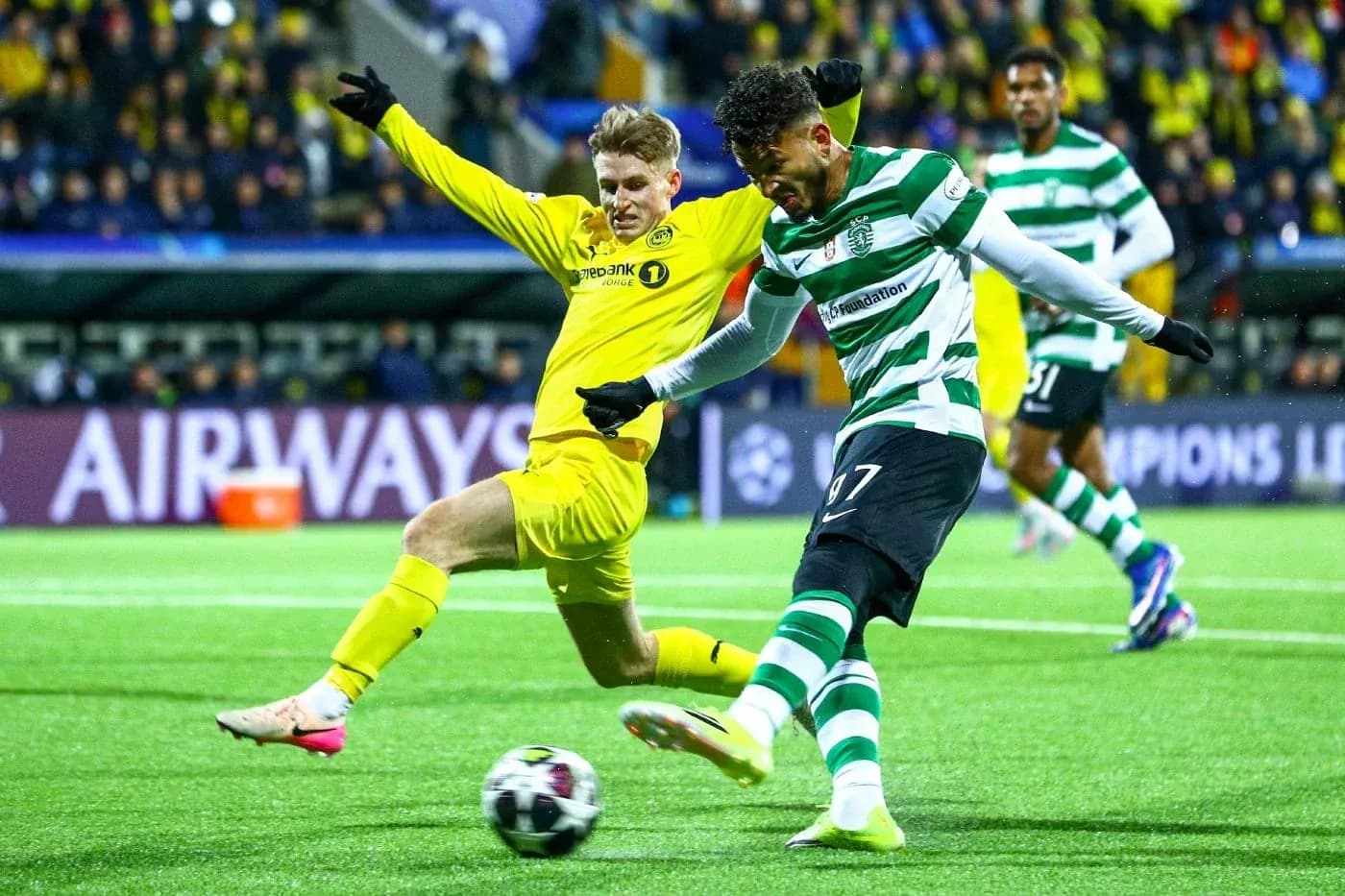
The first leg on 11 March in Bodo has radically rebalanced the tie and the seasonal stakes. Bodo/Glimt’s 3-0 home victory, with a half-time score of 2-0, not only gives them a commanding aggregate advantage but also punctures Sporting’s aura built through the group and early knockout phase. That defeat is Sporting’s heaviest away loss of the Champions League season, matching their worst away scoreline of 3-0 listed in their “biggest loses” section. It exposes the split personality in their campaign: 11 goals conceded away compared to just 3 at home, and an away goals-against average of 2.2 versus 0.8 at home.
Because this is a two-legged 1/8 final, the second leg in Lisbon becomes a hinge moment for both clubs’ seasonal narratives. For Sporting, elimination here would freeze their Champions League impact at the level of a strong group-phase and early knockout performer, but not a side that shaped the latter stages. Remaining 7th in the ranking snapshot, they would exit having failed to translate domestic-style home dominance into a deep continental run. It would also highlight a structural weakness: a defence that has conceded 14 goals overall, with heavy away leakage undermining a potent attack that scores 1.9 goals per match on average.
If Sporting turn the tie around, however, the season’s complexion changes dramatically. A successful comeback would reinforce Lisbon as one of the competition’s most reliable home fortresses, extend their knockout presence into the last eight, and potentially push them into the conversation with the very top-ranked clubs. Their attacking profile – 17 Champions League goals, including a huge spike between minutes 61-75 where they have scored 8 times – suggests that late pressure at home can still reshape the aggregate picture. Progression would validate their tactical flexibility too, with three different formations used across the campaign.
For Bodo/Glimt, the 3-0 first-leg win has already elevated their season from respectable to eye-catching. Their overall form line of “WWDLL” in the standings snapshot hints at inconsistency, but the broader season statistics tell of a side that has grown into the competition: 28 goals scored across 13 Champions League matches, with strong output between minutes 16-30 and 61-75, and a recent surge of wins reflected in the extended form string “WLDDLLLDWWWWW”. Advancing from this 1/8 final would reposition them from a 1/16-finals qualifier to a genuine dark horse in the last eight, capable of outscoring higher-ranked opponents.
The defensive side of their profile remains the main seasonal question mark. They concede 1.5 goals per match overall, with notable vulnerability between minutes 46-60, where they have allowed 5 goals. In Lisbon, protecting the existing advantage will test whether Bodo/Glimt can evolve from an entertaining, attack-driven side into a knockout operator capable of game management under pressure in one of Europe’s more demanding away environments.
From the wider Champions League landscape, this tie’s outcome influences the competitive balance between established clubs and rising outsiders. A Sporting progression would support the pattern of higher-ranked, group-dominant teams asserting themselves in the 1/8 finals, reinforcing the stratification visible in the standings. A Bodo/Glimt success, on the other hand, would inject a mid-ranked, negative-goal-difference side into the quarter-final field, potentially reshaping seeding dynamics and offering future opponents a different stylistic challenge: high-tempo, high-scoring football from a club whose statistical profile is closer to a wildcard than a traditional powerhouse.
In verdict, the Lisbon leg is not just a decider of one tie; it will determine whether the 2025 Champions League knockout phase tilts further towards hierarchy and home strength, represented by Sporting CP’s perfect Lisbon record, or towards disruption and the rise of ambitious outsiders, embodied by Bodo/Glimt’s punch-above-their-weight charge from the 1/16-finals band into the competition’s elite rounds.