The Estádio José Alvalade crackled long before a ball was kicked. Green and white stripes, a tifo screaming “You are my life”, 17 straight home wins in the bank and the European aristocrats from north London in town. Sporting could smell vulnerability. Arsenal, bruised by back‑to‑back cup exits, came to Lisbon needing reassurance as much as a result.
They started with the ball, at least. Dark navy shirts, lightning bolt trim, the usual choreographed circulation across the back four. William Saliba and Gabriel stroked it between them, Ben White tucked in, Riccardo Calafiori stepping high. The pattern said control. The noise said otherwise.
Within seconds Saliba was whistled and jeered for a foul on Luis Suárez in midfield. It set the tone: every Arsenal touch under a wall of sound, every Sporting press cheered like a goal.
Sporting strike first – with the woodwork
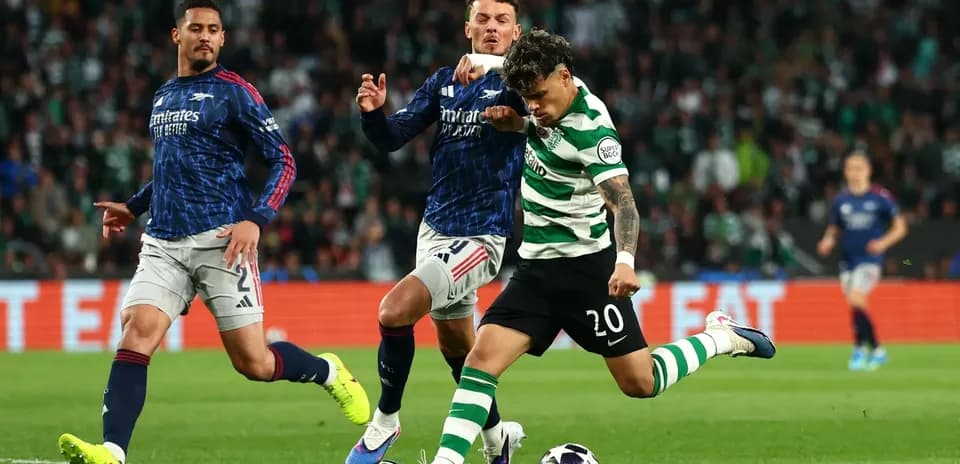
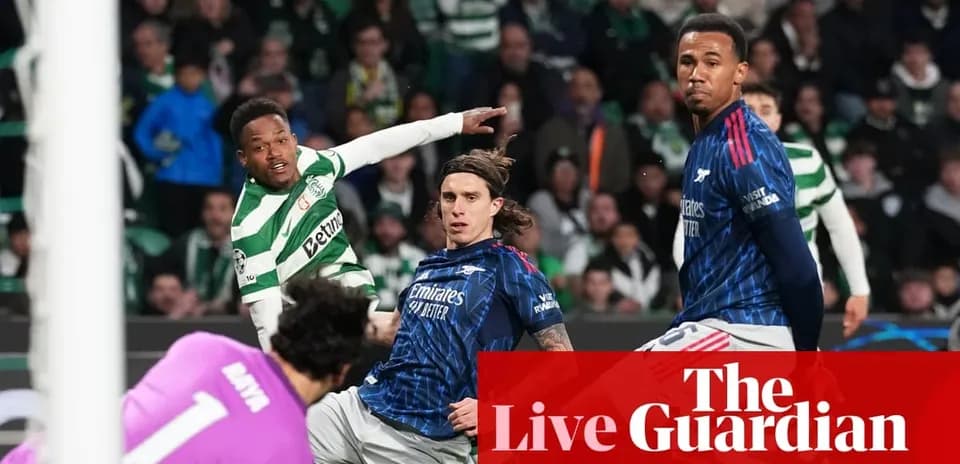
The first real crack in Arsenal’s composure came on six minutes. A gorgeous, disguised pass from Ousmane Diomande with the outside of his boot sliced through the visitors’ back line and released Matheus Araújo. He timed his run perfectly, beat the offside trap and thundered a shot beyond David Raya.
The crossbar shook. Only the slightest fingertip from Raya diverted it there. It was outstanding goalkeeping, the kind that gets lost in the highlights but not in the minds of defenders. Arsenal had been carved open; Raya had just saved them from an early deficit.
Sporting smelt blood. From the resulting spell, a free-kick on the edge of the area offered another chance. The wall did its job. Araújo then tried his luck from distance, this one flying into the stand, but the message was clear: the Portuguese champions were not here to admire the Premier League leaders.
A few minutes later, Geny Catamo drove in from the right and let fly from a tight angle. Raya, again, was sharp, dropping low to his near post to smother. Arsenal’s supposed control looked fragile.
Arsenal’s set-piece menace, Silva’s nerves
Mikel Arteta had spoken before kick-off about “identity”, about going back to the behaviours that had carried Arsenal to the summit of English football and an unbeaten Champions League run. Part of that identity this season has been ruthless set-pieces. In Lisbon, they almost struck again.
On 13 minutes, Araújo clipped Noni Madueke just outside the box on the right. Martin Ødegaard, all calm amid the chaos, whipped a devilish ball into the area. Antonio Adán Silva charged out and got nowhere near it. The ball bounced awkwardly and spun behind for a corner, the goalkeeper stranded and grateful.
From the next dead ball, Silva’s unease grew. Madueke trotted across to take the corner and the delay cranked up the volume. Whistles rained down as he waited. When he finally delivered, the inswinger crashed straight against the crossbar, the keeper misjudging the flight. The rebound dropped to Ødegaard, who swung and completely mistimed his shot. It ran out to Leandro Trossard, whose low drive skidded wide.
Silva had already flapped at a free-kick moments earlier. His handling looked uncertain, his decision-making jittery. Arsenal, for all their recent struggles, knew they had a route to goal if they kept forcing corners and free-kicks.
A battle on the flanks, a scrap in midfield
The contest settled into a jagged rhythm. Arsenal tried to reassert themselves with longer spells of possession, Declan Rice and Martín Zubimendi stepping in to dictate. At times they managed it, recycling the ball, probing, waiting for Ødegaard to find a gap. The home crowd’s fury dipped to a simmer.
Then Sporting would pounce.
Araújo, nominally the left-back, played like a one-man storm. He tried to nutmeg White on the edge of the Arsenal box, failed, then immediately fouled the defender as he hunted the ball back. He was everywhere – bursting forward, snapping into tackles, fouling Madueke again on 20 minutes to concede another free-kick. Sporting’s shape out of possession – a compact 5-2-3 – gave him licence to surge and recover.
On the opposite side, Madueke was a constant target. He drew fouls, held the width and looked to isolate his full-back. When Inácio coughed up possession cheaply on 25 minutes, Madueke pounced but delayed his cross, allowing Araújo to recover and snuff out the danger. It summed up Arsenal’s evening: promising positions, a beat too slow.
Sporting’s threat never really went away. Francisco Trincão and Pedro Gonçalves buzzed between the lines, while Suárez, the Colombian focal point, dropped off to knit moves together. This was no Gyökeres-style battering ram; Suárez preferred to link, to drag centre-backs into awkward areas and let others run beyond him.
Behind them, João Simões – the 19-year-old drafted in for suspended captain Morten Hjulmand – played with a maturity that belied his age. He kept the ball moving, screened intelligently and never looked overawed by the occasion or the opposition.
Gyökeres returns, but Arsenal misfire
If this was billed as an unofficial Viktor Gyökeres derby, the Swede’s first-half impact barely registered. His first touch in the Sporting penalty area came on 11 minutes, and he immediately looked for a supporting run. Araújo, again, read it best, nicking the ball away before the move could develop.
Too often, Arsenal’s front three felt disconnected. Trossard drifted infield, Gyökeres searched for combinations, Madueke hugged the line, but the final pass never quite arrived. When Calafiori unexpectedly popped up on the right side of the Sporting box just after the half-hour, he could only drive a cross into empty grass, no navy shirt attacking the space.
Behind them, Raya almost invited trouble. Under pressure near his own area, he scuffed a clearance that bounced straight towards Silva’s box, a rare moment of poor distribution from the Spaniard. He raised a hand in apology, knowing full well that one misstep in a quarter-final can define a season.
At the other end, Sporting continued to threaten in flashes. Inácio picked out Araújo with a clever pass, the full-back’s run again splitting Arsenal open, but his first-time ball across to Suárez lacked precision. A better connection and Raya would have been in serious trouble.
Rice booked as the temperature rises
The first yellow card of the night underlined the edge in the contest. On 31 minutes, Hidemasa Morita slid in on Trossard. He took the ball but the follow-through was ugly, catching the Belgian and drawing an immediate reaction. Daniel Siebert reached for his pocket. Morita could have no complaints.
Rice stood over the resulting free-kick, wide on the left. He curled an inswinger into the area, hoping for a flick or a scramble, but Sporting’s defenders met it firmly and headed clear. It was another set-piece opportunity wasted, another reminder that Arsenal’s usual dead-ball precision had gone missing at a crucial time.
By then, the match had become a grind. Arsenal passed, probed, reset. Sporting sat in, then sprang out with pace when the ball turned over. The Premier League leaders looked like a team caught between the need to steady themselves and the urge to strike first in a tie of this magnitude.
Pressure, pedigree and a long night ahead
All of this played out against the backdrop of a club wrestling with expectation. Arsenal arrived in Lisbon having seen a domestic quadruple evaporate in the space of a fortnight – first Manchester City in the Carabao Cup final, then a shock FA Cup exit to Southampton. Arteta insisted there was no panic, only a need to “focus on the present” and rediscover the traits that had carried them this far.
Sporting, by contrast, strode into the night with the swagger of a side that had won 17 straight home games, including a 5-0 demolition in the last 16 after overturning a 3-0 first-leg deficit at Bodø/Glimt. Rui Borges had talked before kick-off about daring to be themselves, about set-pieces and belief, about not straying from their plan.
For 45 minutes, that belief crackled in every tackle, every surge from Araújo, every roar that greeted a blocked cross or a Rice miscontrol. Arsenal carried their reputation and their unbeaten Champions League record; Sporting carried the weight of a city that believes its club can trade blows with Europe’s elite.
The first leg still had a long way to run. But under the Lisbon lights, with the anthem still echoing in memory and the tifo’s message hanging over the home end, one question lingered: whose season would this tie come to define?