Tottenham vs Crystal Palace: Premier League Clash Preview
Under the lights of Tottenham Hotspur Stadium in London, Saturday 31 October 2026 brings a capital clash loaded with early‑season tension. Tottenham, still searching for lift‑off in the Premier League, host a Crystal Palace side hovering just above the danger zone. For the home crowd it is about turning a mixed start into a push back toward the European places; for Palace, every point is precious in a campaign where defensive frailty has already raised survival questions.
Season Context
Tottenham arrive in this ninth round sitting 14th with 9 points from 8 matches, a goal difference of -2 and 8 goals scored against 10 conceded. The record of 2 wins, 3 draws and 3 defeats underlines a stop‑start opening, but the numbers also show they are competitive in most games, averaging 1.0 goal scored and 1.25 conceded per outing based on those 8 fixtures.
Crystal Palace are even closer to the trapdoor. They stand 17th with 7 points from 8 matches, having won 2, drawn 1 and lost 5, with 9 goals scored and a worrying 19 conceded for a goal difference of -10. That works out at 1.1 goals scored but 2.4 shipped per game, a defensive record that leaves them firmly in the early relegation conversation unless something changes quickly.
Form & Momentum
Tottenham’s recent pattern reads WWDLD, a sequence that hints at recovery after a rocky start. Two wins in that run show growing resilience (9 points overall from 8 games), and with 8 goals from those 8 matches they are at least finding the net at a steady rate of 1.0 per game. The 10 goals conceded across the same span (1.25 per game) suggest they are not watertight, but the balance of results points to a side edging in the right direction rather than spiralling.
Crystal Palace, by contrast, carry the more fragile momentum of LLWDL. Five defeats already from 8 league outings underline their vulnerability (19 goals conceded in those 8 games), and that average of 2.4 goals allowed per match is the defining problem of their season so far. The attack is not completely blunt — 9 goals from 8 games is a respectable 1.1 per match — but the defensive leakiness keeps dragging them back into trouble.
Head-to-Head Patterns
Recent meetings between these London rivals have been anything but predictable, with momentum swinging across the divide. On 5 March 2026, Crystal Palace stunned Tottenham 3-1 at Tottenham Hotspur Stadium in the Premier League (season 2025), a statement away win that exposed Spurs’ defensive lapses. Earlier that same Premier League campaign, on 28 December 2025, Tottenham had ground out a 1-0 victory at Selhurst Park (season 2025), showing they can edge tight contests on Palace turf. Go back to 11 May 2025 and Palace again proved awkward visitors, winning 2-0 at Tottenham Hotspur Stadium in the Premier League (season 2024), reinforcing the sense that this fixture often ignores the script.
Tactical Preview
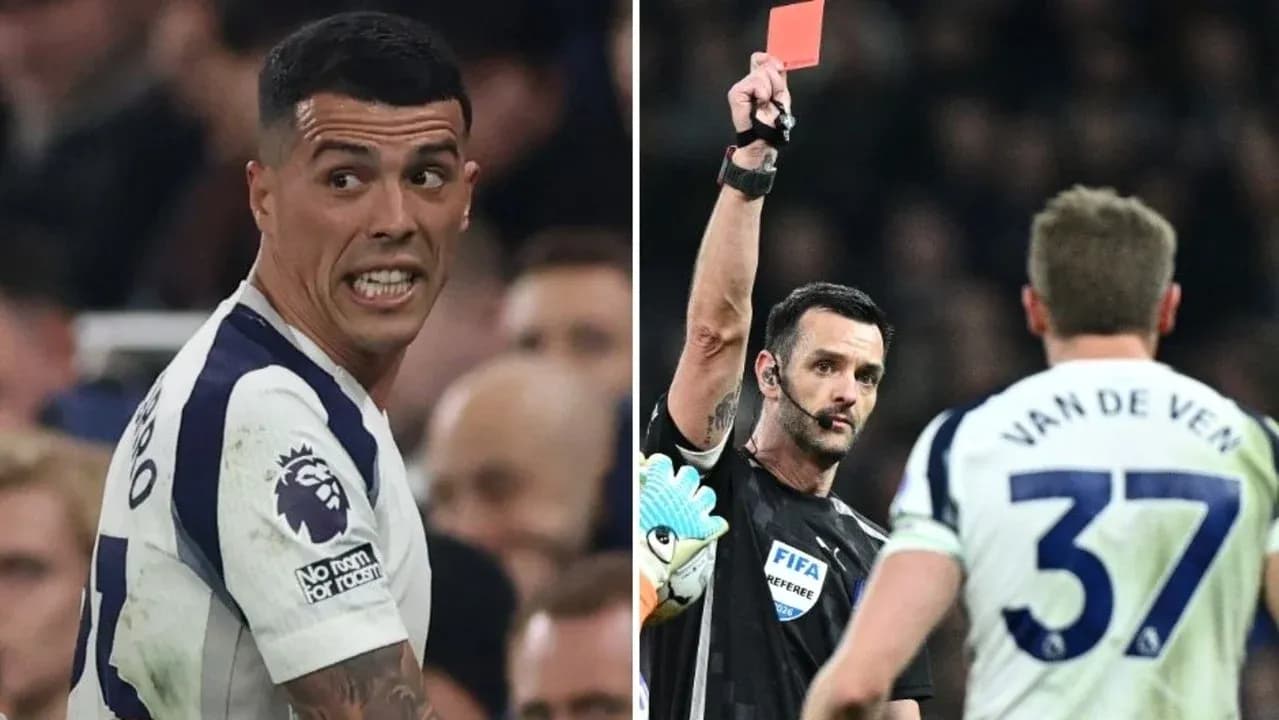
Tottenham’s statistical profile points toward a side built on structured possession and a flexible attacking line. Their most common setup has been a 4-2-3-1 used in 7 matches, occasionally shifting to a 3-1-4-2 in 1 game, which suggests a preference for a back four with double pivot control but the capacity to switch to a back three when chasing different spaces. Across 8 league fixtures they have scored 8 and conceded 10, numbers that align with a team trying to control games but still occasionally exposed when transitions break down. The presence of creative figures like J. Maddison (though listed as questionable with a groin injury) and dynamic attackers such as M. Kudus, D. Kulusevski, Richarlison and D. Solanke gives them variety between the lines and in the box, even if they will miss the passing rhythm and pressing energy of R. Bentancur, suspended after a red card. Wide defenders like Pedro Porro and D. Udogie can drive high, which fits the 4-2-3-1’s emphasis on overlapping width.
Crystal Palace have leaned heavily on a 3-4-2-1 shape, used in all 8 league matches, a system that puts significant responsibility on the back three and wing‑backs. The numbers show both the potential and the risk: 9 goals scored but 19 conceded across those 8 games underline how exposed that back line can be if the midfield screen is bypassed. The creative heartbeat has been D. Kamada, who already has 3 assists and 1 goal in 8 Premier League appearances, while Yeremy Pino offers dribbling threat from advanced midfield zones despite also being one of the league’s heavier yellow‑card collectors (3 bookings). Up front, options like J. Strand Larsen, J. Mateta and E. Nketiah give Palace a mix of target‑man presence and penalty‑box movement, but the team’s ability to protect leads is undermined by that 2.4 goals‑against average.
Injuries could shape the tactical chessboard. Tottenham are without M. Mudryk and W. Odobert (both with ankle and knee injuries respectively), plus X. Simons and another attacker with a muscle problem, limiting their wide rotation. R. Bentancur is suspended, while T. Adarabioyo, L. Bergvall and J. Maddison are all doubtful. Palace, meanwhile, lose C. Riad and T. Tomiyasu at the back, important absences in a three‑centre‑back system, with J. Strand Larsen, I. Sarr and Q. Timber all listed as questionable. With both squads stretched, depth and in‑game management could be decisive.
Statistical Snapshot
- Competition: Premier League, season 2026 — 31 October 2026.
- Venue: Tottenham Hotspur Stadium, London.
- Prediction: Win or draw for Tottenham — Double chance : Tottenham or draw.
- Win Probabilities: Home 45% / Draw 45% / Away 10%.
- Model: Tottenham 58.0 — Crystal Palace 42.0.
Betting Verdict
The analytical models lean clearly toward the hosts: the comparison index gives Tottenham a 58.0 to 42.0 edge, while the prediction market sees them avoiding defeat in 90% of scenarios (45% home win, 45% draw). Bookmaker prices for a home victory cluster between roughly 1.47 and 1.58, implying an underlying probability in the region of 63–68%, which is notably stronger than the model’s conservative 45% home‑win figure. Tottenham’s steadier recent form (WWDLD) and their more solid defensive record of 10 goals conceded in 8 league games compare favourably with Palace’s porous 19 conceded in the same number of matches, and that, combined with Palace’s inconsistent head‑to‑head record away at this ground, strengthens the case for backing the hosts in some form. Taking all of this together, the most sensible angle is to follow the model’s advice and side with “Tottenham or draw” on the double‑chance market, while those seeking more value may still justify a straight home win given Palace’s defensive numbers.