Tottenham's Final Day Survival Battle in Premier League
The last day always lies to you.
You tell yourself you’ve seen it all before, that nothing can really shock you now, that permutations and “As It Stands” tables are just numbers on a screen. Then the whistle goes in ten different grounds, the goals start to drop in from everywhere at once, and suddenly you’re craning for updates from games you’d barely glanced at all season.
Titles, Europe, survival. Or, in this case, mostly survival.
Tottenham have made sure of that. Of course they have.
The title race fizzled out weeks ago. The scrap for Europa places is a polite squabble compared to what’s going on at the bottom. But Spurs, in their eternal commitment to self-sabotage, have dragged themselves to the brink and handed the league one last, delirious storyline.
They deserve a grudging nod for that, at least. Without them, we’d be pretending to care about the “Race for Europe” instead of watching a club of Tottenham’s resources trying to avoid an unthinkable fall.
Crystal Palace v Arsenal might be chaos in its own right – one team with eyes on another game entirely, the other fuelled on three days without sleep and adrenaline alone – but it doesn’t touch what’s happening in north London and east London. Not today.
Not when Tottenham could actually go down.
Game to watch: Tottenham v Everton
James Maddison called it “embarrassing”. He wasn’t wrong.
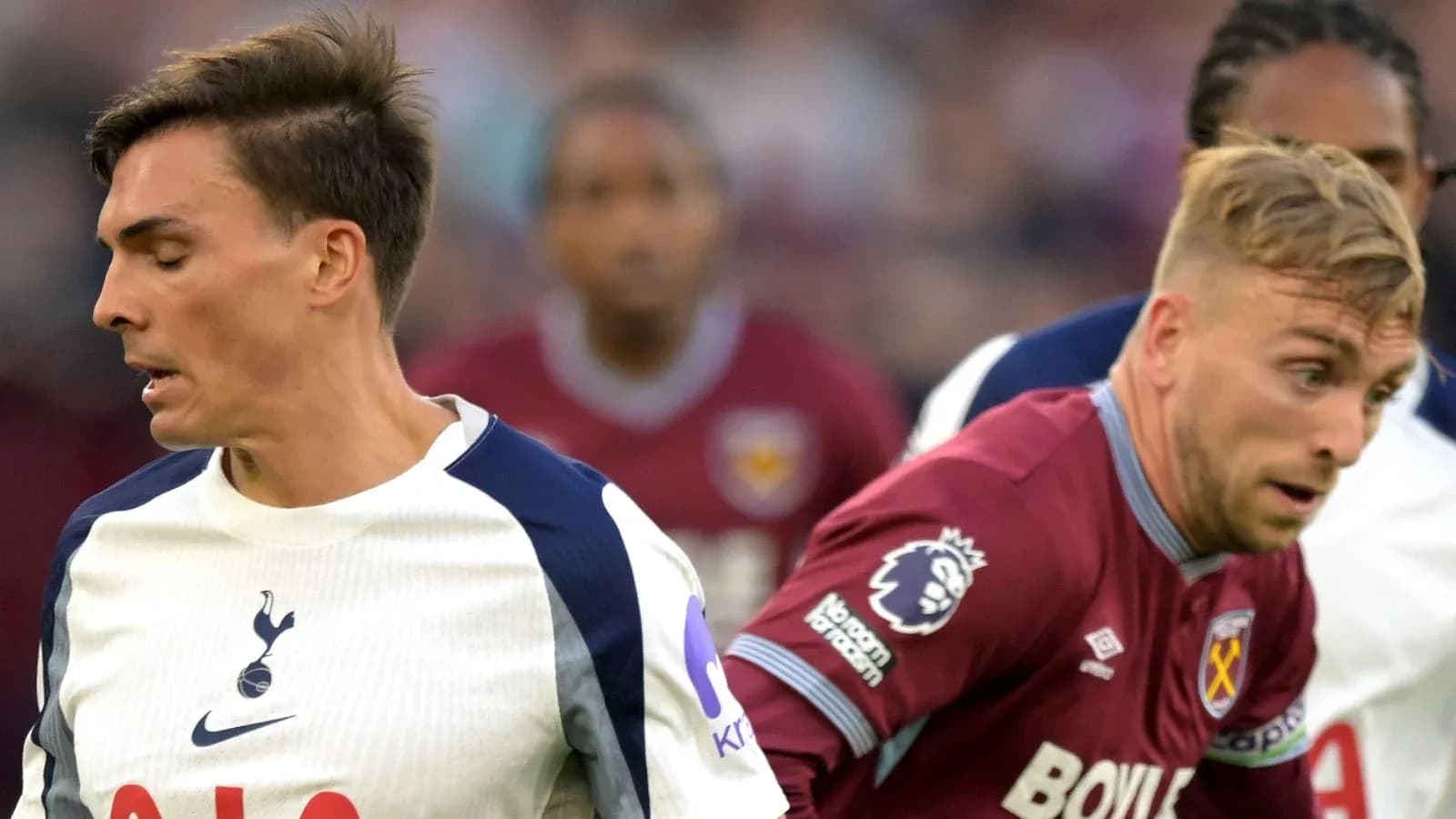
Tottenham, a club that started this era talking about titles and trophies and a new stadium as a launchpad to greatness, go into the final day needing a result to make sure they don’t drop out of the Premier League.
They sit on the same points tally with which they finished 17th last season. Back then, they coasted to safety because three teams were utterly detached at the bottom. This time there are only two punchbags. The trapdoor is closer.
Last season, there was at least the half-plausible excuse that once safety was banked in February after three straight wins, the club turned its gaze to the Europa League and let the league form rot. The collapse was still grotesque, but you could see the logic, however flimsy.
This year? The only fig leaf is injuries, and even that comes with its own indictment. Spurs knew they had a crisis in January. They’d already spent half the season with a treatment room that looked like a five-a-side league. They chose to sit tight, wary of being accused of panicking.
How’s that worked out?
The most brutal illustration came on the right wing. Selling Brennan Johnson early in the window, for serious money, was actually sharp business. Nothing he produced in a Spurs shirt, and nothing he’s done at Palace, screams mistake. The problem was what came next.
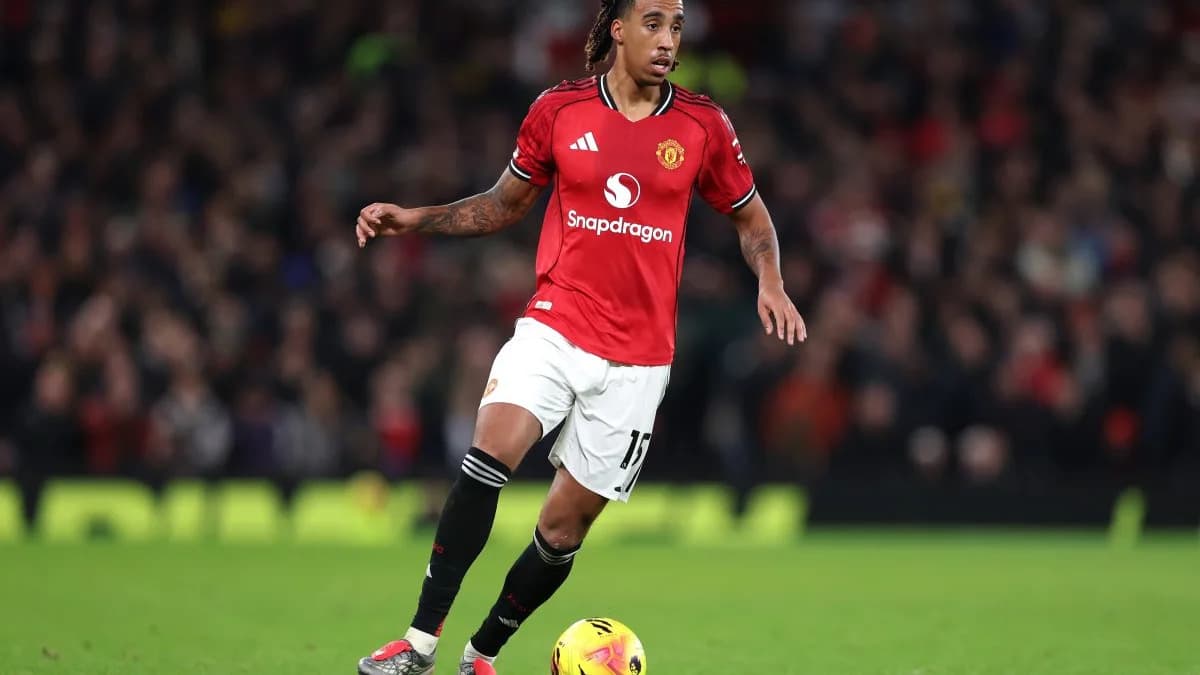
Mohammad Kudus went down with a serious injury in the very next game. Spurs then had three full weeks of the window to react, to find someone, anyone, to plug the gap. They barely twitched. No replacement for Johnson. No cover for Kudus. No gamble. No imagination.
If Sunday goes wrong, that inaction will sit near the top of the charge sheet. In truth, it should be there even if they stay up.
Because whether Spurs survive or not, the season has exposed a hierarchy that froze when decisive action was required. Chief executive Vinai Venkatesham – an Arsenal fan, to add a layer of farce – and sporting director Johan Lange have overseen a campaign that veered from muddled to negligent. It’s hard to build a case for either of them staying in post.
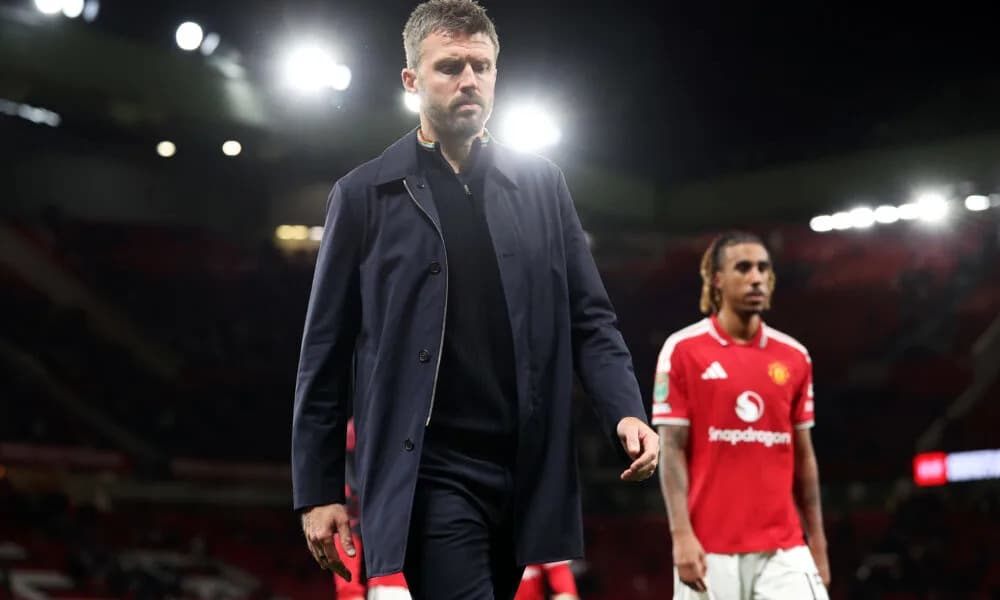
Roberto De Zerbi has at least given this team a shape and a plan, but he has been coaching with one hand tied behind his back. The January attempt to look like grown‑ups, to avoid the optics of panic, has left him with an attack stripped of both depth and quality.
Again, he will go into the biggest game of the season with a front three of Richarlison, Mathys Tel and the desperately out-of-form Randal Kolo Muani. He will ask them to carry the threat, then glance over his shoulder and hope Maddison is fit enough to change the game from the bench without being thrown on in pure desperation.
Maddison’s brief cameos against Leeds and Chelsea have told the whole story. In 20 ragged minutes each time, still short of fitness and sharpness, he has made Spurs look immediately more dangerous. That’s a credit to him, but an even harsher verdict on those who have been starting in his absence.
One point keeps Tottenham safe. Unless West Ham somehow put 12 past Leeds – a level of calamity so cartoonish that even Spurs’ own mythology struggles to stretch that far – a draw will do.
On paper, Everton are the right opponent. Sean Dyche’s side have run out of legs and ideas in recent weeks. They haven’t won since early March and what looked like a serious tilt at European football at the Hill-Dickinson has evaporated.
Yet nobody with even a passing knowledge of Tottenham’s psyche would dare call this straightforward. For this team, a good start feels like oxygen. Under De Zerbi they have shown the thinnest skin imaginable. Concede first, and they don’t respond; they retreat.
At Sunderland and Chelsea, they were doing fine until they went behind. Then they crumpled. Against Leeds at the Tottenham Hotspur Stadium, they moved from cruise control to panic the moment the equaliser went in. The pattern is too clear to ignore.
They need the first punch here. Not just to steady themselves, but to keep West Ham at arm’s length psychologically as well as mathematically.
Because you can already hear it. The roar, or the groan, or that horrible nervous murmur that spreads like smoke, if news of a West Ham goal filters through. You can picture the players, glancing at the stands, at the bench, at the big screen. You can picture the doubt.
There are nine possible combinations of results across the two games that decide the drop. Eight of them keep Spurs up. Any normal club would sleep soundly with that. Tottenham are not a normal club. You can’t quite shake the feeling they might find the one catastrophic outcome that remains.
If they do, it’s over to…
Team to watch: West Ham
West Ham enter the day with hope, not expectation. That’s already an upgrade on where they were after their surrender at Newcastle last weekend. They needed a lifeline; they got one.
The problem is the opposition. Leeds, on current form, are a far tougher assignment than Everton. They are unbeaten in eight and, crucially, they don’t seem to understand the concept of easing off.
Leeds had nothing tangible on the line last weekend either. They still beat a Brighton side with everything to play for. This is not a group that slips into flip-flops and sunglasses just because the calendar says May.
West Ham have to pray that this is the day it finally catches up with them, that the edge dulls just enough for a team in claret and blue to take advantage. Because if you strip away the context and look purely at form, it is hard to mount a serious argument that a West Ham side on three straight defeats should be fancied against this Leeds team.
They cannot repeat what happened at St James’ Park. That was an all-or-nothing occasion in theory, and they delivered something closer to nothing. This time, there is no excuse.
The plan is obvious. Strike early. Score first. Turn the screw on a Tottenham side that has shown time and again it cannot handle pressure or adversity. If West Ham can put three points on the board, the psychological load shifts up the M11.
It’s a long shot. They know that. But it’s not a fantasy. If West Ham look after their own job, the rest of the afternoon might yet tilt their way.
Manager to watch: Pep Guardiola
At the Etihad, a different kind of farewell.
Pep Guardiola will walk out for one last Premier League game. As with Ferguson, Wenger and Klopp, it is almost impossible to picture him prowling another English touchline in different colours. This is his exit.
The match itself, against Europa League winners Aston Villa, carries no real weight. City’s attempt to run down Arsenal fizzled out with that laboured, barely deserved draw at Bournemouth in midweek. The lap of honour comes without a trophy in the main competition they care about most.
Guardiola still leaves with a domestic cup double and a squad in transition that, on paper, remains built to contend. By any normal standard, that is a decent season. By his own, it falls short.
Across ten years, he turned the Premier League into a place where 95 points was sometimes the bare minimum to even stay in the conversation. Six titles in seven seasons at their peak. Relentless doesn’t begin to cover it.
To walk away after two years without a genuine title challenge, followed by a campaign that never quite caught fire, will gnaw at him. He will know that. He will feel it.
But he still departs as the league’s second-greatest manager. Given who occupies the top spot, that is not a bad epitaph.
Player to watch: Mohamed Salah
Another goodbye. This one far more awkward.
Mohamed Salah’s final season at Liverpool has played out in a strange, sulky register. Without Trent Alexander-Arnold dovetailing behind him, he has often looked isolated, frustrated, at times almost unrecognisable from the ruthless winger who shredded defences for fun.
The goals and moments have still come, but so have the scowls, the spiky post-match interviews, the social media pot-shots. For a player of his stature – an all-time great for both club and league – it is a messy way to edge towards the exit, especially a year on from Alexander-Arnold’s own unseemly departure from Anfield.
For once, though, there is no danger of the “Player to watch” disappearing into the background. No risk of a late injury, a surprise rest, a suspension missed on the teamsheet. Salah has made himself impossible to ignore.
Liverpool need a point to lock in Champions League football. Whether he starts, storms off, sits on the bench wrapped in a coat or never makes it to the ground at all, Salah will dominate the narrative. Every camera will find him. Every reaction will be parsed for clues about what comes next.
On a day of ten simultaneous kick-offs, he remains the player you can’t take your eyes off. Even if, especially if, he isn’t actually on the pitch.
Football League game to watch: Hull City v Southampton Middlesbrough
The Championship play-off final rarely needs help in the drama department. Promotion, money, careers, legacies – all of it rides on a single afternoon. This year, it arrives with an extra twist: Spygate.
Southampton’s decision to send a staffer to film opposition training, armed with nothing more sophisticated than a phone and a lack of common sense, has already cost them dearly. No drones, no clandestine tech, just a low-rent caper that might end up carrying a £200m price tag.
They have paid a heavy price, and deservedly so. Middlesbrough, who were on the wrong end of that stupidity, can claim to be victims. But they have also benefited more than anyone, handed a route back into a game they had lost on the pitch.
The real innocents in all this are Hull City. They did it the old-fashioned way: turned up for a two-legged semi-final, won it, and waited to see who they’d face under the arch. While Southampton and Middlesbrough at least knew they’d either be in or out, Hull were left in limbo, discovering their opponents less than 72 hours before kick-off.
Southampton cheated. Middlesbrough lost. Hull just did their job and got dragged into the circus anyway.
And you can feel where this is heading. The sheer weight of football’s mischief suggests Middlesbrough will somehow win the £200m match and become the first beaten semi-finalists ever to go up.
Because of course they will.
European game to watch: Bayern Munich v Stuttgart
On the continent, Harry Kane stands on another podium with another medal in reach. Bayern Munich, runaway Bundesliga champions, face holders Stuttgart in the DFB Pokal final.
It’s tempting to shrug and pencil in another Bayern procession. That would ignore a curious recent history. This would be their first Pokal triumph since their 20th, back in 2020. They haven’t even made the final in the five seasons since.
Stuttgart arrive as defending champions, chasing back-to-back Pokal wins for the first time. They have four to their name already and a growing sense of momentum. Twice before, in 1986 and 2013, they reached this stage only to be beaten by Bayern.
Kane came to Germany for nights like this. Bayern came to Berlin to remind everyone that the domestic cup still belongs to them. One of them leaves with a fresh line on the honours list. The other leaves with questions that will echo into the summer.