Can Trent Alexander-Arnold Thrive in Midfield?
The question refuses to die. Can Trent Alexander-Arnold really live in midfield?
Gareth Southgate tried it at Euro 2024, then shelved the plan after two group games. Jurgen Klopp built an entire Liverpool structure around his ability to drift inside and dictate, but always with “right-back” next to his name on the teamsheet.
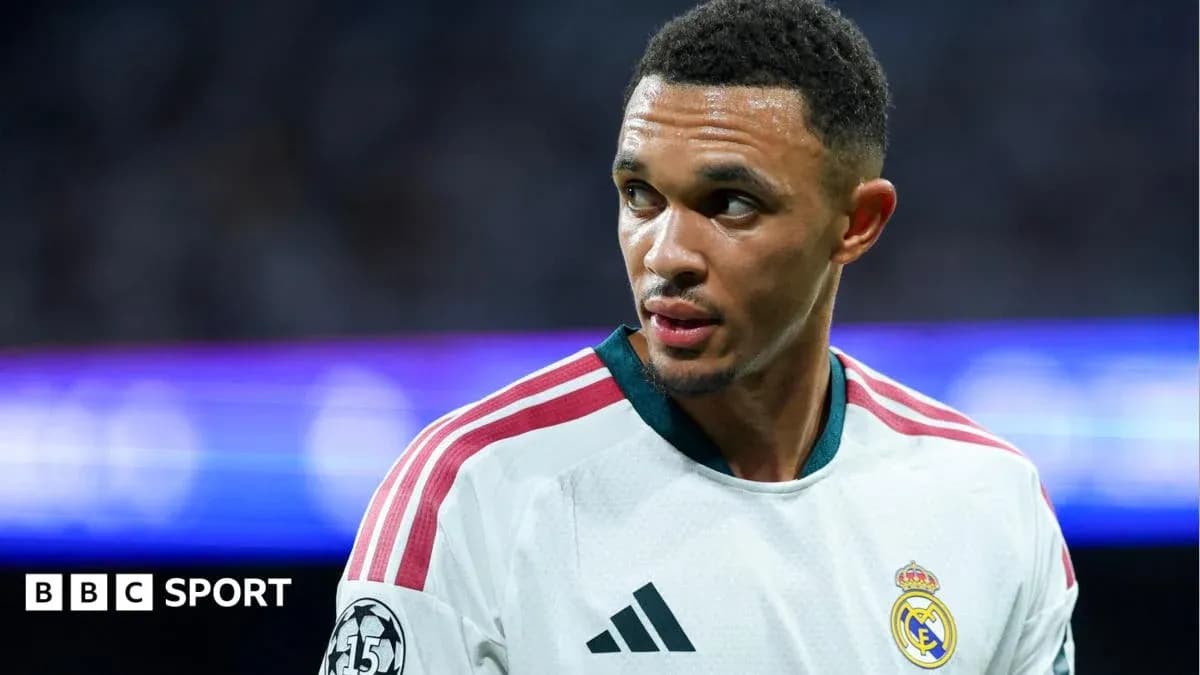
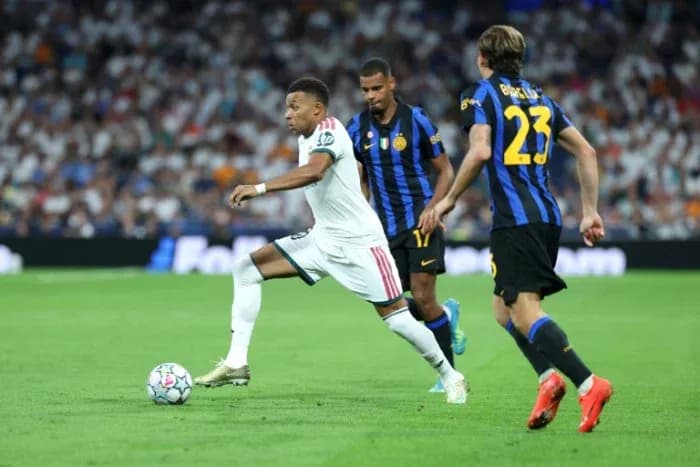
Now it is Jose Mourinho’s turn to experiment. On Tuesday night, under Champions League lights, Alexander-Arnold started in the middle for Real Madrid in a tense 2-1 win over Inter Milan.
Mourinho’s reluctant midfielder
On paper, this looked like a statement. In reality, it was necessity.
Eduardo Camavinga, Arda Guler and Bernardo Silva were all suspended, leaving Mourinho with a hole in central midfield. Into it stepped Alexander-Arnold, lining up alongside Federico Valverde.
He was busy and bold, but imperfect. He created two chances, swung in more crosses than any of his team-mates and tried to shape the game with the ball at his feet. Yet he did not win a single tackle, and his passing accuracy dipped to 83.3%.
Mourinho appreciated the effort, but drew a clear line.
“He has played midfield with England and Liverpool... but he is not a midfielder,” the Real coach insisted after the match. The Portuguese praised Alexander-Arnold’s reading of the role, saying he “interpreted what he needed to really well, tactically”, and bracketed him with Valverde as players who “worked very well at this level”.
Gratitude, yes. A long-term positional switch? Not yet.
Whistles, tension and an early exit
The game tightened after Inter pulled one back on 77 minutes. Almost immediately, Mourinho turned to his bench and took Alexander-Arnold off.
Whistles followed around the Bernabeu. They sounded more like irritation at Real Madrid’s jittery performance than a personal verdict on the England international, but the timing made the moment feel pointed. A new role, a big stage, and an early walk to the touchline.
This was also a small milestone: the first competitive match in which Alexander-Arnold and fellow right-back Denzel Dumfries both started. Mourinho had tried the pairing once before, in pre-season against Fiorentina, with Alexander-Arnold at right-back and Dumfries pushed higher up the same flank.
The picture is still blurred. Mourinho does not yet have a nailed-on starting right-back. Last season Alexander-Arnold had to scrap with Dani Carvajal for minutes. This year, the fight is with Dumfries.
Behind the scenes, though, the view is positive. Mourinho is understood to be impressed by Alexander-Arnold’s performances, his professionalism and the flexibility he offers. He sees something different to the traditional full-back: a player who can step into central pockets, link play and hurt opponents with his range of passing.
That technical armoury remains his calling card – the crosses, the switches, the through balls, the set-piece delivery. All elite. The question is where to best unleash it.
England’s experiment and its limits
Southgate wrestled with the same dilemma. In June 2023, he handed Alexander-Arnold the England number 10 shirt for a Euro qualifier in Malta. England won 4-0, Alexander-Arnold scored from midfield and spoke afterwards about how natural it felt.
“I haven't played it too much, but it feels comfortable,” he told Channel 4. “It feels natural, I will say that. It's somewhere I can see myself playing.”
For the next year, Southgate kept flirting with the idea. Then came the flat 1-1 draw with Denmark at Euro 2024. Alexander-Arnold started centrally, struggled to impose himself, and was withdrawn before the hour. The experiment, at least in that form, was over.
Mourinho’s verdict after the Inter game echoed that tension between potential and practicality.
“He has lost some balls because it is not the same to play in this position compared to at right-back,” he said. The physical demands, he stressed, were different. “The intensity of physical work is quite difficult. He has a different engine. He has given 100%. He left the pitch with nothing left to give.”
A role, not a reinvention
This is where the debate now sits. Alexander-Arnold is not being reborn as a pure central midfielder in Madrid. Mourinho’s own words shut that door for the moment. Yet the role he played against Inter – stepping in, drifting wide, threading passes – underlines why managers keep returning to the idea.
He is still fighting for the right-back slot. Still jostling with Dumfries, as he once did with Carvajal. Still trying to convince a new fanbase he belongs in this Real Madrid side, in any position.
But every time he moves inside and starts to spray passes, the old question resurfaces. Not just can he play in midfield.
How long will managers keep trying to prove that he should?