Tuchel and Bellingham: Navigating Media Storms Ahead of Semi-Final
Thomas Tuchel knows a storm when he sees one. This one, he insists, is little more than a media-made squall.
The relationship between the Germany-born England coach and his on-field general, Jude Bellingham, has been under the microscope for months, ever since Tuchel’s mother described some of the midfielder’s antics as “repulsive” last summer. An apology followed, the noise died down, and the pair drove England forward together.
Then came Norway.
England squeezed through their Euro quarter-final with a 2-1 extra-time win, a draining 120-minute slog that left bodies on the floor and nerves frayed. Tuchel, ever the perfectionist, stepped in front of the cameras and admitted he was “not happy with the team performance.” The result was there; the standard, in his eyes, was not.
Bellingham bristled. The 23-year-old called for more positivity, a pointed response from a player who had once again emptied the tank on the biggest stage. Suddenly, the old narrative was back: cracks between coach and star, ego versus authority, generational talent versus the man on the touchline.
Tuchel moved quickly.
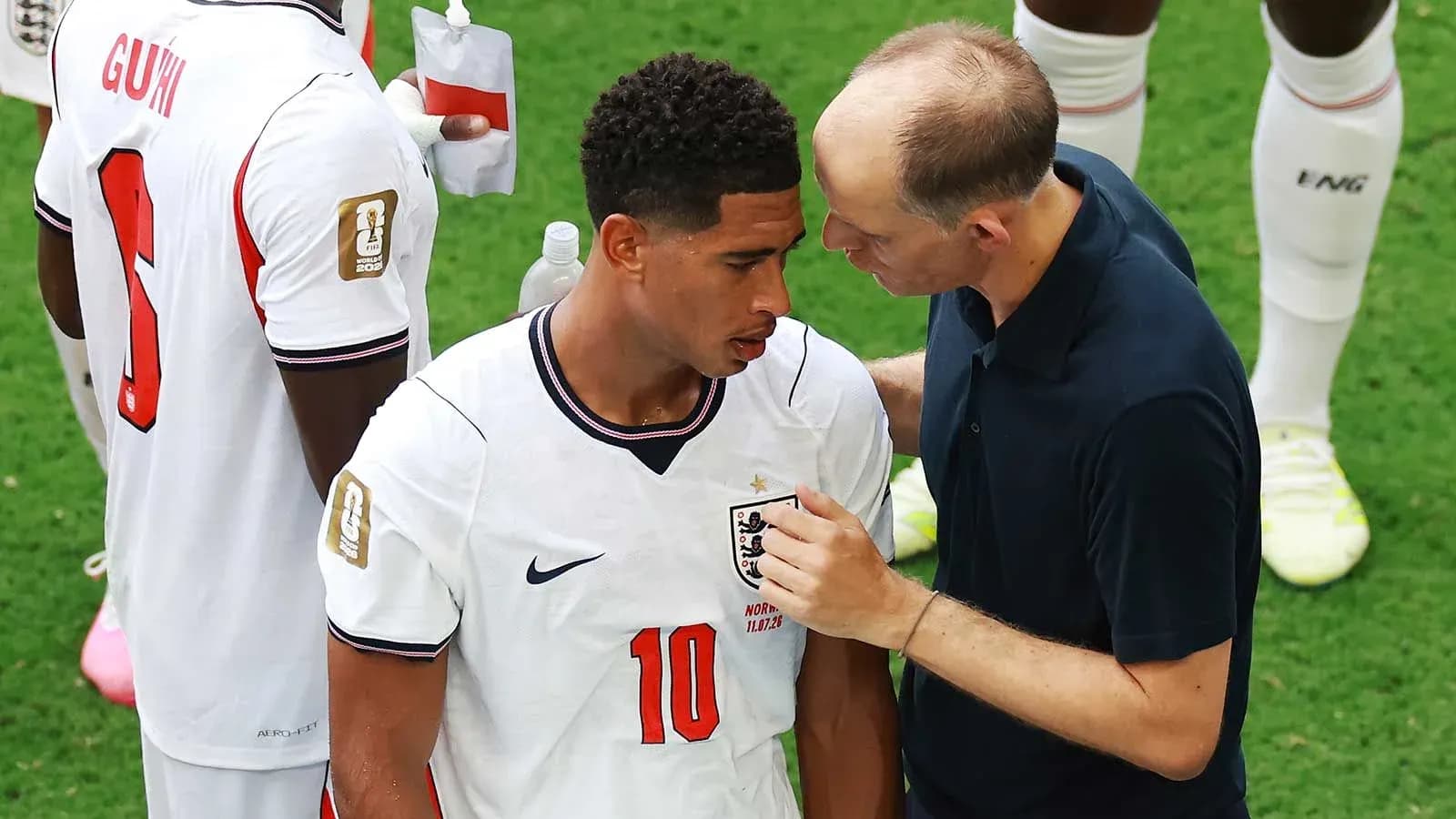
The following day he gathered the squad for a meeting, determined to smother the story before it grew legs ahead of a semi-final against Argentina. No grand showdown, no crisis summit, just a straight conversation to clear the air.
“I wonder who blows these things up, eh?” he told talkSPORT. “So, there is nothing to blow up and if it's blown up, it's blown up in the media, of course.”
The pressure, in his view, had been misdirected. The coach defended Bellingham’s flash of irritation as the natural reaction of a player still running on adrenaline and fumes after 120 minutes.
“What do you expect of a player that just played 120 minutes and gave literally everything,” Tuchel said, explaining how a nuanced assessment had been chopped into a headline. He had called Bellingham “world class,” praised his “world class actions,” then added some criticism. Strip out the praise, leave only the word “sloppy,” and the dynamic changes.
“If you just cut all this and tell him 'oh, your coach said you were sloppy' what do you expect?” Tuchel continued. “Yeah, of course you get the comment that you get and then you try to blow it up and people try to create misunderstandings and cracks where no cracks are.”
That is the core of his argument: coach and player are cut from the same competitive cloth. He pushes; Bellingham pushes back; the edge between them is not a fracture but a shared fuel.
“We come from the same place. We come from being competitive and I am a competitive coach. I push this team to the limit and that was my assessment,” Tuchel said. In his eyes, the question put to Bellingham in the flash interview was “unfair,” because it ignored the compliments and went straight for the criticism. A loaded prompt in a raw moment.
“What do you expect of a player that just gave everything and stands there in front of a microphone in a flash interview?” he asked.
Bellingham’s own words carried a sting. In his post-match comments he appeared to jab at Tuchel’s modest playing background, suggesting “maybe he doesn't know what it's like to play in those kind of conditions” or against a striker of Erling Haaland’s level. It was a rare public hint at a fault line that has followed Tuchel throughout his career: the idea that a coach without an elite playing CV stands on thinner ice.
Tuchel brushed that aside. He does not accept that his authority or tactical sharpness is dulled by the fact he never graced nights like this as a player. He is adamant the bond with Bellingham remains strong, the relationship hardened rather than harmed by the exchange.
“It's just what it is but we're as close as ever, and close more than ever before,” he said. “You can see that on the field. The energy and mentality in camp is excellent in the last days and we are ready to go for it tomorrow.”
Behind that confidence sits a man who still carries the humility of someone who never thought he would stand in an England technical area at a major tournament. Tuchel did not grow up dreaming of drawing up game plans for semi-finals; he dreamt of playing in them.
“I would still like to have a player's career, that was my dream,” the former Chelsea boss admitted. “I never thought about being a coach, never dreamt about being a coach on that kind of level, so I think this is basically the dream. I just feel also on the sideline very humbled, and from time to time it just strikes me on the sideline right before the match 'I couldn't play here on this occasion.'”
He has long since made peace with that. His answer to the old question about playing pedigree is delivered with a light touch but a clear edge.
“I don't think that you have to play [to be a coach]. A funny quote, you don't have to be a horse to be a good jockey!” he joked.
The semi-final against Argentina will tell its own story. If Bellingham drives England on again and Tuchel’s plan bites, the noise around their relationship will fade into the background. If it doesn’t, every word, every glance between touchline and talisman will be dissected all over again.