Turki Al-Sheikh's Bid for Derby County: A Test for English Football's Regulator
English football’s fledgling independent regulator has been thrown straight into the deep end. Its first major examination may come not from a boardroom wrangle in the Premier League, but from a historic club in the East Midlands and a powerful figure at the heart of Saudi Arabia’s entertainment machine.
A New Power at Derby’s Door
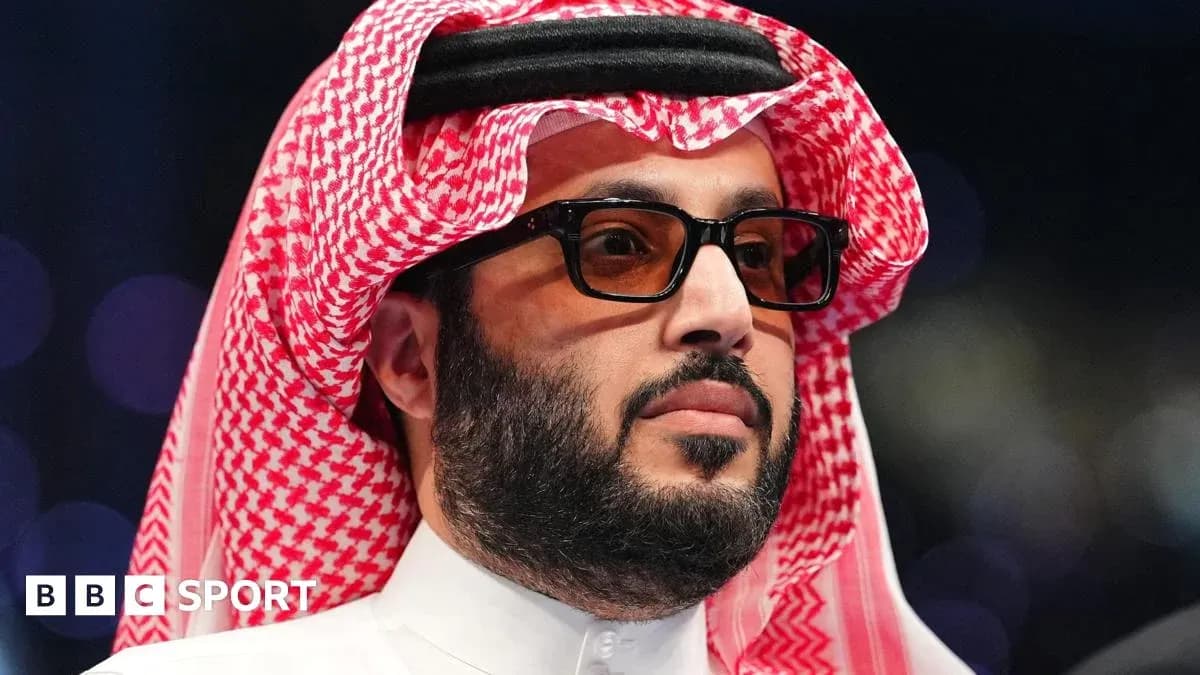
Turki Al‑Sheikh, chairman of Saudi Arabia’s General Entertainment Authority and one of the most influential men in global boxing, is attempting to buy a stake in Derby County. The 44-year-old has already owned clubs in Spain and Egypt. Now he wants in on a Championship side trying to re-establish itself after years of turbulence.
On paper, it looks like a familiar modern football story: a storied club, ambitious ownership, and a billionaire with a taste for spectacle. In reality, it cuts much deeper.
Al‑Sheikh is no distant investor. He is a prominent member of the inner circle around Saudi Arabia’s de facto ruler, Mohammed bin Salman. Human rights organisations have long accused Saudi Arabia of using sport and culture as a glossy front for a state with a grim record on human rights, women’s freedoms, the death penalty and LGBT rights.
That’s why Amnesty International is calling this moment a “defining test” for the Independent Football Regulator (IFR).
A Regulator Under the Spotlight
The IFR, created only last year to safeguard the integrity and future of the English game, now finds itself at the centre of a global debate. It has taken over responsibility for the owners’, directors’ and senior executives’ test from the English Football League when it comes to new investment in Championship clubs.
If Al‑Sheikh wants in at Derby, he needs the regulator’s approval.
Felix Jakens, head of campaigns at Amnesty International UK, did not mince his words. He framed the question starkly: will English football’s new watchdog allow “a senior representative of a government directly implicated in mass human rights violations” to gain control of one of the country’s oldest clubs?
Amnesty insists those questions must not only be asked, but answered in full public view.
The numbers behind their concerns are stark. Amnesty says 356 people were executed in Saudi Arabia last year – a record figure condemned by rights groups. Against that backdrop, Al‑Sheikh’s profile matters. As Jakens put it, Al‑Sheikh “is not a private businessman. He is the chairman of Saudi Arabia’s General Entertainment Authority.”
For the IFR, this is not simply a box-ticking exercise. It is an early verdict on what kind of gatekeeper it intends to be.
Saudi Footprint Growing in English Football
The potential Derby deal would not stand alone. Newcastle United are already majority-owned by Saudi Arabia’s Public Investment Fund, a move that triggered intense scrutiny and protests when it went through. Amnesty says Al‑Sheikh taking a stake in Derby would represent a “significant expansion of Saudi Arabia’s footprint in English football.”
The links do not stop at nationality. Any association between Al‑Sheikh and the backers at Newcastle will inevitably provoke fresh debate about multi-club influence, even if the ownership structures differ.
The Premier League’s own owners’ and directors’ test forbids any person or entity from directly or indirectly determining the management of more than one English league club. While Derby sit outside the Premier League, the direction of travel worries some observers. One powerful network, multiple clubs, overlapping interests: English football has seen how that story can unfold elsewhere.
Derby’s Search for Investment
For Derby, the interest arrives at a delicate moment.
Owner David Clowes, the Derbyshire property developer who rescued the club from administration in the summer of 2022, has been open about the need for new money. Since 2024 he has been looking for investors and has previously indicated he could be willing to sell upwards of 80% of his stake.
Derby are not alone in seeking outside capital. But the identity of this potential investor has split the fanbase in a way few routine takeovers ever do.
Some supporters see a chance to supercharge a club that has been away from the Premier League for almost two decades. Others look at Saudi Arabia’s record and feel a knot in the stomach.
A Fanbase Pulled in Two Directions
Rams fan Nick Webster summed up the divide during a BBC Radio Derby Sportscene at Six discussion. He spoke of a support that will not be able to “skirt around” the ethical fault line running through this proposed deal.
On one side, there is excitement at the prospect of “billions” potentially flowing into the club. On the other, deep discomfort at the human rights concerns and the wider political baggage. Then there are those stuck in the middle, uneasy but tempted, aware that modern football rarely offers clean choices.
It is not a theoretical debate. It is about what kind of club Derby County want to be, and what compromises supporters are prepared to live with to chase promotion and stability.
The Showman’s Track Record
If there is one thing Al‑Sheikh has shown in boxing, it is a flair for the grand stage.
Derby fan Sam Jones, a boxing manager who has worked closely with Al‑Sheikh, felt “excited straight away” when he heard of the Saudi supremo’s interest in the Rams. To Jones, the man he knows is a deal-maker who turns wild concepts into real events.
He points to the extraordinary show Al‑Sheikh staged at the Pyramids of Giza in May. That card was headlined by Oleksandr Usyk’s world title fight with Rico Verhoeven and featured Jones’s own fighter, Jack Catterall, on the undercard. Catterall walked away with the WBA “regular” welterweight belt at the foot of one of the world’s great wonders.
Jones described arriving to find a sandstorm whipping across the venue half an hour before Catterall’s ring walk. Chaos in the desert. Yet the event went ahead, a surreal blend of ancient backdrop and modern sporting theatre. For Jones, that night encapsulated Al‑Sheikh’s “serious ambition” and willingness to push boundaries.
His message to Derby fans is simple: if Al‑Sheikh brings even a fraction of that energy and resource to Pride Park, they “need to be very excited.”
A Defining Call
For now, there is silence from the key players. Derby County have declined to comment. So have the IFR, the English Football League and Al‑Sheikh’s representatives.
Behind closed doors, though, the stakes are obvious. This is not just about one investor and one club. It is about whether English football’s new regulator is prepared to draw a line on state-linked power, or whether the sport continues down a path where geopolitical muscle and domestic tradition collide.
Derby want a route back to the top flight. Turki Al‑Sheikh offers money, profile and a proven taste for the spectacular. Amnesty International offers a warning.
The decision that follows will say as much about the future character of English football as it will about the fate of a club once known simply as the Rams of the Baseball Ground.