Uncertainty Surrounds Carrick as Manchester United Eye Future
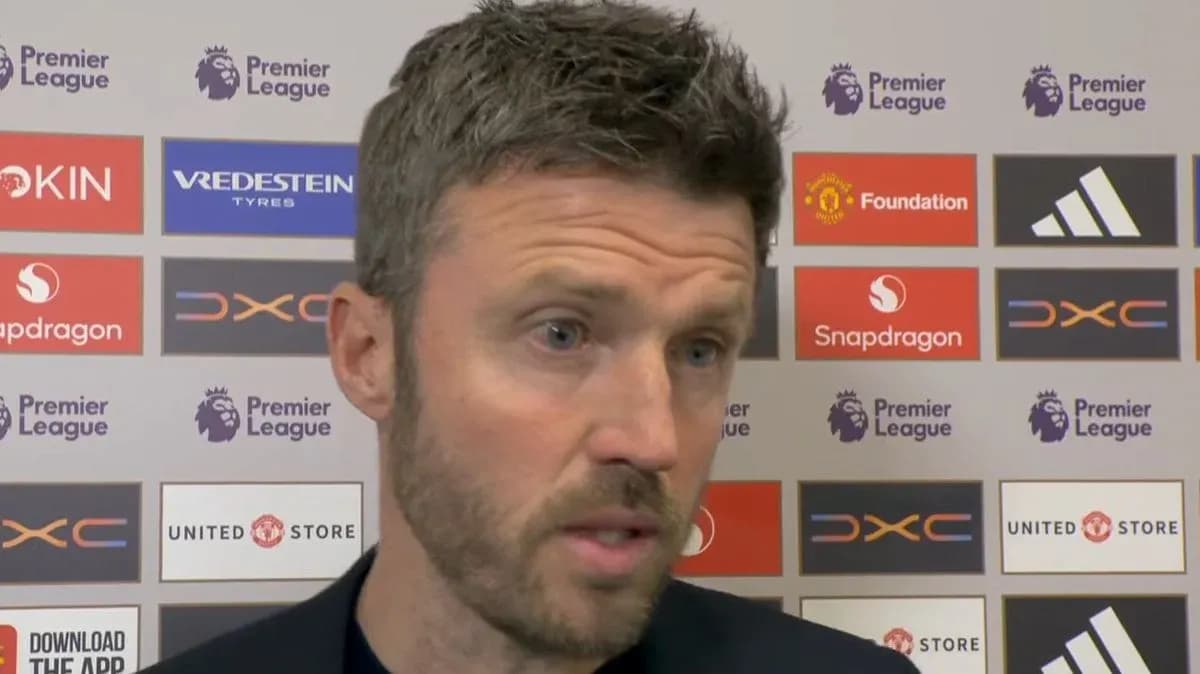
Manchester United are back in the Champions League, the table shows progress, and a fourth straight league win at Sunderland on Saturday would all but lock in third place. On paper, Michael Carrick has delivered.
Inside Old Trafford, the mood is very different.
Sir Jim Ratcliffe and his football operation have been consistent on one point: a permanent manager will be appointed at the end of the season. That stance has not shifted, no matter how many points Carrick has banked or how calm he has looked in the dugout. United need every league position they can grab to squeeze out extra prize money for a crucial summer, yet no one can say with certainty whether the man guiding them there will be trusted to spend it.
The result is a strange tension. United push for the line, but the man leading the charge is coaching under a cloud.
Neville, Keane, Scholes – and the Nagelsmann nod
That uncertainty has spilled into the club’s most famous alumni. On the latest episode of the Stick to Football podcast, Gary Neville found himself on the receiving end rather than asking the questions.
Neville opened the debate in familiar fashion: “The big question is, what do Manchester United do about the manager, Michael Carrick? The question is, from people who support the appointment of Michael, for people who are more nervous, the question is who would you put in?”
Roy Keane pounced. The Republic of Ireland great turned to his former captain with a pointed look. “What’s your vibes because, you know, you are on the inside.”
Before Neville could even draw breath, Paul Scholes cut across him. “I know what he is going to say... [Julian] Nagelsmann. He says Nagelsmann every time I see him.”
The name has hovered around United’s conversations for months. Julian Nagelsmann, the Germany head coach, is exactly the kind of profile modern superclubs covet: young, tactically sharp, schooled at Hoffenheim, RB Leipzig and Bayern Munich. Neville reeled off that pedigree himself.
But the reality bites. Nagelsmann is contracted to lead Die Mannschaft through to after Euro 2028, with World Cup 2026 already on his horizon. From a practical standpoint, the idea of him walking into Carrick’s seat any time soon looks remote.
Neville bristled at the suggestion he was feeding that narrative with some secret knowledge from the corridors of Old Trafford. “I don’t know Nagelsmann. I’ve not spoken to anybody at Manchester United about him at all, that’s an absolute fabrication,” he said. He stressed that his admiration for the German is based purely on merit: a decade at clubs built on strong coaching cultures, not a whisper from a boardroom.
To Neville, Nagelsmann is simply his ideal candidate if United decide Carrick is not the long-term answer. To those listening – fans and even the old dressing-room allies sat next to him – the question lingers: is this just punditry, or does he sense the direction of travel?
For Carrick, it hardly matters where the rumours come from. They all point the same way – towards a summer decision that may not include him.
Carrick’s frustration over FA Youth Cup stage
Away from the noise around his own job, Carrick has been vocal on another issue close to his heart: youth football and the stage it deserves.
Manchester United’s under-18s face Manchester City’s youngsters next Thursday in the FA Youth Cup final. It is the showcase fixture for the next generation, a night that has traditionally belonged under the big lights of a main stadium.
Initially, City’s Joie Stadium – home to their development and women’s teams – was pencilled in to host the final. Once the derby pairing was confirmed, many supporters hoped for an upgrade to the Etihad Stadium, with its 53,400 seats and big-arena feel. City declined, prioritising work on the North Stand ahead of the final weekend of the Premier League season.
United then stepped in. Old Trafford was offered as an alternative, a chance to turn a youth final into a major event in front of a far larger crowd. City turned that down as well, opting to keep the game at the 7,000-capacity Joie Stadium.
Carrick did not hide his disappointment.
“I’m disappointed, to be honest,” he admitted. “I think getting to the Youth Cup final always seems to have been a thing where you play at the main stadium and it’s such a showcase event for players of that age group.
“So we’re disappointed. I think I’ve had some amazing memories, some of my best memories, in that competition of playing with your close mates and it’s a shame that it hasn’t worked out for whatever reason.
“But listen, for the boys to go there... it’s a fantastic game, it’s a great opportunity. I’m sure the game itself will be good, and I’m looking forward to going and supporting the boys.”
His words cut to the core of what United still like to believe they are: a club built on youth, on big nights for young players, on stages that feel bigger than the age on the teamsheet. The decision to keep the final at a smaller venue denies that spectacle, even if the football itself will not lose its edge.
Carrick will be there, watching the next wave, even as questions swirl about whether he will be the one shaping their path into the first team.
United head to Sunderland chasing a fourth straight win, Champions League money, and a stronger bargaining position in the summer market. Above it all sits the same unresolved issue: when Ratcliffe and his team finally make their call, will Carrick’s steady work count for enough, or is United already drifting towards a different vision on the touchline?