U.S. Men's National Team Advances Without Pulisic
SEATTLE — No Christian Pulisic. No problem — at least for now.
On a cool Friday night in the Pacific Northwest, the U.S. men’s national team punched its ticket to the World Cup knockout rounds with a 2-0 win over Australia, a performance that said as much about the squad’s growing depth as it did about the result itself.
This time, the Americans didn’t need their biggest star. They needed their bench, their balance, and a 21-year-old making his own name on the world stage.
Life without Pulisic
Pulisic, the AC Milan forward and heartbeat of this U.S. side, watched from the sidelines with a calf injury, his 33 international goals and big-tournament aura left out of the lineup. In previous eras, that might have spelled trouble. The U.S. has not always been a team that could casually absorb the loss of its talisman.
Not this group.
A deep roster, rotated and recalibrated, did enough to clinch a place in the knockouts after only two matches — a first for the U.S. as World Cup hosts. Back in 1994, the last time the tournament came to American soil, the team squeaked through as one of the best third-place finishers before bowing out to eventual champions Brazil in the round of 16.
This time, qualification feels less like a surprise and more like a statement.
Early pressure, early break
The tone was set early down the left flank. In the 11th minute, Folarin Balogun — already sharp after his two-goal showing in the 4-1 win over Paraguay on June 12 — went to work.
Balogun surged down the sideline, driving at the Australian back line with the kind of directness that forces mistakes. His low centering ball sought out Ricardo Pepi, starting in Pulisic’s place, making the right run into the box.
Pepi never touched it.
Australia defender Cameron Burgess did, and that was enough. The ball glanced off him and skipped past his own goalkeeper, an own-goal that gave the U.S. a 1-0 lead and control of the match’s tempo.
Sometimes pressure doesn’t need a perfect finish. It just needs the ball in the right area and a defender in the wrong place.
Freeman’s moment
The breakthrough settled the U.S. and stretched Australia. The Socceroos tried to push higher, but the Americans looked comfortable managing the game, recycling possession, and picking their moments to break.
Then came the moment that will live far longer than the scoreline.
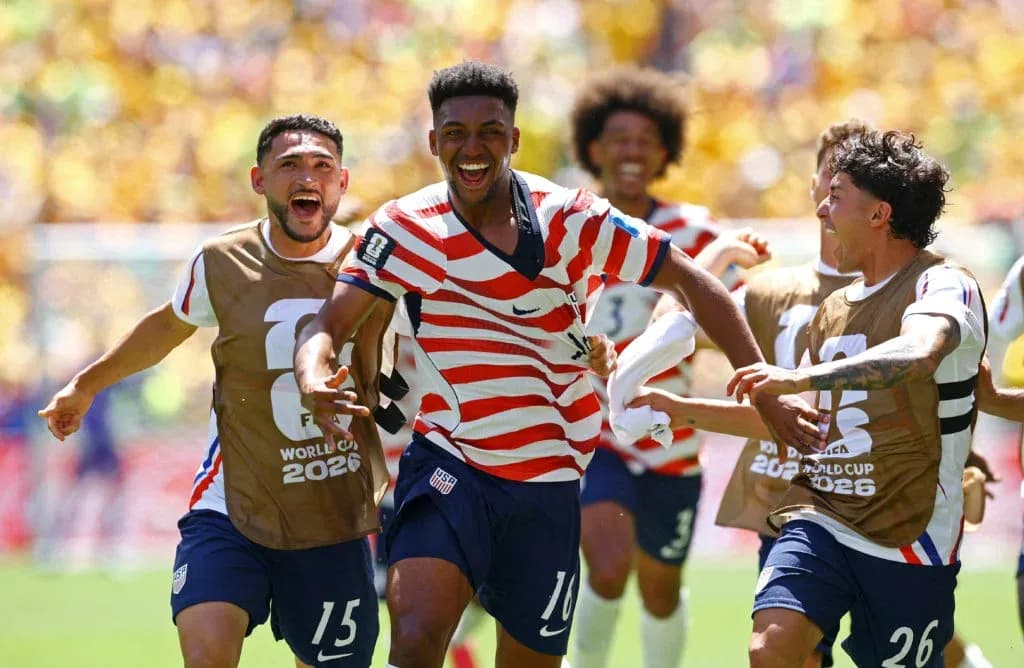
In the 43rd minute, from a set piece, the youngest player on the team stepped into the spotlight. Alex Freeman, just 21 and already carrying the weight of a famous surname as the son of Super Bowl champion Antonio Freeman, attacked a loose, deflected effort from Sergiño Dest.
The ball had ricocheted inside the box, chaos for defenders, opportunity for anyone brave enough to commit. Freeman didn’t hesitate. He rose, met it cleanly with his head, and powered it home for a 2-0 lead — his first career World Cup goal.
The stadium roared. The celebration paused, briefly, for a video review. The confirmation only added to the release. A young defender with a football legacy in his blood had just carved his own line in the family history.
A different kind of U.S. team
From there, the U.S. controlled the night. Australia chased the game but never truly shook the Americans out of their rhythm. The own-goal had opened the door; Freeman’s header slammed it shut.
What lingers from this performance isn’t just the score. It’s the sense that this U.S. side can bend without breaking when its star man is unavailable, that it can call on players like Balogun, Pepi, Dest, and now Freeman to carry the load.
In 1994, the U.S. was a host nation learning to belong. This time, with a knockout place secured after two matches and key contributors still to return, the question is no longer whether they belong.
It’s how far this deeper, bolder version of the U.S. can go once Christian Pulisic is back on the pitch.