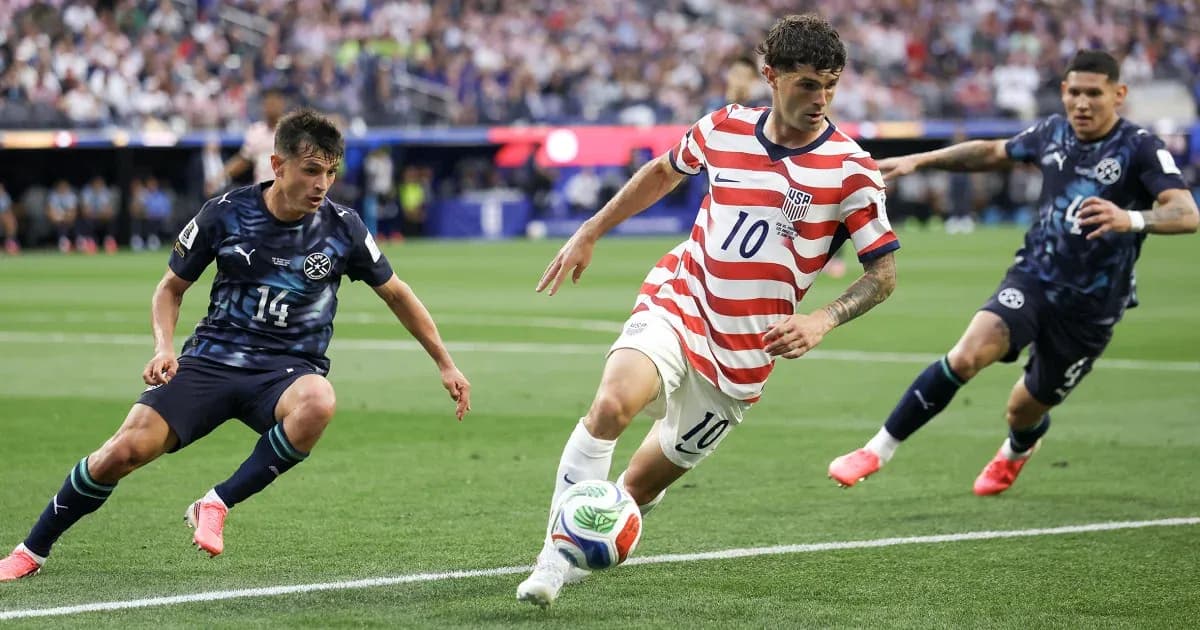
U.S. Soccer: Building on World Cup Success Against Australia
For the U.S., the answer this week has not been to bask in the glow of Paraguay. It has been to rewind the tape to a bruising night against Australia seven months ago, when nothing felt easy and Mauricio Pochettino stormed into the dressing room at halftime of a 1-1 friendly and let his players have it.
“They come and they fight,” he snapped in a moment later released on video. “When are we going to fix that?”
The U.S. fixed it that night, grinding out a 2-1 win. Now comes the sequel that actually counts.
On Friday, the same opponent stands between the Americans and a place in the knockout round. Both teams opened with victories — the U.S. with that 4-1 dismantling of Paraguay, Australia with a measured 2-0 win over Turkey — and the stakes are simple: win, and you’re through.
From rant to identity
Sebastian Berhalter still hears that halftime tirade in his head. It wasn’t just noise. It was a line in the sand.
“I think one is that we’re American, we don’t take s---,” the midfielder said this week, asked what stuck from that night. “I think that’s something that [Pochettino] really put in, and you know, he’s, even though he’s Argentinian, he has that mindset of like, ‘Look, this is what we do, and this is who we are, and this is what America is about.’”
That edge, Berhalter added, is not a slogan. It’s training-ground reality. Pochettino “really drills” it into them.
Seven months on, the context could hardly be more different. The U.S. has just produced a statement World Cup performance, a 4-1 opening win that matched the largest margin of victory in the nation’s tournament history. Folarin Balogun scored twice, the first American to hit a World Cup brace since 1930. The scoreline was emphatic, the football flowing.
Pochettino’s message afterward? Pride, yes. But not permission to exhale.
Haji Wright summed it up: the coach told them he was “proud,” then immediately shifted the focus back to the grind of the group. One game, three points, nothing more.
Tyler Adams has lived enough cycles with this team to know how quickly the narrative can swing.
“There’s been moments throughout the process where things weren’t going amazing,” the midfielder said. “Now all of a sudden, some people consider [our play] amazing, whatever it is, but we’ve stayed completely humble in our approach to every single game and trusted the process of what we’re going through.”
The message is clear: enjoy Paraguay, remember Australia.
Australia bring the bruises
The Socceroos did not surprise the U.S. in that friendly; they simply refused to back off. They pressed, they tackled, they turned a non-counting game into a test of nerve and body language.
Nothing about them has softened since.
“They’re tough to break down, they’re dangerous on counterattacks, they have good players at the top of the pitch, and they were able to be effective and damage Turkey,” Wright said, reflecting on Australia’s 2-0 win on Saturday.
Then came the warning shot.
“I think Turkey kind of came into the game a bit overconfident, and I think we won’t make that same mistake.”
That is where Pochettino’s old rant and this new World Cup reality collide. The U.S. has the momentum, the attacking verve, the numbers on the scoreboard. Australia has the scars to prove they relish the kind of game that can derail a favorite.
The Americans know what’s coming: second balls, aerial duels, counters launched in two passes, and a referee’s whistle that might be slow to arrive.
Pulisic worry lingers
Only one cloud drifted over the U.S. after Paraguay. It carried the name everyone in the squad and back home watches first: Christian Pulisic.
He had been electric in the first half, his runs and passing carving open Paraguay and directly setting up the first two U.S. goals. Then he didn’t emerge for the second.
Pochettino explained that Pulisic had taken a minor knock in the days before the match and was kicked again in his left leg during the first half. At the break, the star winger simply could not warm up properly. The decision was made.
Since then, Pulisic has been training separately from the main group, Tim Weah said. No dramatic declarations, no guarantees. Just the sight of the team’s most influential attacker working off to the side as Australia looms.
Asked on Thursday, Pochettino kept it deliberately vague: “We’ll see.”
Weah did not bother hiding his concern. “I’m just praying to God that he feels 100% fit,” he said.
Adams, captain’s armband or not, stepped in to steady the room.
“Christian will be ready, everyone, let’s relax,” he said. “He’ll be fine.”
The truth will reveal itself when the teamsheets drop. With Pulisic, the U.S. carries a different kind of threat between the lines. Without him, the test of depth and identity becomes sharper, the margin for error smaller.
A different kind of benchmark
This World Cup has already given the U.S. a historic marker: four goals in an opener, a long-standing record matched, a striker breaking a scoring drought that stretched back to the game’s infancy in the country.
But the more telling benchmark may come against Australia, not Paraguay.
Can this team take a punch and hit back? Can it marry the slick football of its best days with the uncompromising edge Pochettino demanded in that halftime rant?
The last time these sides met, the U.S. answered those questions in a friendly that didn’t count. On Friday, the same questions return — only now, the reward for the right answers is a ticket to the knockout rounds.