Valencia vs Celta Vigo: A Tactical Analysis of the 3–2 Clash
The Mestalla had the feel of a crossroads fixture, and the numbers underline why. Fourteenth‑placed Valencia, a side whose season has oscillated between brief surges and worrying slides, hosted sixth‑placed Celta Vigo, one of La Liga’s more efficient travellers. Over 90 minutes that finished 2–3, the clash became a study in contrasting identities: a home team still trying to stabilise its defensive structure against a visiting side built to exploit space and punish lapses.
Across 30 league matches to date, Valencia’s statistical profile is clear. They score 1.1 goals per game and concede 1.5, with a noticeably tighter operation at Mestalla: 21 scored and 18 conceded in 15 home outings. Celta arrive with a more balanced, upward‑looking profile—44 scored, 37 conceded, and a robust away record of seven wins from 15, backed by 21 goals on the road. Where Valencia lean on moments, Celta’s season suggests a more repeatable formula.
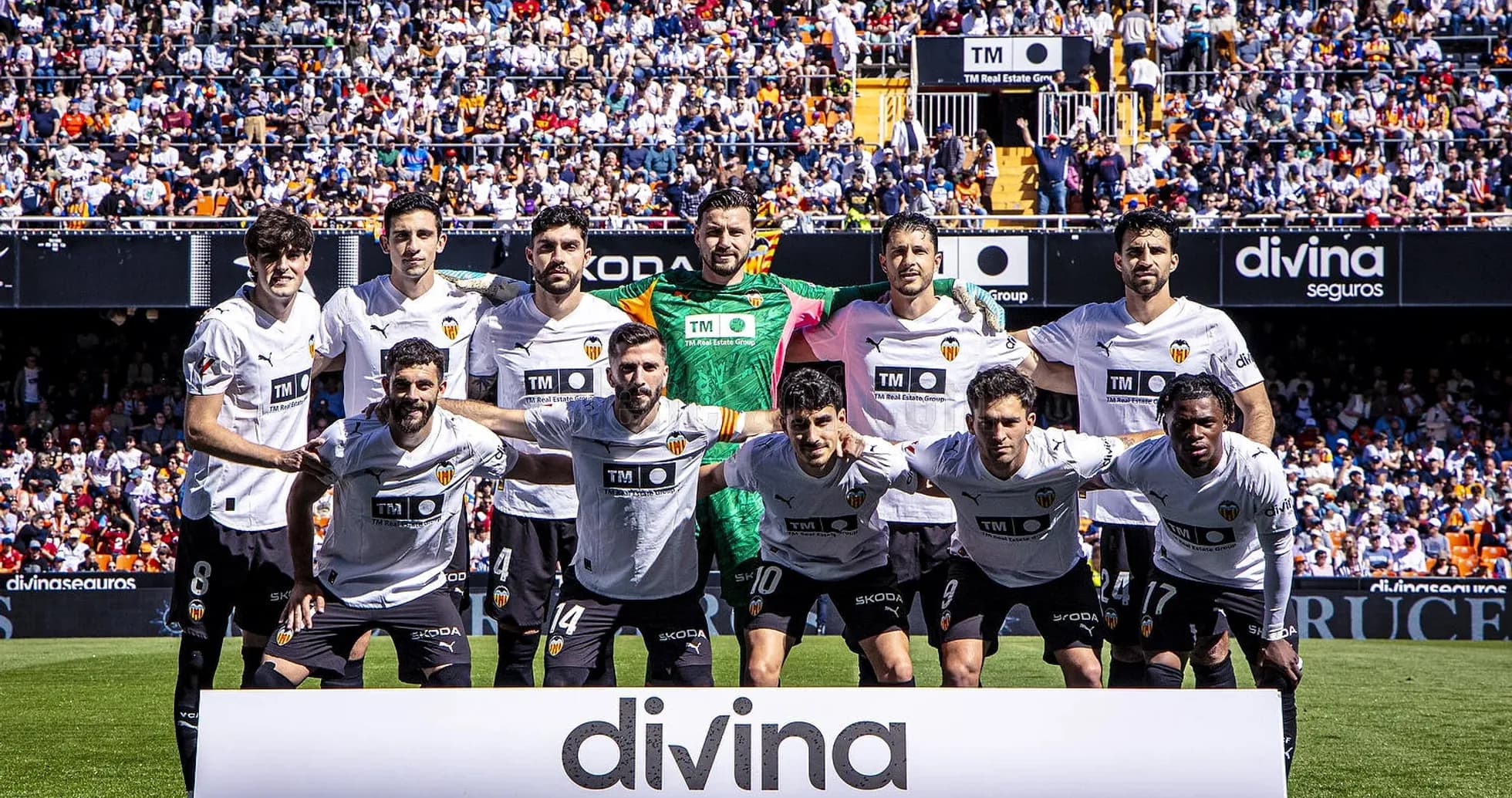
Carlos Corberan doubled down on that by reverting to his most-used 4‑4‑2, a shape Valencia have deployed 17 times this campaign. Claudio Giraldez answered with Celta’s signature 3‑4‑3, the platform for 23 league starts and the backbone of their away efficiency. On paper it was a classic structural duel: Valencia’s two banks of four trying to compress the middle third, Celta’s front three and wing‑backs stretching and pulling at those lines.
The Butterfly Effect: Absences and Rewired Plans
Both coaches walked into this fixture with important absentees that reshaped their tactical options.
Valencia’s list was long and defensive. J. Agirrezabala (knee), J. Copete (ankle), M. Diakhaby (muscle) and D. Foulquier (knee) were all ruled out. The consequence was a back four that almost picked itself: S. Dimitrievski in goal behind U. Nunez, C. Tarrega, E. Comert and José Gayà. With Diakhaby and Copete unavailable, Valencia were short of aerial dominance and recovery pace at centre‑back; without Foulquier, there was no natural defensive full‑back to rotate in if Corberan wanted to flip to a back five mid‑game.
Celta’s injury sheet cut just as deep, but higher up the pitch. Iago Aspas’ Achilles tendon injury removed their most experienced reference point between the lines, while the absences of M. Ristic, M. Roman, C. Starfelt and M. Vecino stripped depth from both flanks and midfield. Starfelt’s injury, in particular, forced Giraldez to lean on J. Aidoo and J. Rodriguez either side of M. Alonso in the back three, a combination that skews more towards front‑foot defending than calm box management.
Discipline also loomed in the background. Valencia’s season-long yellow card distribution spikes sharply late on: 25% of their bookings arrive between 76–90 minutes, with significant clusters between 46–60 and 61–75 (both 18.33%). Celta’s curve is flatter but still peaks between 46–60, 61–75 and 76–90 (each 20.69%). In other words, both sides tend to live on a disciplinary tightrope precisely when legs tire and matches open up—exactly the phases that decided this 3–2 away win.
The Chess Match: Hunters, Shields and Engines
In attack, this was billed as Hugo Duro versus the collective Celta back line. Duro came in as Valencia’s leading scorer with nine league goals from 29 appearances, a striker who marries relentless duelling (210 contests, 84 won) with penalty‑box timing. His flawless record from the spot this season (one scored from one) adds another threat profile: draw contact, punish from 12 yards.
Celta’s “shield” against him was not just the back three, but the entire away defensive unit that has conceded only 16 goals in 15 away matches—1.1 per game, matching their away scoring rate. Aidoo’s aggression stepping into midfield, M. Alonso’s reading of the game on the left of the three, and the work of wing‑backs O. Mingueza and S. Carreira in tracking wide runs were all designed to deny Duro clean service from the flanks.
On the creative axis, Luis Rioja was Valencia’s primary engine. With five assists and 30 key passes this season, Rioja is ranked 17th in La Liga for rating among the top assist providers and operates as the left‑sided midfielder in the 4‑4‑2. His 55 dribble attempts, 30 successful, and 82 duels won from 178 underline his role as the carrier who can tilt the pitch. The plan was obvious: use Rioja to isolate Celta’s right side—often J. Rodriguez stepping out and Mingueza pushing on—forcing the back three to slide and opening channels for Duro and L. Ramazani.
Celta, missing Aspas’ orchestration, looked instead to share the creative burden across their front three and double pivot. F. Jutgla and P. Duran were tasked with pinning Valencia’s centre‑backs, while H. Alvarez could drift into half‑spaces to link with H. Sotelo and I. Moriba. Without a pure No. 10, Celta’s playmaking was more about collective movement and rotations than a single conductor.
Behind them, the enforcer role was diffuse. Valencia’s Gayà, one of the league’s most card‑prone defenders with six yellows and a red this season, had to balance his usual aggression with the responsibility of leading the back line. His 54 tackles and 15 interceptions speak to how often he steps into danger zones; his disciplinary record is the cost. On the Celta side, the midfield quartet—Mingueza, Sotelo, Moriba, Carreira—shared the screening, with Moriba in particular needing to time his interventions to avoid cheap bookings in those late‑game windows where Celta’s yellows spike.
From the bench, both managers had clear game‑changer vectors. Corberan could turn to A. Danjuma, U. Sadiq or D. Raba to flip the front line into a more transition‑heavy 4‑2‑3‑1, while Pepelu and L. Beltran offered the possibility of reinforcing central control or switching to a double pivot. Giraldez had Borja Iglesias in reserve—Celta’s top scorer with 11 league goals, 22 shots on target from 34 attempts and a flawless three‑from‑three penalty record. [IN] came on for [OUT] involving Iglesias was always likely to tilt the match towards a more direct, penalty‑box focused Celta, especially against a Valencia side that concedes 1.5 goals per match overall.
Statistical Verdict: Why It Tilted Celta’s Way
Strip away the drama of a 3–2 away win and the underlying dynamics hold. Celta arrived with a stronger overall goal difference (+7 to Valencia’s –11), better form (44 points to 35), and an away profile that mirrors Valencia’s home returns but with a sharper cutting edge. Both sides boast eight clean sheets this season, but Celta’s five away shutouts underline a defensive unit that travels well.
The decisive factor was always likely to be how Valencia’s vulnerable defensive metrics intersected with Celta’s away scoring. Valencia concede 1.2 goals per game at home; Celta score 1.4 per game away. In a match where Valencia’s discipline historically frays after the hour and Celta’s yellow‑card curve also spikes between 46–90 minutes, the expectation was for a stretched, high‑event second half. That is exactly the landscape Celta’s 3‑4‑3 is built to exploit.
In the end, Valencia’s 4‑4‑2 offered threat—particularly through Duro’s movement and Rioja’s delivery—but could not neutralize Celta’s multi‑layered attack or their capacity to manage away fixtures. The numbers pointed towards a narrow, high‑scoring contest tilted in the visitors’ favour; the 3–2 scoreline simply gave that prognosis a vivid, Mestalla‑shaking form.