Valencia Defeats Sevilla 2-0 in La Liga Showdown
At Estadio Ramón Sánchez Pizjuán, Valencia defeated Sevilla 2-0 in La Liga’s Regular Season - 29, in a match defined by control without the ball and ruthless first-half finishing. Both sides lined up in a 4-3-3, but Carlos Corberan’s Valencia executed a compact, counter-attacking plan that repeatedly exposed Sevilla’s structural flaws in rest defense. Despite Sevilla’s 59% possession and higher passing volume, Valencia’s superior xG (1.81 to 0.4) and sharper movements in the front three turned a relatively even shot count into a comfortable away win built on efficiency and defensive discipline.
Scoring Sequence & VAR
The opening exchanges followed the expected pattern: Sevilla circulating from the back through N. Gudelj and K. Salas, pushing fullbacks G. Suazo and C. Azpilicueta high, while Valencia sat in a mid-block 4-3-3 with J. Guerra and G. Rodriguez ready to spring forward.
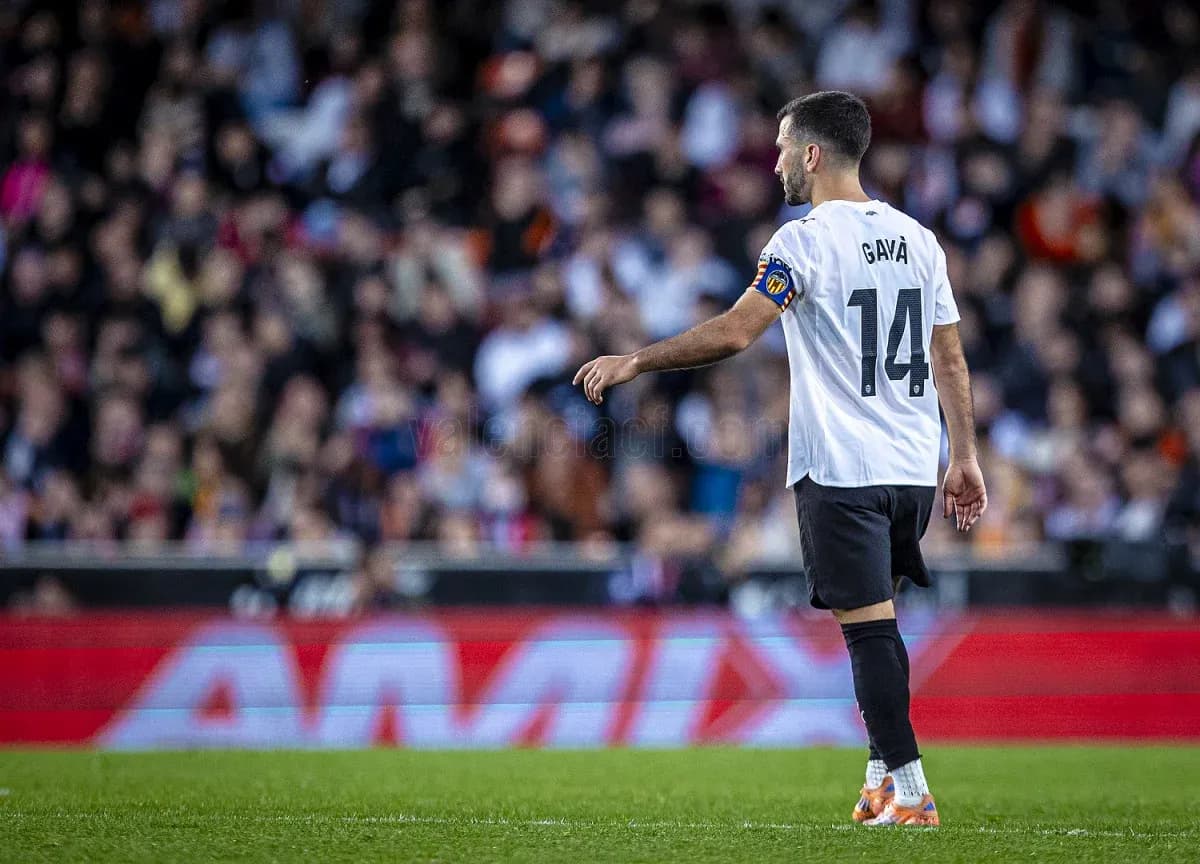
The first key structural crack appeared before the goals. At 26', Valencia lost J. Gaya, and At 26', J. Vazquez came on for J. Gaya. This forced a reshuffle on the left side but did not disrupt Valencia’s compactness; instead, it nudged them even deeper, sharpening their counter-attacking focus.
Sevilla’s frustration surfaced at 28' when Lucien Agoumé received a yellow card for a foul, a sign of their difficulty stopping Valencia’s transitions once the first line was broken.
At 37', Matias Almeyda reacted to early imbalances, and At 37', A. Adams came on for C. Azpilicueta, pushing R. Vargas and A. Sanchez into even more aggressive positions. The change, however, immediately preceded Valencia’s breakthrough. At 38', H. Duro struck for 1-0, punishing Sevilla’s exposed central corridor after a direct attacking move that bypassed their advanced fullbacks and left the center-backs isolated.
As Sevilla tried to regain composure, Valencia struck again. At 45', L. Ramazani made it 2-0, finishing a move created by L. Rioja’s assist from the left. The sequence underlined Valencia’s clear attacking pattern: quick wide progression, aggressive runs into the box, and precise final actions. The score was 0-2 at the break.
There were no VAR interventions or disallowed goals; the scoreline reflected Valencia’s clarity in the final third versus Sevilla’s sterile dominance of the ball.
Tactical Shifts & Personnel
Almeyda went for a triple structural reset at half-time to salvage the game. At 46', B. Mendy came on for L. Agoume, At 46', I. Romero came on for A. Sanchez, and At 46', J. A. Carmona came on for J. Sanchez. The idea was clear: fresh legs between the lines with Mendy, more direct threat with I. Romero, and added aggression from Carmona on the right.
This reconfiguration pushed Sevilla into an even more front-loaded 4-3-3 in possession, with fullbacks high and interiors stepping into the half-spaces. Sevilla saw 5 of their shots blocked by the Valencia defense. That line captures the second-half dynamic: Sevilla camped in Valencia’s half, but the visitors’ box defending was relentless. C. Tarrega and E. Comert repeatedly stepped out to block, while the midfield three collapsed quickly into the area to deny shooting lanes.
On the Valencia side, Corberan managed the game through measured rotations rather than structural overhauls. At 66', L. Beltran came on for L. Ramazani, and At 67', U. Sadiq came on for H. Duro. Beltran’s arrival shifted Valencia towards a more conservative 4-4-2/4-5-1 without the ball, with extra density in midfield to absorb Sevilla’s pressure. Sadiq offered an outlet to hold long clearances and slow the tempo.
Sevilla’s final attacking push came with further changes. At 71', Oso came on for R. Vargas, and At 73', Castrin came on for D. Sow. These moves aimed to add physical presence and crossing threat, but they also slightly diluted Sevilla’s technical quality between the lines. The result was more volume than clarity: 13 total shots, but only 2 on goal, and Valencia’s block line remained in control.
Corberan closed the game with further energy and control substitutions. At 80', D. Lopez came on for A. Almeida, adding fresh legs to press Sevilla’s build-up. At 89', Pepelu came on for J. Guerra, reinforcing Valencia’s ability to manage possession in the dying minutes and break Sevilla’s rhythm.
Disciplinary moments further shaped the emotional tone. Agoumé’s first-half yellow constrained Sevilla’s aggression in midfield, making them more hesitant in counter-pressing. Late on, at 90+5', Neal Maupay received a yellow card for argument, encapsulating Sevilla’s frustration as their sterile dominance yielded no breakthrough. On Valencia’s side, Lucas Beltrán’s yellow at 74' came from a foul that underlined their commitment to disrupting Sevilla’s tempo, but it did not significantly alter their compact shape.
Throughout, Sevilla’s high fullbacks and aggressive front three left them vulnerable to the same transitions that produced both first-half goals. Even after adjustments, their rest defense never fully stabilized, while Valencia’s low block and sharp counters remained coherent from start to finish.
The Statistical Verdict
The numbers align tightly with the tactical story. Sevilla had more of the ball (59% possession), more passes (494 to 351), and better pass accuracy (84% to 76%), yet their xG of 0.4 reveals how little danger they created from that control. Valencia, with only 41% possession and 9 total shots, produced an xG of 1.81, turning fewer attacks into far higher-quality chances.
Both goalkeepers made 2 saves, and neither side’s goals prevented metric moved the needle, so the difference lay in shot quality and defensive organization. Valencia saw 4 of their shots blocked by the Sevilla defense, but unlike Sevilla, they consistently reached high-value zones inside the box (8 shots in the area versus Sevilla’s 7, but with far better finishing and timing).
Valencia prevailed through superior efficiency and defensive resilience: they converted their best chances, protected the central lane ruthlessly, and managed the game state intelligently through substitutions. Sevilla’s possession-heavy 4-3-3 lacked penetration and balance, leaving them with sterile control and no route back once Valencia’s first-half counters had already decided the contest.