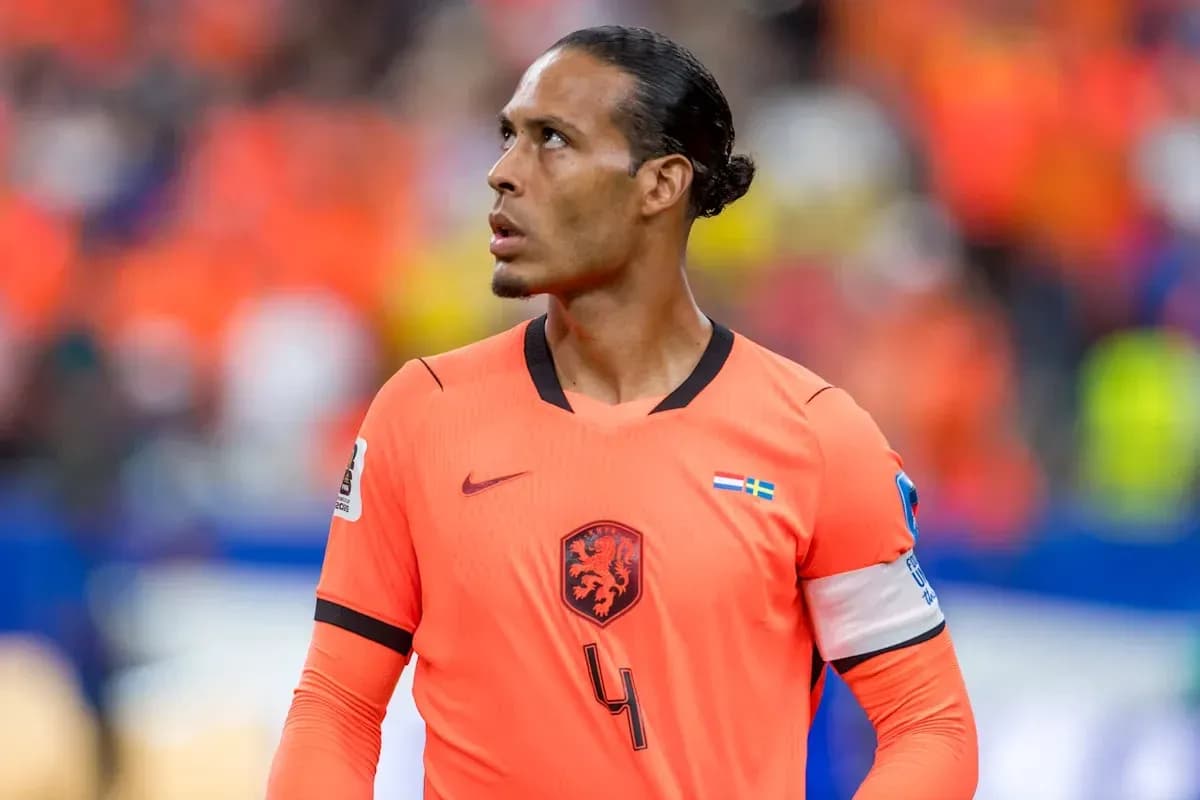
Virgil van Dijk Faces Criticism After Netherlands' World Cup Exit
Virgil van Dijk has rarely looked as exposed as he does now – not on the pitch, but in the court of opinion back home.
The Netherlands’ World Cup exit at the hands of Morocco, sealed in the cruelty of a penalty shootout after a stoppage‑time equaliser, has triggered a wave of anger and soul‑searching. At the centre of it stands the national captain, accused by one of the country’s loudest voices of betraying the very identity of Dutch football.
Driessen’s blistering verdict
De Telegraaf columnist Valentijn Driessen did not bother with nuance. In a scathing piece that captured the fury of a nation stunned by the manner of its elimination, he trained his sights on both Van Dijk and departing head coach Ronald Koeman.
“Ronald Koeman and Virgil van Dijk have betrayed everything our national team stands for,” he wrote, turning a tactical debate into an indictment of leadership.
Driessen argued that the shift to a back three during the tournament stemmed from Van Dijk’s failure to marshal the defence properly in the group stage. In his view, the captain’s inability to organise those around him forced the coach into compromises that cut against long‑held Dutch principles.
When Morocco’s late equaliser arrived, Driessen was even less forgiving. He pinned responsibility on Van Dijk for losing his marker in the dying moments, accusing him of allowing the decisive run that dragged the tie into extra time. The conclusion was brutal: the defender’s “time is up.”
For a player who has come to symbolise defensive authority for both club and country, it was an extraordinary public stripping‑back of reputation – and a raw reflection of how much this World Cup exit stings in the Netherlands.
One lapse, one turning point
The images will linger. Morocco surging forward in stoppage time, the cross delivered, the run made, the finish applied. Van Dijk, usually a picture of calm control in those moments, found himself on the wrong side of a decisive action.
His career has been built on reading danger before it develops, on suffocating attacks with positioning rather than last‑ditch heroics. Here, at the worst possible moment, that instinct deserted him.
Yet to reduce an entire campaign to one defensive misstep strips away context. Knockout football lives on the edge; games swing on inches, on a single duel, on a brief loss of concentration. The Dutch had chances to kill the tie long before Morocco’s late surge. They did not take them.
For much of the night, Van Dijk did what he has done for years: headed danger clear, won his battles in the air, and helped keep Morocco at arm’s length. The equaliser did not arrive after a match spent drowning under pressure; it came after long periods in which the Netherlands had managed the contest, only to let it slip at the death.
That does not spare him from criticism. It does, though, underline how thin the margins were between control and collapse.
Playing hurt
Koeman’s revelation after the match added another layer. Van Dijk, he admitted, had been struggling physically. A calf problem had been “bothering him badly”, yet the captain stayed on through extra time, chasing a semi‑final place on one good leg.
For a central defender, a compromised calf is no minor detail. It affects acceleration, turning, the ability to recover when dragged into wide areas or forced into repeated sprints in transition. In the closing stages of a draining knockout tie, those tiny drops in sharpness are often decisive.
Van Dijk chose to play on. He did not signal to come off, did not ask to be protected. He gambled that his presence, even short of full fitness, gave his country a better chance than any reshuffle without him.
That choice can be praised as commitment or questioned as misjudgment. What it certainly does is colour the picture of a performance now being dissected frame by frame. A defender playing through clear discomfort is not the same as a defender simply failing to cope.
Legacy under scrutiny, not erased
None of this will shield Van Dijk from the reality of being captain. When a campaign ends in heartbreak, the armband becomes a target. Leaders are expected to absorb the blows.
Van Dijk has spent more than a decade at the top of the European game, defined by his leadership, consistency and authority in the most demanding environments. That body of work does not vanish in one night, however savage the commentary becomes.
Yet this is a different kind of test. This is not about outmuscling a centre‑forward or winning a header in his own box. It is about how he responds when a nation questions whether he still embodies its footballing ideals.
The coming weeks will bring a different rhythm. The World Cup is over, the emotional noise will gradually subside, and his focus will shift back to club football, to recovery, to getting that calf right and his mind clear.
The Netherlands, for their part, will start to map out a new international cycle without Koeman. They must decide how much of this failure they pin on tactical choices, how much on individual errors, and how much on the fine lines that always define tournament football.
Van Dijk cannot control the debate that rages in columns and studios. He can control only what comes next. When he pulls on the orange shirt again, the spotlight will be harsher, the questions sharper.
For a captain whose authority has rarely been doubted, the next performance for his country will not just be another cap. It will be a statement on whether this World Cup exit marks the beginning of his decline, or the spark for one last, defiant response.