West Ham's Struggle: From Premier League to Championship
Ten years into their uneasy life at the London Stadium, West Ham find themselves back where they swore they would never return: in the Championship, staring at Portsmouth in the Carabao Cup first round and wondering how it all unravelled so quickly.
Relegation has stripped away the Premier League gloss. What’s left is a club wrestling with itself – in the boardroom, in the stands, and in its own sense of identity.
A cup tie under a cloud
Portsmouth will bring 9,000 travelling supporters on Saturday, a throwback crowd for a fixture that used to belong to another era. For West Ham, it doubles as a brutal marker of decline. Twelve years ago, under Sam Allardyce, the Championship became a springboard, a one-season reset before an immediate return to the top flight.
Can this version of West Ham turn it into the same? On paper, they are short-odds favourites for promotion. In reality, nothing feels straightforward.
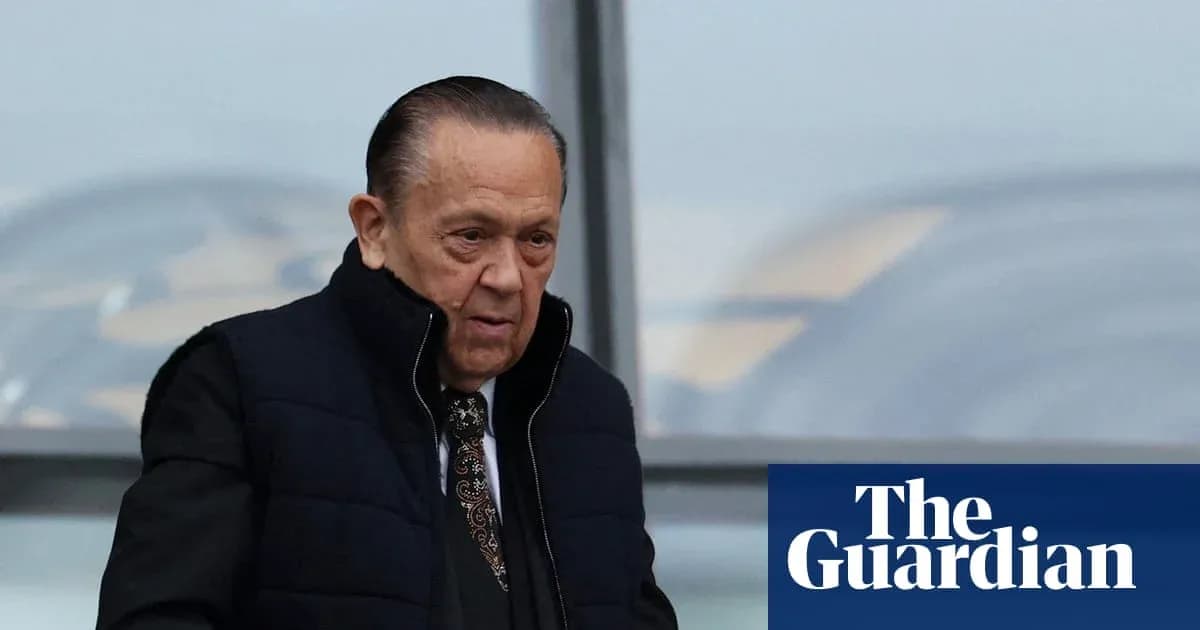
The match will also unfold under a very different kind of spotlight: whether David Sullivan walks through the doors of a stadium where he is no longer wanted.
Sullivan versus the stadium he chose
The London Stadium’s operators have recommended Sullivan stay away, warning of “potential for demonstrations and anti-social behaviour by some spectators”. The club’s fans advisory board has said his attendance would cause “offence and upset”.
He is expected to turn up anyway.
Sullivan, who retains a 38.8% stake despite stepping down as joint-chair, is said to want to experience the season as a supporter, to wait and watch before considering any sale. The timing is incendiary. On 25 May, as relegation was confirmed despite a home win over Leeds, he had to leave early for his own safety.
That was before the BBC Panorama documentary in June accused him of sexually exploitative and predatory behaviour towards women over several decades. Sullivan denies the allegations. On the eve of the broadcast he stepped down from his role “to avoid disruption to the club while he addresses the matter privately”.
He was already a lightning rod. Since the high of winning the Europa Conference League in May 2023, West Ham’s trajectory has been steeply downward. The £100m fee banked for Declan Rice the following summer dissolved into a transfer strategy that never convinced. The club slid. The mood curdled.
Jarrod Bowen, captain and hero of that Prague night, has pledged to stay and lead the attempt at promotion. Around him, the sense of a club in freefall lingers.
Power, money and a vacuum at the top
For years, Sullivan acted as West Ham’s de facto director of football, often to the irritation of those employed to make football decisions. His closest ally, Karren Brady, stepped down in April, ending a working relationship that stretched back to 1990. The old guard is splintering, but no clear new order has taken its place.
Supporters have bought 50,000 season tickets for this Championship campaign, a vast show of loyalty at a time when the dominant chant is for Sullivan to leave entirely. His exit from the front line brought a flicker of optimism. The idea of a fresh start took hold.
Then the succession battle began to twist.
Daniel Kretinsky, the Czech billionaire and Royal Mail owner who has held 27% of the club since 2021, looked the natural heir. Many expected him to move towards control once Sullivan stepped aside. Instead, this week he trimmed his stake to just under 25%, transferring 2% to Czech entrepreneur Jakub Havrlant. The move keeps him below the 30% threshold that would trigger a mandatory takeover offer if he went on to secure a majority.
At the heart of the intrigue sits the 25% shareholding of the late David Gold. His daughter, Vanessa Gold, now co-chair, controls that block. Kretinsky holds first refusal on it. If he takes it in full, he would combine it with his original stake to move beyond 50.1%, potentially forcing a formal bid for the rest of the club.
By shifting 2% to Havrlant first, he can buy the Gold stake, gain effective control and still avoid that obligation. It is a calculated move – and it cuts directly across the ambitions of another familiar figure.
Staveley circles as fans look on
Last weekend Amanda Staveley re-entered the Premier League conversation. After helping bring the Saudi Arabian Public Investment Fund into Newcastle and then departing the club in July 2024, she is again looking for a way back into football.
She was linked with a takeover at Tottenham last September. Now, it is suggested she will use a similar source of funding to engineer a move for West Ham, with the Gold stake the obvious gateway. Among Newcastle fans, her departure has been lamented this summer as the club prepares to list; her drive and deal-making are missed.
Some West Ham supporters see in her the possibility of the same galvanising effect. But Kretinsky’s manoeuvre over the Gold shares complicates her path. Sullivan’s 38.8% still holds the balance of power. Staveley’s next move is being watched closely, yet the picture remains murky, the direction of travel opaque.
The club is caught in a holding pattern: old power refusing to let go, new money hovering, no one yet willing to commit to the full leap.
A squad reshaped by necessity
While the boardroom twists and turns, the squad has been quietly, and sometimes painfully, reshaped.
The first arrival of the summer was free agent Joël Veltman, the experienced former Brighton and Ajax defender. His signing offered a rare note of reassurance amid a transfer window defined by exits.
Mateus Fernandes has gone to Tottenham. Crysencio Summerville has joined Al-Hilal. Between them, those two sales brought in around £140m – roughly equivalent to a season’s worth of Premier League television revenue. The money is essential, the optics brutal.
Freddie Potts, a youth product and symbol of the academy’s enduring pride, has been sold to Club Brugge for £10m. That deal in particular jarred with some fans. Needs must, the club argues, if more signings are to follow. The Championship, though, is a harder sell for ambitious players.
There is interest in Troy Parrott, Ireland’s World Cup playoff hero now at AZ Alkmaar. His profile fits the brief: young, hungry, with something to prove. Convincing him to drop into the second tier is another matter.
Nuno’s calm in the storm
On the touchline, one constant remains. Nuno Espírito Santo is still in charge, despite widespread expectation that he would depart after relegation.
His calm demeanour, the almost meditative presence on the touchline, is badly needed at a club where panic has become second nature. The vacuum created by Sullivan’s retreat, the uncertainty over ownership, the lack of incoming transfers – all of it feeds anxiety.
The fixture list offers little comfort. Before 1 September, West Ham face Burnley, Charlton, Watford and Wolves in the league, a run that will quickly reveal whether they are genuine promotion contenders or a big name drifting in the Championship.
Behind the scenes, Karim Virani has returned as interim chief executive after a spell at Rangers. A former club employee who left in 2020, he has been brought back to help stitch together some sense of unity and direction. It is a delicate job in a fractured environment.
A home that never felt like home
While West Ham search for themselves, their stadium carries on being everything to everyone else.
This summer, the London Stadium has hosted Take That and Metallica, as well as a Diamond League athletics meet in July where Josh Kerr broke the world mile record. On Thursday, a bid was confirmed to stage the 2029 World Athletics Championships, after a long impasse between the club and the stadium’s ownership.
Each event is another reminder that, a decade after leaving the Boleyn Ground, West Ham still do not truly own their home. The terms agreed by Sullivan, Gold Sr and Brady secured a modern venue and a new era in theory, but they also locked the club into an arrangement that many supporters have never accepted.
That resentment now folds into everything else: the relegation, the stalled transfers, the boardroom intrigue, the lingering presence of a co-owner who knows he will not be welcomed when he takes his seat.
On Saturday, Portsmouth will march in with 9,000 voices. West Ham will walk out to a stadium full of season-ticket holders who have turned up in vast numbers once again, demanding that this season be different.
The question is whether a club in the middle of a power struggle, playing in a ground that still feels borrowed, can truly build a way back to where it believes it belongs.