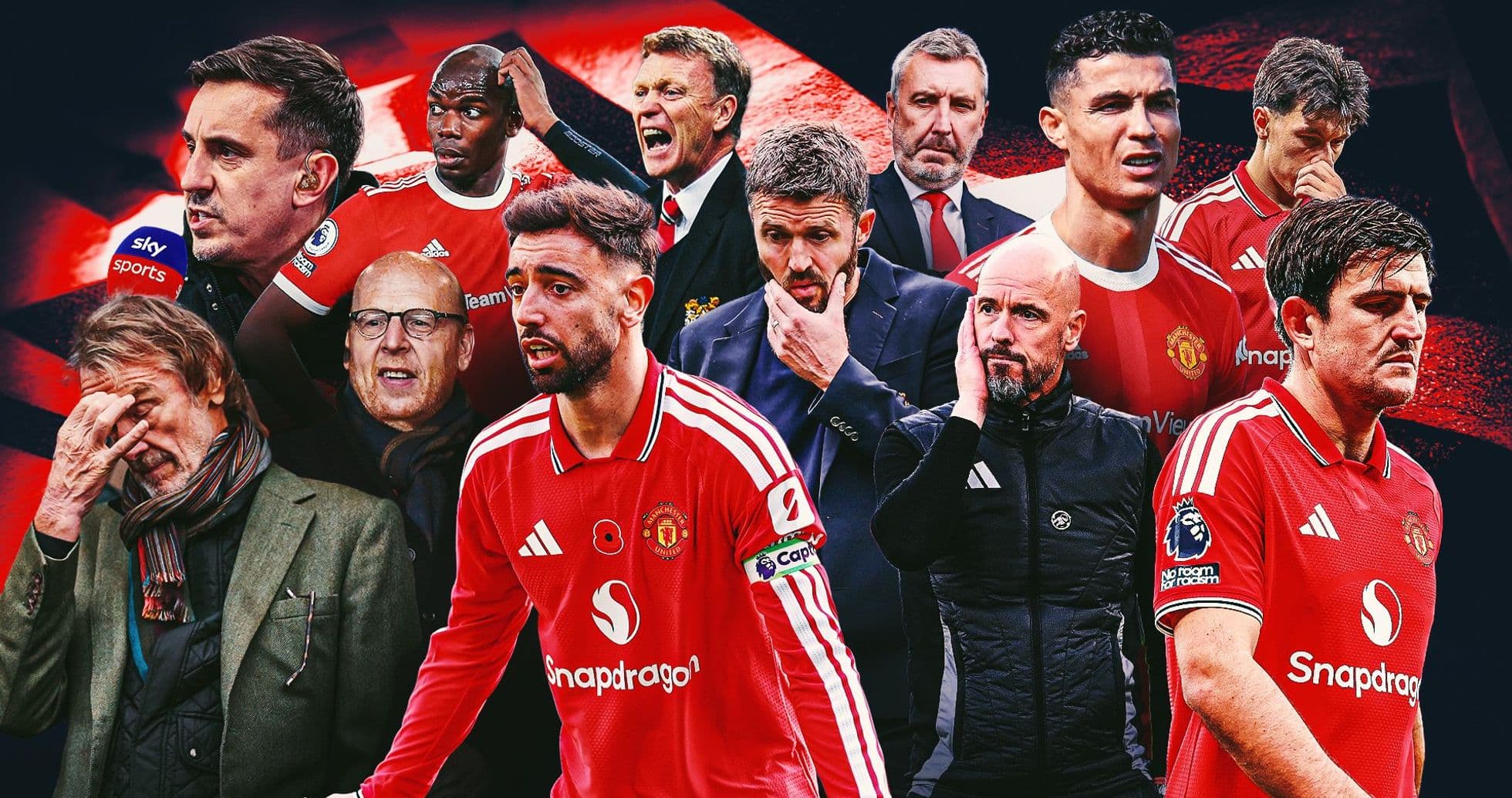
Who Is Most Responsible for Manchester United's Fall?
Manchester United's fight to avoid relegation feels like it’s been brewing for years. Currently, Michael Carrick’s squad sits just above the drop zone on goal difference after managing only one win in nine Premier League games this season. Across all competitions, they've suffered six defeats and three draws, scoring just six goals while conceding 18. It’s hard to imagine this slump ending any time soon.
The club is likely to replace its manager again soon, but the problems run so deep that any immediate uplift seems unlikely. The current ownership, led by INEOS, once targeted a title return by the club’s 150th anniversary in 2028, yet United instead faces the threat of relegation—a bitter reality for a team with such rich history and resources.
The Start of the Downfall: The Glazers Takeover
The trouble began back in 2003 when Malcolm Glazer started buying shares quietly during a dispute involving then-manager Sir Alex Ferguson and the club's previous majority shareholders. By 2005, the Glazer family took control through a leveraged buyout, saddling the club with hundreds of millions in debt for the first time in decades.
Fans protested immediately, even founding a breakaway club called FC United of Manchester. Despite winning multiple trophies between 2006 and 2009, debt levels kept rising, reaching £716 million under the Glazers’ ownership. Ferguson defended them publicly, saying the ownership wasn’t affecting the team, though United’s transfer spending power was already limited.
Ferguson’s Departure and the Struggle to Find Stability
When Ferguson and CEO David Gill both left in 2013, the club lost its pillars of stability. Their departures coincided with a shift in power towards executive vice-chairman Ed Woodward, whose financial focus often clashed with football priorities.
The legendary squad of veterans was aging, and new manager David Moyes, lacking top-level experience, struggled immensely. He cleared out Ferguson’s trusted coaching staff and failed to attract high-profile players, settling for Marouane Fellaini. United ended seventh, their lowest Premier League finish.
Subsequent managers—Louis van Gaal, Jose Mourinho, Ole Gunnar Solskjaer, Ralf Rangnick, Erik ten Hag, Ruben Amorim, and now Carrick—have all faced similar fates. None could restore consistent success, with constant managerial changes reflecting deeper issues beyond coaching.
Poor Recruitment and Financial Mismanagement
United has spent over £2 billion on transfers since Ferguson’s retirement, plus nearly £100 million on managerial compensation. Yet, very few signings have worked out well. Out of 78 players signed in 13 years, only Bruno Fernandes and Zlatan Ibrahimovic stand out as clear successes.
Big-money deals frequently failed to deliver, including expensive flops like Angel Di Maria, Memphis Depay, Alexis Sanchez, Jadon Sancho, Donny van de Beek, and Aaron Wan-Bissaka. Ten Hag’s signings—Antony, Lisandro Martinez, Andre Onana, Mason Mount, Rasmus Hojlund, Manuel Ugarte, Joshua Zirkzee—did not fit well into the team, contributing to ongoing struggles.
Transfer decisions have often lacked coherence, with too many voices involved and coaches lacking final say—a sharp contrast to Ferguson’s era where he controlled transfers.
Boardroom Blunders and Ownership Issues
Ed Woodward, a key figure in the Glazers’ takeover, prioritized commercial appeal over football logic, often handing long-term contracts to underperforming players. His role in the controversial European Super League attempt triggered fan outrage and his eventual resignation.
John Murtough succeeded him but continued questionable recruitment choices, while CEO Richard Arnold’s tenure saw mishandling of sensitive issues like Mason Greenwood’s reintegration, damaging the club’s reputation.
In late 2023, INEOS acquired a minority stake and took operational control. Despite promises to overhaul the sporting structure, recent decisions have worsened matters. Poor recruitment under INEOS, coupled with cost-cutting measures like staff layoffs and increased ticket prices, have alienated fans further.
Fans Demand Change
Supporters have grown increasingly vocal. Before a recent derby defeat to Manchester City, thousands protested against the Glazers and INEOS. Former defender Gary Neville has called for the owners to sell, highlighting the club’s £1.2 billion debt and failure to invest in the stadium or squad properly.
Neville criticized plans for a £2 billion new stadium without clear funding, describing the club as having suffered 13 to 14 years of football failures. He insists it’s time for the owners to step aside and let the club rebuild under new leadership.
The Path Forward
INEOS could increase its share or acquire full ownership in the future, but fans want faster change. The current leadership, especially the Glazers, are seen as absentee landlords disconnected from the club’s heritage and supporters.
Manchester United's decline is a complex story of poor ownership decisions, mismanaged finances, shaky recruitment, and unstable leadership. The club's revival depends on new direction and ownership that truly understand and respect the club’s legacy and ambitions.