Wolves and Fulham Share Points in Tactical Stalemate
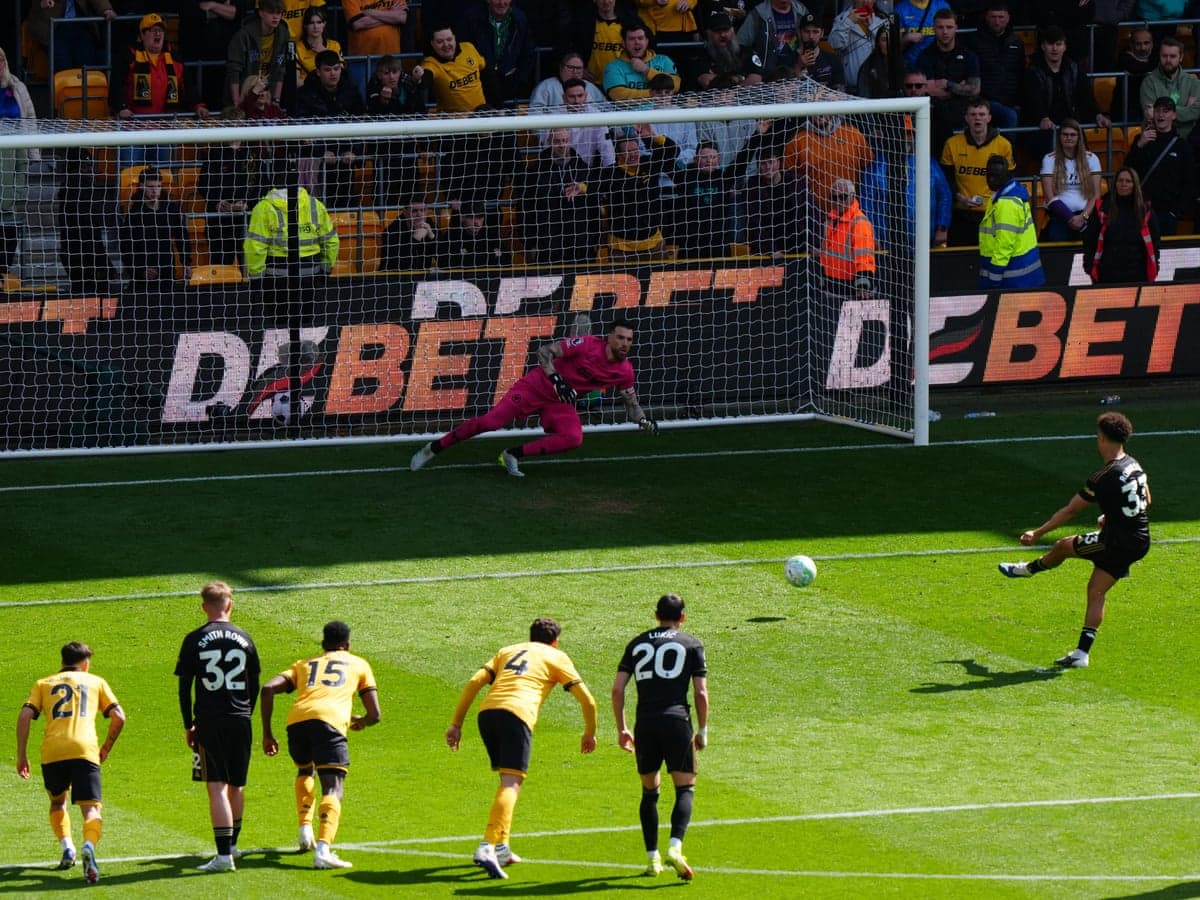
Molineux felt caught between farewell and defiance as Wolves, already mired in a relegation-bound season, shared a 1-1 draw with mid-table Fulham. Following this result, the table tells a stark story: Wolves remain 20th with 19 points and a goal difference of -41, while Fulham stay 13th on 49 points, their own goal difference a modest -6. Yet within those numbers, this match offered a snapshot of two very different footballing identities, and a tactical script that both coaches tried to bend to their needs.
Both sides lined up in mirrored 4-2-3-1 systems, but with contrasting intentions. Rob Edwards’ Wolves, at home in front of a restless Molineux crowd, leaned into industry and verticality. J. Sa anchored a back four of D. M. Wolfe, L. Krejci, S. Bueno and Y. Mosquera, with a double pivot of Joao Gomes and Andre tasked with doing the dirty work and jump-starting transitions. Ahead of them, R. Gomes and M. Mane flanked Hwang Hee-Chan behind lone forward A. Armstrong – a structure designed to break quickly rather than dominate the ball.
Marco Silva’s Fulham, by contrast, brought their familiar 4-2-3-1 template that has underpinned a solid season. B. Leno stood behind a defence of T. Castagne, I. Diop, C. Bassey and A. Robinson, with S. Berge and S. Lukic as the controlling pair in midfield. The trio of O. Bobb, E. Smith Rowe and A. Iwobi supported Rodrigo Muniz, a front four built to interchange, find pockets and probe rather than simply cross and hope.
The absences framed the tone. Wolves were again without L. Chiwome and E. Gonzalez, both sidelined by knee injuries, while S. Johnstone’s knock limited Edwards’ goalkeeping options. For Fulham, the suspension of J. Andersen after a red card removed their most authoritative organiser at the back, and with R. Sessegnon out through a hamstring injury, Silva’s defensive rotation was stretched. The omission of Andersen in particular shifted responsibility onto I. Diop and C. Bassey to marshal the line and handle aerial duels.
Heading into this game, the season-long numbers painted Wolves as a side living on the edge of their own box. Overall they had scored 26 and conceded 67, with an average of 0.7 goals for and 1.8 against. At home, they managed 1.0 goals for but still allowed 1.8, a ratio that demands perfection in both boxes they simply have not found. Fulham arrived with a more balanced profile: overall 45 goals scored and 51 conceded, averaging 1.2 goals for and 1.4 against. On their travels they had been less convincing, with 17 goals for and 31 against, an away average of 0.9 scored and 1.6 conceded, underlining why a point at Molineux, even against the bottom side, still had value.
The disciplinary profiles of both squads added an undercurrent of risk. Wolves’ yellow card distribution this season has surged after the interval, with 28.21% of their bookings arriving between 46-60 minutes and another 20.51% from 61-75. That pattern reflects a side that often chases games, tackles late and defends in emergency phases. Their red cards have been spread across 31-45, 46-60 and 61-75 minutes, one in each range, hinting at emotional volatility as pressure builds.
Fulham, meanwhile, carry their own edge. Their yellow cards peak late, with 23.29% between 91-105 minutes and 20.55% from 76-90, suggesting a team that often has to survive frantic finales. Their lone red card this season came in the 46-60 window, a reminder that their aggression in the early stages of the second half can boil over. In a match that finished level and tight, that shared volatility was always lurking beneath the surface.
Within that context, the “Hunter vs Shield” duel took on a subtle form. Wolves do not boast a prolific league top scorer in the provided data, but Hwang Hee-Chan’s role as the advanced midfielder was clear: attack the spaces between Fulham’s full-backs and centre-backs, especially with Andersen absent. The Shield, in this case, was a Fulham unit that on their travels had conceded 31 times, often undone when stretched. Diop and Bassey had to step into Andersen’s commanding void, and their ability to track Armstrong’s runs and deal with Hwang’s movement was central to limiting Wolves to a single goal.
On the other side, Fulham’s most dangerous weapon in the wider season data is H. Wilson, even though he began this match on the bench. With 10 goals and 6 assists in 35 appearances, he has been both finisher and provider, producing 50 shots (25 on target) and 38 key passes. His seven yellow cards underline how involved he is in both directions. Even when not starting, his presence among the substitutes shaped Wolves’ thinking: any late introduction of Wilson would have targeted a Wolves side that has conceded heavily overall and often wilts under sustained pressure.
In the “Engine Room”, Andre and Joao Gomes embodied Wolves’ identity. Andre, one of the league’s top yellow-card collectors with 12 bookings, has combined 1285 passes at 91% accuracy with 78 tackles and 29 interceptions, a blend of tidiness and bite. Joao Gomes, with 108 tackles and 36 interceptions, is even more of a ball-winner, his 69 fouls committed and 10 yellows telling the story of a midfielder who lives on the disciplinary edge to protect a fragile back line. Across from them, S. Berge and S. Lukic sought to slow the tempo, recycle possession and keep Fulham from being dragged into Wolves’ chaotic, transitional game.
Statistically, Wolves’ survival plan this season has rested on narrow margins: four clean sheets in total, only three at home, and 19 matches in which they failed to score. Their penalty record – 2 taken, 2 scored, 0 missed – is one of the few immaculate lines on their sheet, but they rarely reach the box often enough to lean on spot-kicks. Fulham, by contrast, have eight clean sheets overall and a perfect penalty record as well (5 from 5), underlining a side more capable of managing moments and closing games when they get ahead.
A 1-1 draw felt, in xG terms, like the meeting point of those profiles: Wolves’ blunt but spirited attack against a Fulham defence that is sturdier at home than away, and a Fulham offence that averages 0.9 goals on their travels against a Wolves back line that concedes 1.8 at Molineux. The numbers suggest Fulham might have expected to shade the quality of chances, but Wolves’ desperation, their aggressive midfield screen, and Fulham’s diminished back line without Andersen pulled the contest back towards parity.
Following this result, the broader verdict is that Wolves remain a side defined by effort and attrition rather than cutting edge, their 4-2-3-1 here an adaptation rather than a settled identity. Fulham, even when not at their fluid best, showed why they sit 13th overall: a clearer structure, more reliable penalty and clean-sheet record, and the luxury of game-changers like H. Wilson in reserve. Over the span of a season, those traits tilt Expected Goals and results in their favour. At Molineux, they were just enough to ensure that even in a stalemate, Fulham’s campaign kept its mid-table shape, while Wolves’ long, grim season edged towards its inevitable conclusion.