World Cup Matches: France vs Norway and Others
The World Cup tightens its grip on the calendar on Friday. No more shadows, no more safety nets. Groups G, H and I close out their schedules, and with them come the last chances for teams to drag themselves into the Round of 32 – or slide quietly out of the tournament.
France and Norway stare each other down for first place. Spain try to slam the door in Group H. Egypt, Iran, Belgium, Cape Verde and Saudi Arabia all walk that thin line between survival and the flight home.
Around them, a World Cup that was supposed to be sprawling and diffuse has started to find its heartbeat.
France, Norway and a fight for the summit
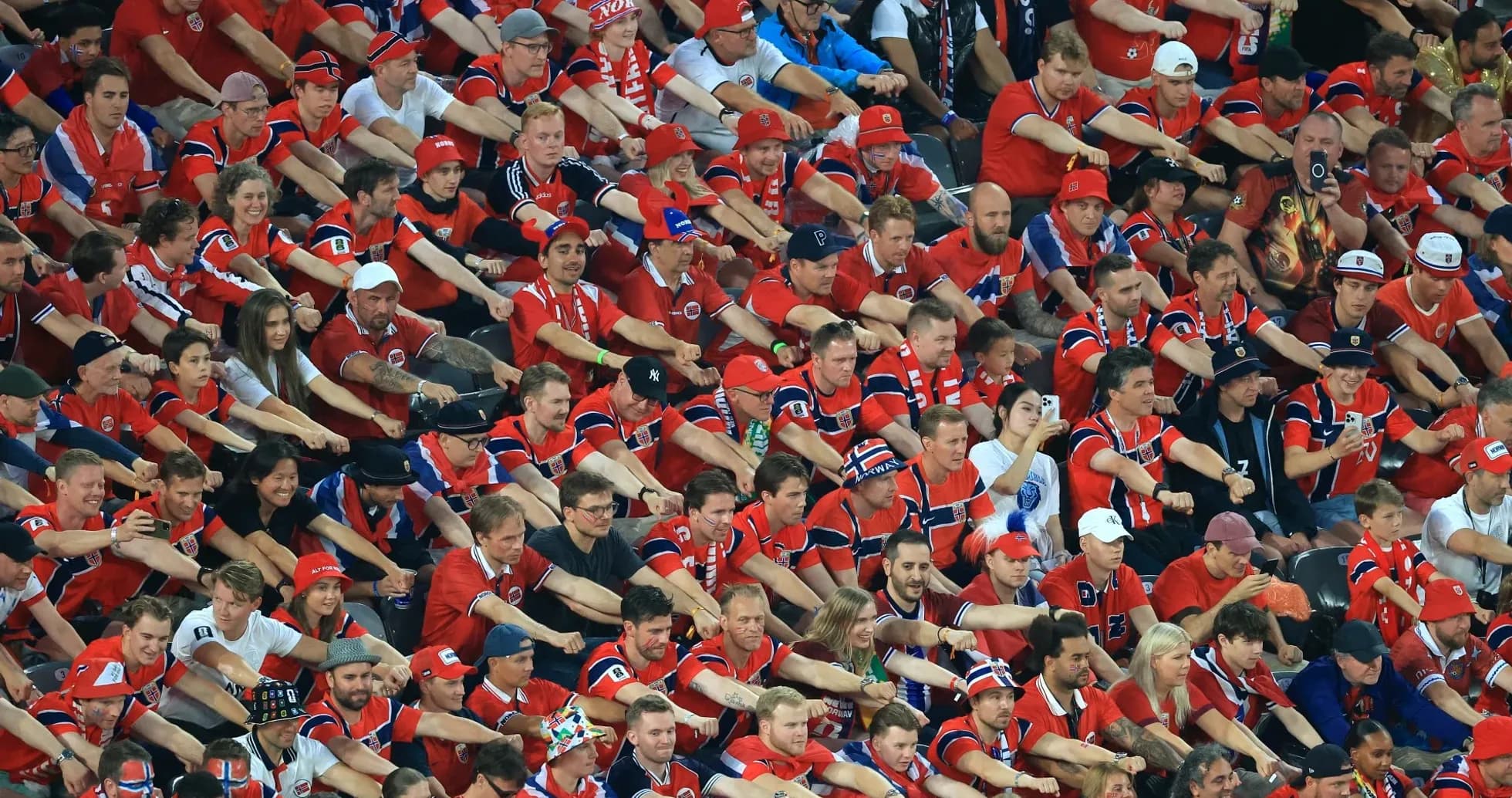
Boston hosts the headline act. Norway vs France, 3pm EDT, with Group I’s top spot on the line.
The history leans heavily blue. This is the 16th meeting between the two nations; France dominated their last encounter, a 4-0 friendly win in 2014. Norway have beaten France in competitive action only twice, and you have to go back to a European Championship qualifier in 1987 for the last time they pulled it off.
Their World Cup record against European sides tells its own story. Norway are still waiting for a first win, having drawn two and lost three of their five such matches. France, by contrast, arrive armed with five straight World Cup victories over European opponents.
The numbers echo the narrative. Opta’s supercomputer hands Les Bleus a 59.4 percent chance of victory. A draw – rated at 20.6 percent – would be enough for France to seal top spot. Norway’s odds of an upset sit at 20 percent, the kind of outside shot that can flip a group on its head in a single moment.
Both are already through. What’s at stake now is positioning, pride and a cleaner path through the knockouts.
Senegal chase safety, Iraq cling to hope
At the same time in Toronto, Senegal and Iraq meet for the first time at a World Cup. The stakes are brutally simple.
Senegal can’t win the group anymore, but they can still save their tournament. They remain unbeaten against AFC opposition on this stage, having drawn with Japan in 2018 and beaten Qatar in 2022. Iraq, for their part, have never faced an African side at a World Cup. Their introduction comes with everything on the line.
Opta’s model is ruthless. Senegal are given a 77.2 percent chance of victory, Iraq just 8.6 percent, with the draw at 14.2 percent. The West Africans still hold a 72.2 percent chance of reaching the last 32. Iraq’s hopes are almost mathematical fiction: 1.1 percent.
One team plays to keep a door open. The other needs a miracle.
Cape Verde, Saudi Arabia and a knife-edge night
In Houston, under the lights at 7pm CDT, Cape Verde and Saudi Arabia walk into their first-ever World Cup meeting knowing both can still make it out of Group H.
Saudi Arabia arrive with a solid record against African opposition at this level – only one defeat in five games, with two wins and two draws. Cape Verde, one of the tournament’s more intriguing emerging stories, carry the weight of expectation from a continent watching a historic campaign unfold.
The numbers are tight. Cape Verde are given a slight edge by Opta’s supercomputer: 40.8 percent to win, 33.9 percent for Saudi Arabia, 25.3 percent for a draw. In qualification terms, Cape Verde stand at 66.7 percent to reach the last 32. Saudi Arabia sit at 33.3 percent.
One swing of a boot could flip those odds in an instant.
Spain’s authority tested by Uruguay’s history
In Guadalajara, 6pm CST, two former world champions meet with more than nostalgia at stake. Uruguay vs Spain. The fixture has been rare, but stubbornly balanced on this stage.
Their two previous World Cup clashes both ended level: a 2-2 draw in the final round of the 1950 tournament and a goalless stalemate at Italia ’90. A rivalry that appears in the record books only briefly, but never with a winner.
Spain arrive as reigning European champions and heavy favourites. Opta’s simulations tell the story: Spain win 62.4 percent of 25,000 pre-match runs, Uruguay take just 15.7 percent, with a draw occurring 21.9 percent of the time.
History says these two cancel each other out. The data says Spain should finally break that pattern.
Egypt, Iran and a delicate balance
Seattle gets its own high-wire act at 8pm PDT. Egypt vs Iran, a first World Cup meeting between two teams whose only previous clash came in a low-key LG Cup in 2000 – 1-1 on the night, Egypt winning 8-7 on penalties, Hossam Hassan scoring for Egypt, Ali Daei replying for Iran.
Now Hassan is on the touchline, not the scoresheet.
Iran bring a proud record against African opposition at World Cups: unbeaten, with a win over Morocco in 2018 and draws against Angola in 2006 and Nigeria in 2014. Egypt, leading Group G going into the day, know a result here could define a generation.
Opta tilts slightly towards the Pharaohs. Egypt are given a 42.9 percent chance of victory, Iran 24.9 percent, with the draw – a significant result for both – rated at 32.2 percent.
It feels like the kind of match that turns on one mistake, or one moment of nerve.
Belgium expected to rise, New Zealand refuse to bow
In Vancouver at BC Place, 8pm PDT, New Zealand and Belgium meet for the first time, and the numbers on paper look almost cruel.
Belgium, still searching for their first win of this campaign, could become the first European team since their 1998 side to draw all three group games at a World Cup. New Zealand arrive with a small but stubborn record: unbeaten in their last two World Cup matches against European opposition, those memorable 2010 draws with Slovakia and Italy.
Opta doesn’t believe in the upset. Belgium are given an 80.3 percent chance of victory, with a draw at 11.8 percent. New Zealand win in just 7.9 percent of simulations.
The All Whites have heard that story before. They’ve spoiled it before, too.
The table: who’s already safe, who’s still swinging?
By Friday, June 26, six groups are done. Groups G to L are still sorting out the remaining Round of 32 places, and 13 spots are still up for grabs.
Only one team has been perfect: Mexico, on nine points, the only side to emerge from the group stage with a 100 percent record.
A long list are already through: Mexico, South Africa, Switzerland, Canada, Bosnia and Herzegovina, Brazil, Morocco, USA, Australia, Germany, Ivory Coast, Ecuador, Netherlands, Japan, Sweden, France and Norway have all booked their places in the knockouts.
- Group G: Egypt lead on 4 points, Iran and Belgium sit on 2, New Zealand on 1.
- Group H: Spain top with 4 points, Uruguay and Cape Verde trail on 2 each.
- Group I: France and Norway are both safely through, but first place remains unresolved.
Groups J, K and L will take their turn on Saturday. The margin for error shrinks by the hour.
Turkiye sting the US in stoppage-time drama
Some games are dead rubbers on paper and anything but in reality.
Turkiye’s 3-2 win over the United States at SoFi Stadium in a Group D finale meant nothing to the table, everything to the spectacle. The US had already secured top spot, Turkiye were already out, yet the two sides delivered a wild, open contest in front of nearly 70,000 fans.
Mauricio Pochettino used the freedom to rotate heavily, making nine changes and handing seven players their first World Cup starts. The game never lost its edge. Turkiye found a 98th-minute winner, a late twist that underlined a simple truth: at this tournament, even the “inconsequential” nights carry their own drama.
Africa’s surge: six through the gate, more lining up
For African football, this expanded 48-team World Cup has become an opportunity – and a statement.
Ten African nations qualified. As many as eight could still reach the knockout stages. Morocco and South Africa are already there. Ivory Coast have also punched their ticket to the Round of 32.
Behind them, Egypt, Algeria, DR Congo, Ghana and Cape Verde walk into their final group matches with everything still in their own hands. It is not just about individuals or isolated runs. It’s about a continent pushing for a historic collective showing, one that would reshape expectations for future tournaments.
The numbers will tell the story in the end. The sense of momentum is already clear.
A lone voice, a silent stadium: Colombia and DR Congo
Not all of this World Cup’s defining images have come with a ball in motion.
Before Colombia’s Group K match against DR Congo, one of the tournament’s most striking moments unfolded during the national anthems. Thousands of Colombian fans fell silent so a lone DR Congo supporter could sing his country’s anthem, unaccompanied, in a stadium that listened.
When he finished, the roar came. Applause, cheers, embraces. A small act, but one that cut through the noise of a 48-team, three-country event and reminded everyone why this sport still matters beyond the tactics board.
Colombia went on to win 1-0 and secure their place in the Round of 32. The image that lingered had nothing to do with the scoreline.
Infantino in two places at once
Then there are the moments that simply defy explanation.
During the final Group E matches, FIFA President Gianni Infantino appeared on the big screens at both Ecuador vs Germany and Curacao vs Ivory Coast – games being played at the same time in different cities.
Social media did the rest. Clips flew around, jokes about the FIFA president finding a way to be in two places at once. In a World Cup stretched across the US, Canada and Mexico, the logistical questions only added to the surreal feel of the night.
On the pitch, it was just as dramatic. Ecuador stunned Germany 2-1. Ivory Coast beat Curacao 2-0 to reach the Round of 32. The football had its own chaos. The screens simply matched it.
Mexico perfect, Azteca in full voice
Some hosts crack under the weight of expectation. Mexico have leaned into it.
At the Azteca Stadium, they closed out a flawless Group A with a 3-0 win over Czechia. Already assured of top spot, they still went for a statement. A quiet first half gave way to a second in which Mexico took control.
Mateo Chavez broke the deadlock. Julian Quinones added his second goal of the tournament. Substitute Alvaro Fidalgo sealed it, ending Czechia’s hopes of progression and sending Mexico through with maximum points to face one of the best third-placed teams in the next round.
Three games, three wins, and a fan base that believes this might be more than just a home World Cup.
Kansas City turns orange
On Thursday, Kansas City stopped being Kansas City for a few hours. It became Amsterdam, Rotterdam, Eindhoven – all rolled into one.
More than 35,000 Netherlands fans, according to local reports, flooded downtown for the Oranje Fanwalk before their match against Tunisia. They gathered at the Power & Light District, then marched behind the iconic orange bus, turning the streets into a moving wall of colour, song and flags on their way to the FIFA Fan Fest.
It wasn’t just Dutch supporters. Locals and neutrals joined in, swept along by the noise. In a tournament spread thinly across three countries, this was one of the clearest, loudest statements of fan culture so far.
Borders, visas and the limits of “global” football
Beyond the scorelines and the spectacles, another story has been unfolding – one that cuts against the World Cup’s favourite slogan of global unity.
Speaking on The Take, journalist Boima Tucker described how the tournament has exposed the tension between football’s promise of togetherness and increasingly restrictive border policies. Travelling across host cities, he spent time with immigrant communities living their own version of this World Cup: Moroccan and Senegalese fans in New York, Cape Verdean supporters in Massachusetts, thousands of Ghanaians packing a watch party in Toronto.
“It’s been wonderful to get an intimate look at how the World Cup has affected people in their homes,” he said. “People are excited to talk about their teams and their countries.”
Yet his reporting also traced the other side. Iran’s national team has been based in Tijuana, crossing into the US only for matches. Football officials and players’ relatives have struggled with visas. The kind of bureaucratic grind that doesn’t show up on a team sheet, but still seeps into preparation.
“When you’re an athlete, you want to be locked in. You want to be concentrating on the field, on the results,” Tucker said. “If you have to jump through hurdles, that’s definitely going to affect the field of play.”
He went further, arguing that the World Cup simply mirrors wider global inequalities. “We live in a global system that restricts people’s movement,” he said, warning that even high-profile reunions and human-interest stories are unlikely to produce “systemic change.”
Yet amid that, Tucker kept coming back to the same counterpoint: football’s stubborn ability to bring people together, if only briefly. He spoke of communities celebrating side by side, of people from different cultures and classes connecting in ways that daily life rarely allows.
“I hope people remember this World Cup as one in which people across ethnic lines, national identities and class lines were able to briefly mingle and learn something about each other,” he said. “More than anything, those borders that we have in our daily lives were briefly overcome.”
On Friday, as France and Norway chase top spot, as Egypt and Iran sweat over survival, as Mexico and the Netherlands ride waves of colour and noise, that’s the question hanging over the tournament.
When the final whistle blows on 2026, what will matter more: who advanced, or who finally got to stand in the same place?