World Cup Knockout Stage Preview: Key Matches Ahead
The World Cup has shed its safety net. From Saturday, every mistake carries a sentence, every decision a consequence. The last 16 arrive with scars, swagger and wildly different routes into the knockouts – and over four days, the tournament will be carved down to a quarterfinal elite.
Here are the ties that will shape it.
Canada vs Morocco
July 4, Saturday, Houston Stadium – 17:00 GMT
Canada’s World Cup story has already changed. Two wins in the group stage have shifted them from plucky participants to a side that believes it belongs here. That belief will be tested by a familiar figure.
Yassine Bounou could have been on the other side of this fixture. Born in Morocco but raised partly in Montreal, he was once approached by former Canada coach Benito Floro. The answer was no. The Maple Leafs have been paying for that decision ever since.
They last ran into Bounou in Qatar and lost 2-1, a defeat that bundled them out at the group stage. The equation this time is simple: get past Bounou, or go home again.
Canada will lean hard on their wide threats. Tajon Buchanan will drive at Morocco down the right, while Alphonso Davies pushes higher from left back into something closer to a winger’s role. Davies’ hamstring scare is parked for now; he returned in the group match against South Africa, his first minutes since Bayern Munich’s Champions League semifinal.
In midfield, Jesse Marsch has already been forced into a reshuffle. Nathan-Dylan Saliba steps in for Ismael Kone, whose World Cup ended with a broken leg against Qatar. That change strips some of Canada’s dynamism but adds a different kind of control.
Morocco have tried to reload, to evolve, but the attack has not truly caught fire. It might not need to. With Bounou behind them, the Atlas Lions know they can drag this tie into the one arena where they trust themselves more than almost anyone: a penalty shootout.
The prize is brutal. The winner is likely to see France next.
France vs Paraguay
July 4, Saturday, Philadelphia Stadium – 21:00 GMT
Paraguay have been here before with France, and the scars run deep on both sides.
In 1958, France trailed in the second half before exploding to win 7-3. In 1998, it took Laurent Blanc’s extra-time golden goal to finally break La Albirroja in the last 16. Paraguay know how close they have come. France know how dangerous these colours can be.
This time, though, Les Bleus arrive at full sprint. They have been blowing past opponents, and the sense is of a side that has slipped into knockout gear without much fuss.
Paraguay did offer a warning to anyone underestimating them by smothering Germany’s attack. Gustavo Gomez and his defensive line closed space, blocked lanes, and turned a heavyweight into a frustrated, one-paced side.
France pose a different problem. Kylian Mbappe stretches teams vertically and horizontally, shredding shape with his runs. Stop him, and you still have to live with the craft of Michael Olise and Adrien Rabiot operating through the middle, sliding passes and taking on shots from range. Wingers pin full-backs, Theo Hernandez can thunder forward from the left, and France will not hesitate to pull the trigger from distance.
Paraguay have history on their side, but France carry the weight of expectation and the weapons to match it.
Brazil vs Norway
July 5, Sunday, New York/New Jersey Stadium – 20:00 GMT
There are not many nations that can look Brazil in the eye and say: we’ve never lost to you. Norway can.
The record is small but sharp – two wins, two draws – and includes one of Brazil’s most contentious World Cup defeats. In 1998, Norway were awarded a late penalty by US referee Esse Baharmast, a decision proved correct on replay but argued over for years. Kjetil Rekdal buried the spot kick, Norway won 2-1, Brazil still topped the group, and the Norwegians squeezed past Morocco into the knockout rounds.
Norway have not been back to a World Cup finals since that tournament. Their last taste of the knockouts ended with defeat to Italy in the first round. For them, this is a return to a stage that once felt within reach more often.
For Brazil, this is about something else: a jolt. Their group-stage form has lacked the usual electricity. Patterns have been tidy, possession assured, but the spark often missing.
Endrick might be that spark. Thrown on from the bench against Japan, he injected energy and unpredictability, the kind of direct threat that unsettles even the most organised defence. He will be dwarfed physically by Norway’s back line, but his movement, timing and willingness to attack space could drag them into places they do not want to go.
Norway bring the weight of an unbeaten record. Brazil bring decades of pent-up frustration about that night in 1998. One of those narratives breaks.
Mexico vs England
July 5, Sunday, Mexico City Stadium – 00:00 GMT on Monday
Altitude versus attitude. Juan Carlos Osorio once framed it that way, and Mexico City’s thin air has been backing him up for decades.
At 2,240 metres above sea level, the Mexico City Stadium can empty the legs of even the fittest visitors. Combine that with El Tri’s high tempo and sharp passing, and opponents often find themselves chasing shadows while gasping for breath.
Mexico have been ruthless at home so far: four games, four wins, eight goals scored, none conceded, split between Guadalajara and Mexico City. Their possession game has set the rhythm, and the front pairing of Raul Jimenez and Colombia-born Julian Quinones has clicked into a smooth, dangerous partnership.
England know the history. Against Mexico, their overall record stands at six wins, two defeats and one draw, including that 2-0 victory at Wembley during the 1966 World Cup. On Mexican soil, though, the picture darkens. The Three Lions have never won in Mexico City, with two losses and a draw. One of those defeats came with Diego Maradona’s “Hand of God” etching itself into football folklore.
This version of England travels with Harry Kane, and that alone changes the dynamic. Kane’s ability to drop off, link play and still arrive in the box gives Thomas Tuchel options, even in the draining conditions.
Tuchel has tried to outthink the altitude, choosing to arrive close to kickoff in an attempt to blunt its impact on his players’ bodies. FIFA, for their part, have weighed moving the start time to avoid potential storms. The planning is meticulous; the reality on the pitch will be far more chaotic.
The stakes could not be clearer. Survive Mexico City, and Brazil or Norway await.
USA vs Belgium
July 6, Monday, Seattle Stadium – 00:00 GMT on Tuesday
USA have been here before, talking about turning a corner. This time, they have a result to back it up.
A 2-0 victory over Bosnia-Herzegovina delivered their first World Cup win over a UEFA opponent since 2002. It came at a cost. Folarin Balogun’s suspension leaves Mauricio Pochettino short in the one area he could least afford it: centre-forward.
The depth chart is brutally simple now. Ricardo Pepi or Haji Wright. One of them must shoulder the load, occupy Belgium’s defenders and finish the few chances that will come.
Belgium arrive with their own story of adaptation. Against Senegal, they looked lost for long stretches, two goals down and drifting out of the tournament. Then Rudi Garcia made one of the boldest calls of this World Cup.
He pulled Kevin De Bruyne and Jeremy Doku, his two most explosive attacking talents, and sent on Dodi Lukebakio and holding midfielder Nicolas Raskin. On paper, it looked conservative. On the pitch, it freed Belgium’s structure. The comeback did not start until the 86th minute, but once it did, Senegal’s grip broke.
This is a small country with a big football footprint. Belgium, roughly the size of the US state of Massachusetts, have beaten USA in six straight meetings since their first World Cup clash back in 1930. That streak hangs over this tie like a shadow.
USA have the chance to rip it down. The winner steps into a quarterfinal against Portugal or Spain, a stage that would validate everything this American generation has been promising.
Portugal vs Spain
July 6, Monday, Dallas Stadium – 19:00 GMT
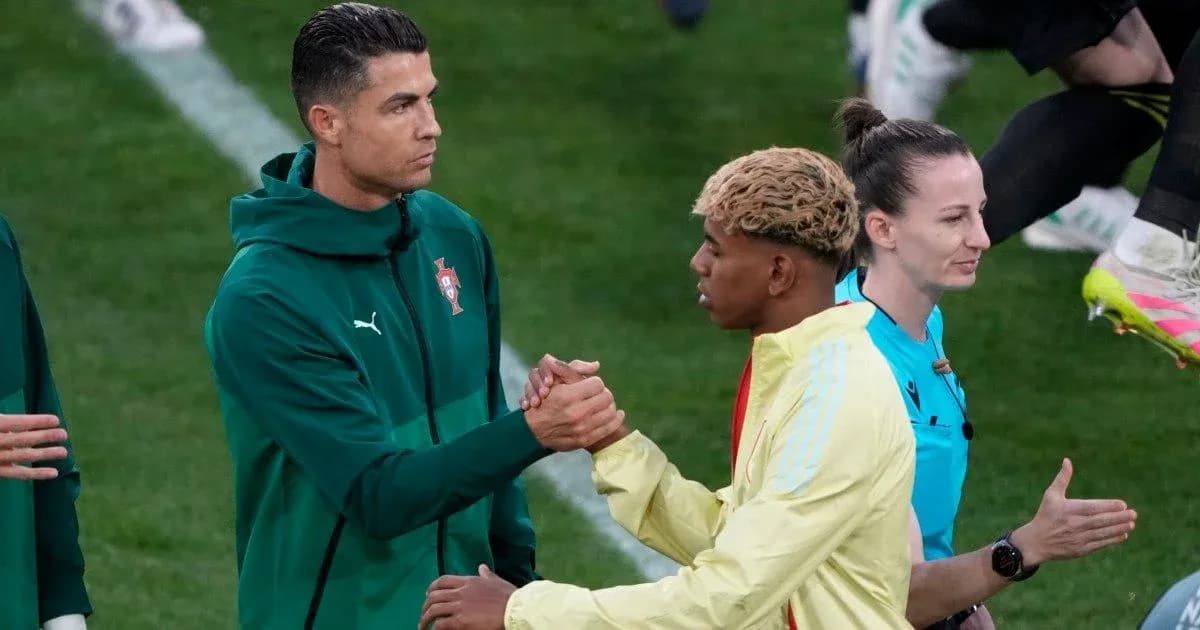
Portugal hired Roberto Martinez for nights like this. Tactical puzzles, high-wire knockout football, and the delicate management of a superstar who still bends games around him.
Cristiano Ronaldo has been central to Portugal’s approach under Martinez, the attack built to feed his movement and finishing. Against Croatia, though, the script twisted. With the game on a knife-edge, Martinez had already withdrawn Bruno Fernandes and Vitinha. Then he did the unthinkable: he substituted Ronaldo as well.
Portugal still found a late winner. It was a reminder that, for all Ronaldo’s presence, this is a squad with depth, variety and the courage to change shape when it matters.
Spain arrive with their own rhythm finally emerging. La Roja’s attack has started to hum. Dani Olmo drives the midfield, knitting passes and breaking lines. Lamine Yamal, still so young, looks increasingly at home on this stage, while Mikel Oyarzabal brings a clean, ruthless edge to their finishing.
History between these neighbours is thick with tension. In 2010, Spain shut down Ronaldo and edged Portugal 1-0 on their way to lifting the World Cup. Eight years later, Ronaldo hit back with a hat trick in a wild 3-3 draw in Russia, a game that felt like a personal duel with an entire nation.
Now they meet again with a semifinal path on the line and two identities clashing: Portugal’s blend of structure and star power against Spain’s whirring, possession-heavy machine.
Someone’s story of this World Cup will end here. Someone else will walk away from Dallas believing this is their year.