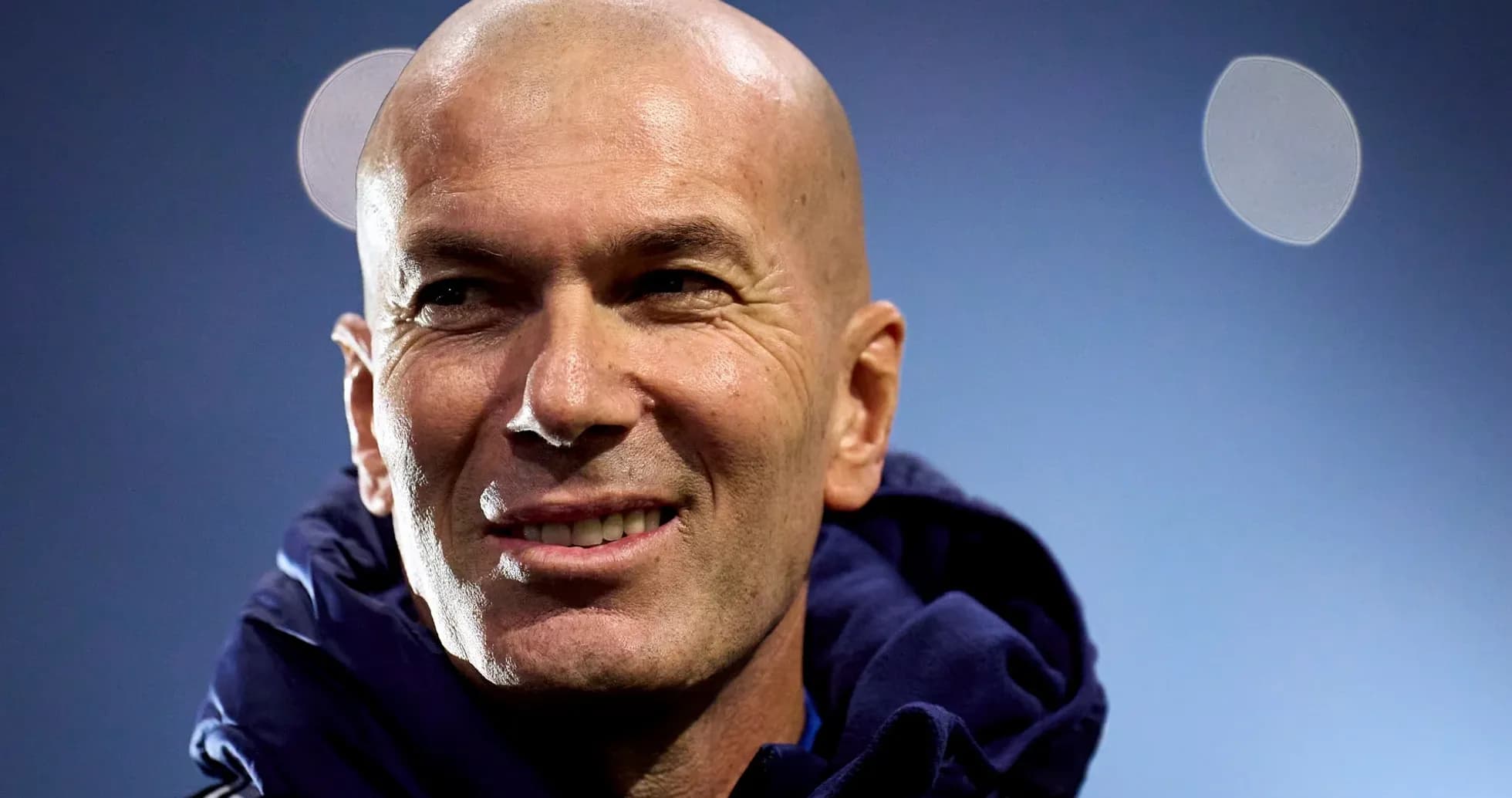
Zinedine Zidane Takes Over as France Head Coach After World Cup
Zinedine Zidane, the most elegant of French No. 10s and the enduring ghost of every major tournament, is finally heading for the job that always felt like his destiny.
According to ESPN, the 53-year-old has reached a verbal agreement with the Fédération Française de Football to take over as France head coach after this summer’s FIFA World Cup, stepping in for Didier Deschamps, who has held the post since 2012.
It is the succession French football has been circling for years.
The heir steps in
Deschamps has been the constant on the France bench for more than a decade, guiding Les Bleus through triumphs, crises, and everything in between. Now the federation has reportedly turned to the one figure whose aura rivals his own.
Zidane’s coaching résumé carries the same weight as his playing career. Twice he took charge of Real Madrid, from 2016 to 2018 and again from 2019 to 2021, and turned a star-studded squad into a ruthless winning machine. His calm presence, his authority in a dressing room full of egos, and his knack for navigating high-pressure nights made him one of the most coveted managers in the game.
For France, the fit is obvious. The expectation has lingered for years that Zidane would eventually lead the national team. Now, with a verbal agreement in place, that long-running subplot is moving toward center stage.
From icon to architect
As a player, Zidane reshaped what a midfielder could be. He won the 1998 Ballon d’Or and was named FIFA World Player of the Year three times, in 1998, 2000 and 2003. Those awards only hint at his influence.
He was the conductor of France’s golden summer in 1998, lifting the World Cup on home soil and imprinting himself on a generation. Eight years later, he dragged an aging France side back to the World Cup final in 2006, bending the tournament to his will one last time.
That night in Berlin remains etched in football history for both brilliance and chaos. Zidane scored from the spot with a nerveless Panenka, then saw red in extra time after his infamous head-butt on Italy’s Marco Materazzi. France finished second. Zidane walked away in disgrace and glory all at once.
Now he returns not as the mercurial playmaker, but as the man tasked with shaping the next era.
A new chapter for Les Bleus
For the federation, replacing Deschamps with Zidane would be more than a simple change of coach. It would be a handover between two World Cup-winning captains of different eras, two leaders who understand what it takes to carry the weight of a footballing nation.
Deschamps brought stability and silverware. Zidane brings mystique and an almost mythic connection to the shirt.
The World Cup will mark the end of one reign. The question is what Zidane will build when he finally steps into the role that has followed him like a shadow for nearly two decades.