2026 Brazilian Grand Prix: Major Grid Penalties Shake Up Race
The stewards’ room at Interlagos has barely had time to cool between meetings. Well before lights out on Sunday, the 2026 Brazilian Grand Prix grid has been ripped up and rewritten, with some of the sport’s biggest names shunted towards the back.
What looks like a routine list of power unit penalties carries real weight. Max Verstappen, Sergio Perez, Lewis Hamilton, Charles Leclerc and George Russell all drop down the order. The reasons are the same on paper – extra engine components beyond their season allocation – but the scale of the punishment varies wildly.
Verstappen and Perez take the hit
Red Bull and Cadillac have both decided Brazil is the moment to pay a heavy price for fresh power.
Verstappen has been handed a 30-place grid penalty after fitting a new internal combustion engine, turbocharger and exhaust system. Each of those is his first breach in that category this season, so each triggers a 10-place drop. Add them up, and the reigning champion’s Sunday will begin far from the sharp end.
On the other side of the paddock, Perez mirrors that strategy. He also takes a new ICE, turbocharger and MGU-K, earning the same 30-place grid drop. His weekend picked up an extra blemish in FP3 when he received a formal warning from the stewards for throwing a small cable organiser out of his car and onto the track, judged to be driving in an unsafe condition. No extra places lost, but not the kind of detail any driver wants on his record.
Both teams have made a clear choice: swallow the pain here, bank fresh hardware for the run-in.
Ferrari’s gamble explodes into a 65-place hammer blow
Ferrari tried to tread more lightly. Initially, the plan for Brazil was conservative: a new ICE for both Hamilton and Leclerc, nothing more. Because that was their first engine beyond the season allocation, each driver incurred a 10-place penalty. Costly, but manageable.
Then FP3 came and went, and the picture changed dramatically for Hamilton.
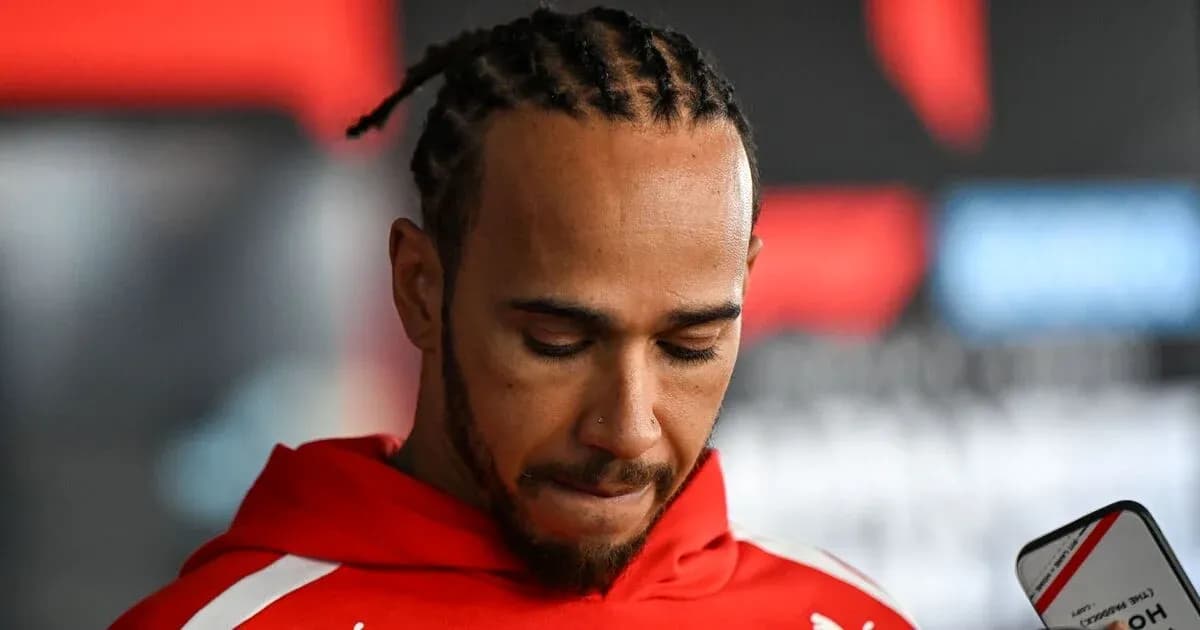
Ferrari elected to give the seven-time world champion a full power unit change. Six of the seven components now exceed his allocation for the first time, and with 10 places per infringement, the bill rocketed. Hamilton’s penalty stands at a staggering 65 places.
It’s a number that makes a mockery of the size of the grid, but it underlines the scale of Ferrari’s decision. They have effectively written off Hamilton’s starting position in Brazil to arm him with a fresh suite of components for the rest of the season.
Leclerc, by contrast, remains on the original plan: one extra ICE, one 10-place drop. His penalty looks almost gentle compared to his team-mate’s, but it still drags him into the midfield fight at a circuit where track position can define a race.
Russell’s smaller but significant slide
George Russell arrived in São Paulo already knowing he would not keep whatever lap he produced in qualifying. Mercedes had committed to another ICE for the Briton, and because this is his second engine above the yearly allocation in that category, the punishment is lighter: a five-place grid drop.
It is the kind of penalty that can turn a front-row start into a third-row scrap, and a third-row start into the thick of the chaos. For Russell, the margin for error in qualifying shrinks. He cannot simply out-qualify his rivals; he has to build a cushion.
A scrambled grid, a different kind of race
Add it all together and the Brazilian Grand Prix will launch with some of the sport’s heavy hitters strewn through the pack. Verstappen and Perez charging from deep. Hamilton trying to carve through with an entirely new power unit behind him. Leclerc and Russell forced into elbows-out racing from the moment the lights go out.
The stewards have done their work. Now the question hangs over Interlagos: who will turn a penalty-riddled Saturday into an opportunity on Sunday?