Alaves Overcomes Mallorca 2–1 in Tactical La Liga Clash
Alaves overturned a one-goal deficit to beat Mallorca 2–1 at Estadio Mendizorrotza in La Liga’s Regular Season - 32 round, in a contest defined less by volume of chances than by how each side manipulated structure and space. The match finished with perfectly split possession at 50–50, but the hosts translated that parity into territorial control, a 15–4 shot advantage, and a 1.09–0.28 xG edge. Mallorca’s early lead through J. Virgili forced Alaves to stretch their 5-3-2, yet Quique Sanchez Flores’ adjustments—both structural and personnel—tilted the game, with T. Martinez’s brace the direct product of wing-back aggression and superior occupation of the half-spaces.
The game’s tactical story began as early as 4', when Alaves made a rare in-game system tweak via a very early substitution: L. Boye (OUT) was replaced by I. Diabate (IN). Rather than an injury-driven like-for-like, this altered the dynamic of the front line, giving Alaves more vertical running and depth against Mallorca’s back four. Despite that, Mallorca struck first at 18', with J. Virgili finishing from a Samu Costa assist. The move reflected Mallorca’s 4-3-1-2 intent: use P. Torre and the midfield triangle to find early passes into the front two, attacking the channels either side of the central centre-back.
Alaves’ response was initially emotional as much as tactical. At 26', Jonny Otto collected a yellow card for a foul, a sign of Alaves’ attempts to disrupt Mallorca’s transitions after losing the ball high. The hosts went into halftime trailing 0–1, despite having more shots and territory, their 5-3-2 struggling to convert width into penalty-box presence.
Second Half
The second half pivoted decisively. At 56', Alaves equalised: T. Martinez scored a normal goal, assisted by left-sided defender A. Rebbach. This action encapsulated the structural shift—Rebbach, nominally a defender in the back five, was now consistently stepping into advanced wide zones, effectively functioning as a wing-back and overloading Mallorca’s right side. With Mallorca’s narrow midfield three and front two, P. Maffeo was repeatedly left in isolation against layered runs.
Three minutes later, Mallorca’s defensive stress manifested in discipline: at 59', Martin Valjent was booked for a foul, emblematic of a back line increasingly forced into late interventions as Alaves circulated the ball side-to-side. The equaliser also emboldened Alaves to lean further into possession, trusting their back five to handle Mallorca’s two forwards in rest defence.
At 63', C. Alena (OUT) made way for D. Suarez (IN). This substitution was a key midfield recalibration: Suarez’s profile as a more controlling, tempo-setting midfielder helped Alaves stabilise circulation and maintain pressure rather than forcing rushed entries into the box. The payoff came at 69', when T. Martinez again found the net, this time from a delivery or combination involving right-sided defender A. Perez. With both wide defenders—Rebbach on the left and Perez on the right—now effectively operating as wing-backs, Alaves were pinning Mallorca’s full-backs deep and exploiting the space around the visiting midfield.
Mallorca tried to restore central control at 70', with P. Torre (OUT) replaced by M. Morlanes (IN). This adjustment aimed to add more defensive stability and ball security in midfield, but by then Alaves had already flipped the scoreline to 2–1 and were dictating the game’s tempo.
As the intensity rose, so did the card count. At 76', Victor Parada was shown a yellow card for a foul, underlining the physical edge in Alaves’ back line as they protected the lead. From 81' onward, Sanchez Flores moved decisively into game-management mode: T. Martinez (OUT) was replaced by J. Guridi (IN), V. Parada (OUT) by J. Pacheco (IN), and A. Perez (OUT) by Calebe (IN), all at 81'. These three substitutions collectively shifted Alaves into a more conservative, defensively secure posture—fresh legs in the back line and midfield, more compact spacing, and a lower risk profile in possession.
Martin Demichelis responded with his own late changes to chase the game: at 81', S. Darder (OUT) was replaced by A. Prats (IN), adding another forward threat; at 85', P. Maffeo (OUT) made way for M. Morey Bauza (IN); and at 86', J. Mojica (OUT) was replaced by T. Lato (IN). These moves attempted to refresh both flanks and add direct running, but by then Alaves had sunk into a well-organised block, leveraging their five-defender structure to absorb crosses and protect the central corridor.
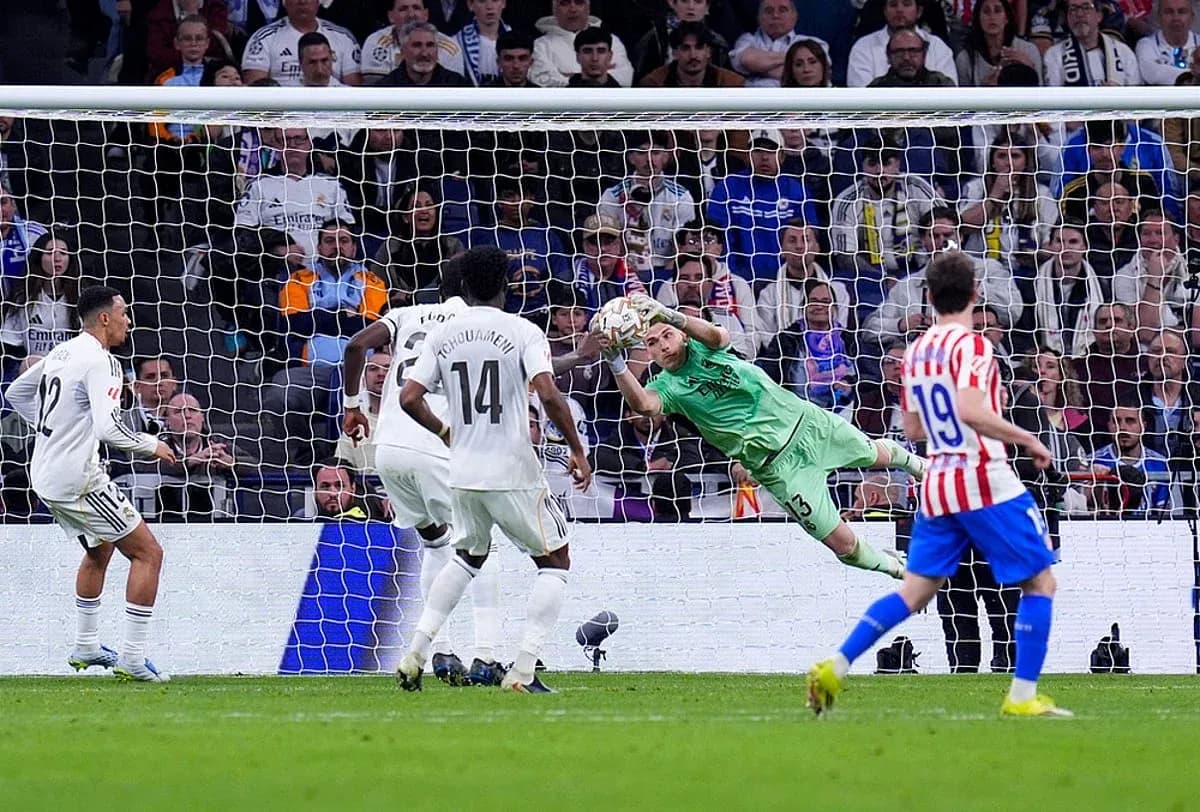
From a goalkeeping perspective, the numbers highlight how the tactical battle was decided more in front of the boxes than inside them. A. Sivera for Alaves faced only two shots on target, making 1 save; the single goal conceded aligned with Mallorca’s low 0.28 xG, indicating that the visitors rarely engineered high-quality looks. L. Roman, meanwhile, made 2 saves from 4 shots on target, conceding twice against an Alaves xG of 1.09. Neither keeper significantly over- or under-performed relative to the quality of chances; instead, the match hinged on Alaves’ ability to repeatedly create moderate-quality opportunities through wide overloads and second-phase pressure.
Statistically, the verdict supports the eye test of a controlled home comeback. Possession was perfectly balanced at 50–50, yet Alaves produced 15 shots to Mallorca’s 4, with 4 on target versus 2, and a 7–2 edge in blocked efforts—evidence of sustained pressure and territorial dominance around the Mallorca box. The hosts also earned 9 corners to Mallorca’s 4, another indicator of where the game was played.
Defensively, Alaves’ “Defensive Index” in this match—if inferred from volume and quality of shots allowed—was strong: only 4 total shots conceded and 0.28 xG against, despite committing 15 fouls and collecting 2 yellow cards (Jonny Otto 26', Victor Parada 76'). Mallorca’s defensive performance was more strained: 15 shots and 1.09 xG conceded, 14 fouls and 1 yellow card (Martin Valjent 59'). In terms of “Overall Form” on the day, Alaves translated structural flexibility, effective wing-back usage, and well-timed substitutions into a deserved 2–1 win, while Mallorca’s narrow 4-3-1-2 struggled to adapt once the wide areas were consistently overloaded.