Barcelona Dominates Getafe in Methodical 2-0 Victory
Barcelona’s 2–0 win at the Coliseum was a methodical territorial occupation rather than a chaotic contest. In a La Liga round 32 fixture, Hansi Flick’s side turned 75% possession, 617 passes and an xG of 1.84 into a controlled away victory over a Getafe team locked in a deep 5-4-1. Getafe, with just 190 passes and 25% of the ball, were forced into a reactive game built on compactness and rest-defence, but they never found a route to goal, failing to register a single shot on target. By the 45th minute Barcelona had already broken the block, and from there they simply managed space and tempo.
First Half
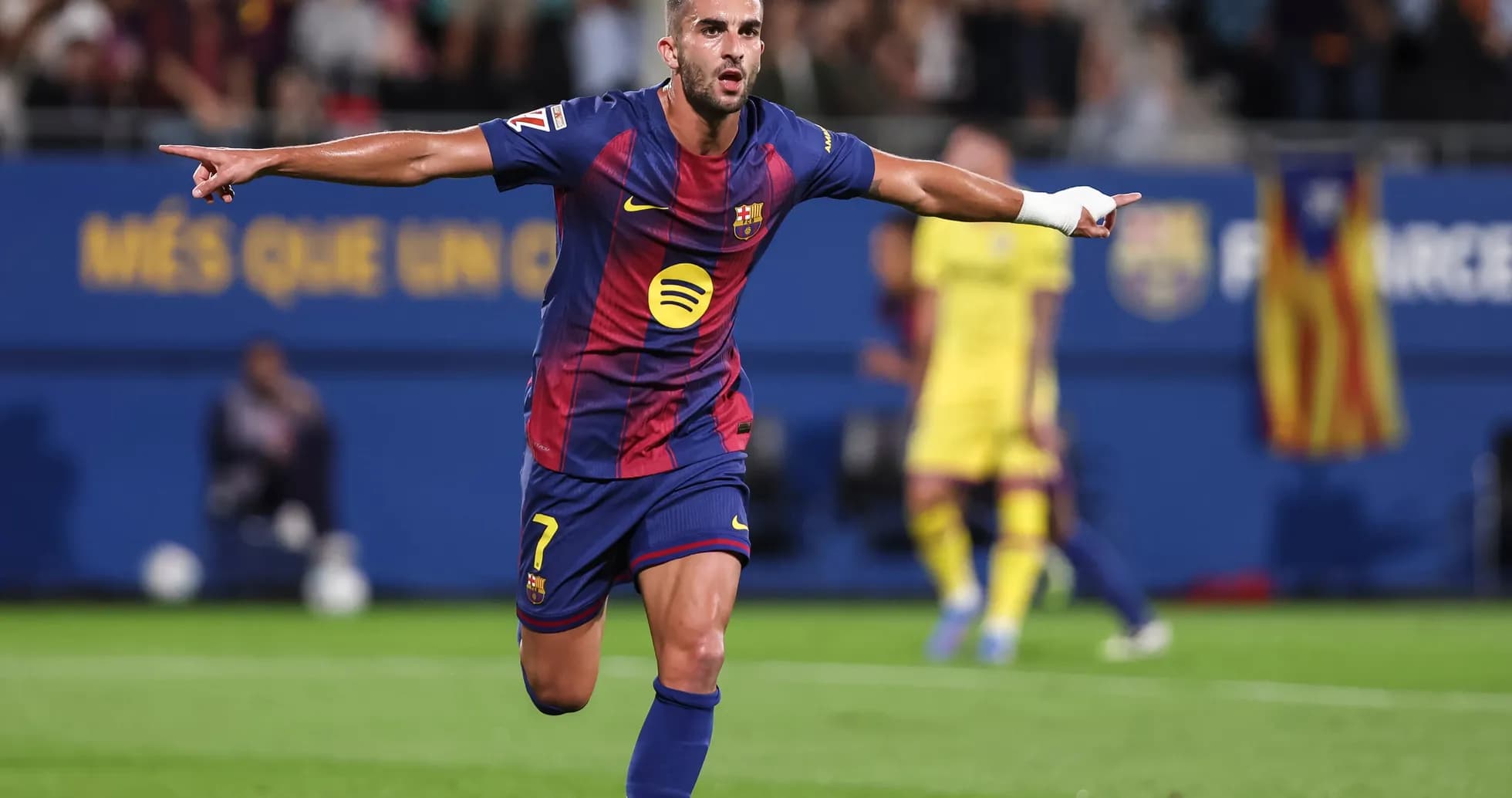
Fermín’s opener in the 45th minute set the tactical tone. Arriving from the left half-space as the advanced midfielder, he exploited the vertical connection between Pedri and the front line. Pedri, operating as one of the double pivots but constantly stepping into the right interior channel, threaded the decisive pass that split Getafe’s last line. Fermín’s timing into the box punished a defensive unit that had been dragged laterally all half by Barcelona’s full-backs and wingers rotating into wide overloads. The goal crystallised Barcelona’s plan: lure Getafe’s wing-backs out, then attack the vacated channels between centre-back and wing-back with late runs from midfield.
Discipline data underlined the game’s physical undercurrent. The first yellow card arrived on 20 minutes, with Jules Koundé booked for a foul as Getafe tried to spring a rare transition. Pablo Gavi followed on 39 minutes, also for a foul, reflecting his aggressive role in counter-pressing whenever Getafe attempted to play through central zones. After the break, the home side’s frustration surfaced. Djene Dakonam saw yellow on 63 minutes for a foul, the product of repeated emergency defending as Barcelona continued to find pockets between Getafe’s midfield and defence. Mario Martín’s booking on 87 minutes, again for a foul, captured a late phase in which Getafe were still chasing and arriving late into duels rather than dictating them.
Second Half
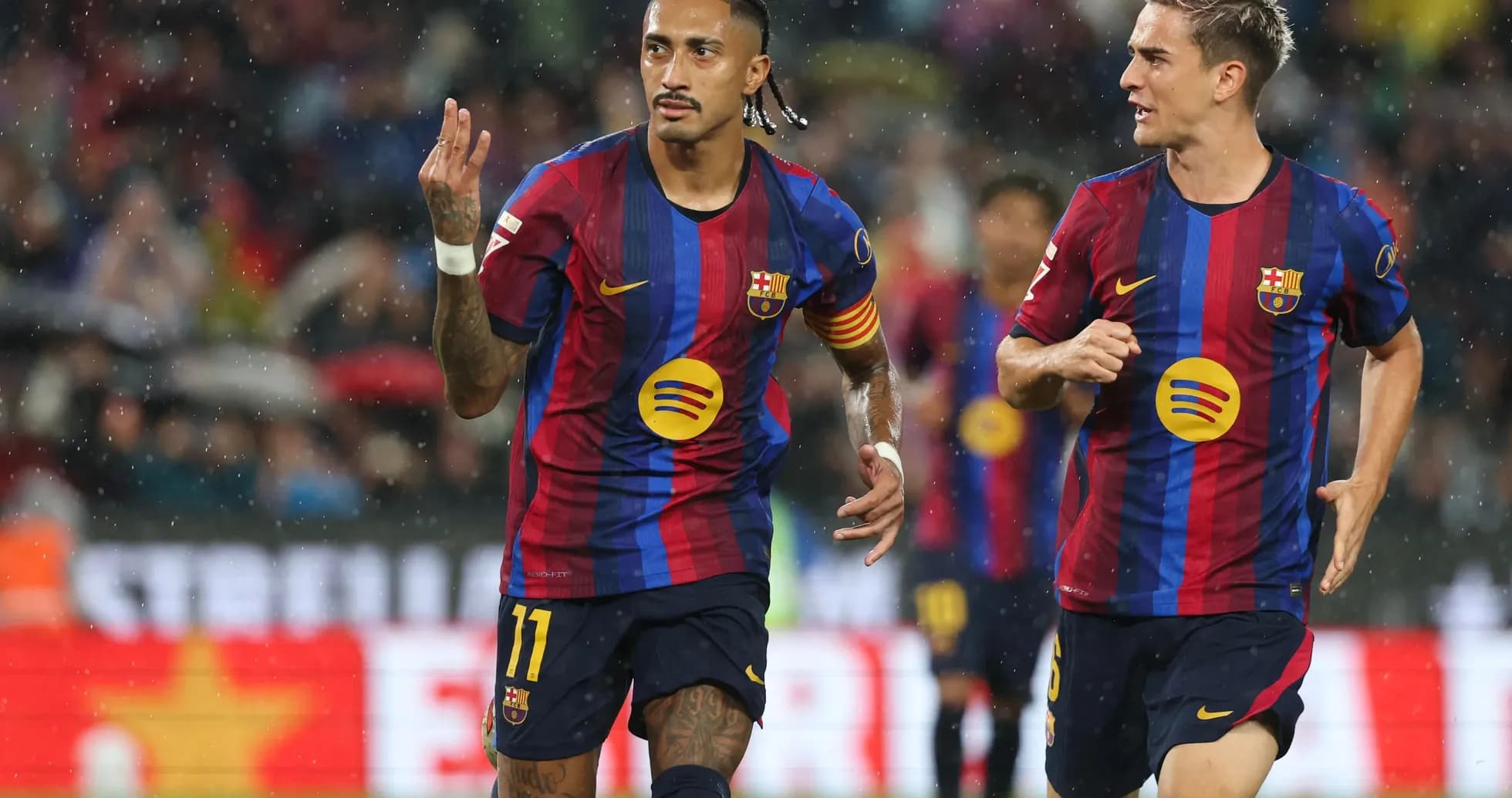
The second goal on 74 minutes, scored by Marcus Rashford and assisted by Robert Lewandowski, emerged from a different mechanism: transition efficiency. With Getafe forced to open up slightly after the interval and following a series of substitutions, Barcelona finally found space to attack depth. Lewandowski dropped off the last line to receive and then released Rashford running beyond. The pattern contrasted with the first-half positional play: less about patient circulation, more about exploiting stretched distances between Getafe’s centre-backs and wing-backs as their block lost compactness.
Goalkeeping and defensive structures tell the rest of the story. David Soria for Getafe made 2 saves, but the key figure is Barcelona’s shot profile: 11 of their 13 attempts came from inside the box, confirming that their possession was not sterile. They consistently progressed into high-value zones, with Gavi and Pedri orchestrating from the double pivot and Fermín, R. Bardghji and Dani Olmo rotating between the lines. Getafe’s goalkeeper “goals prevented” metric sat at 0, indicating that while Soria dealt with what came his way, Barcelona’s finishing more or less matched the quality of their chances.
At the other end, J. Garcia in the Barcelona goal did not have to make a single save. Getafe’s 4 total shots included 0 on target and only 3 from inside the box, a direct consequence of Barcelona’s high Defensive Index on the day: early counter-pressing, aggressive rest-defence with centre-backs P. Cubarsi and G. Martin holding a high line, and full-backs J. Cancelo and J. Kounde squeezing play to keep Getafe penned in. The away side committed just 8 fouls to Getafe’s 15, a sign that they controlled duels positionally rather than relying on last-ditch interventions.
Personnel Changes
Personnel changes reinforced these dynamics. At half-time, Jose Bordalas Jimenez reacted with a double switch: Kiko Femenia (IN) came on for S. Boselli (OUT), and L. Vazquez (IN) came on for V. Birmancevic (OUT), an attempt to add width and more direct running to the 5-4-1. Later, Djene (OUT) was replaced by A. Abqar (IN) at 76 minutes, and Davinchi (OUT) made way for Alex Sancris (IN), while A. Kamara (IN) replaced M. Arambarri (OUT) on 81 minutes. These moves shifted Getafe towards a slightly more front-foot posture, but they also loosened the compactness that had contained Barcelona in the first half.
Flick’s substitutions were more about energy management and preserving structural superiority. On 60 minutes, F. de Jong (IN) came on for Gavi (OUT), adding calmer distribution and press-resistance at the base of midfield. Simultaneously, R. Araujo (IN) replaced J. Kounde (OUT), and M. Rashford (IN) came on for R. Bardghji (OUT), injecting pace for the transition phase that ultimately produced the second goal. Later, A. Balde (IN) replaced Fermín (OUT) at 82 minutes, providing defensive security on the flank, and M. Casado (IN) came on for Pedri (OUT) on 88 minutes to close out the central spaces. Crucially, every substitution maintained the 4-2-3-1’s balance: two stable pivots, wide threats, and Lewandowski as the reference point.
Statistics
Statistically, Barcelona’s performance aligned closely with their underlying numbers. An xG of 1.84 against 0.63, combined with a 2–0 scoreline, suggests a result broadly in line with chance quality. Their 90% pass completion from 617 passes underscores both their Overall Form in possession and their capacity to suffocate opponents territorially. Getafe’s 59% accuracy from 190 passes and 7 offsides reflect a strategy based on long, risky balls into a lone forward, frequently caught by Barcelona’s high line. With both sides finishing on 2 yellow cards and no reds, the disciplinary balance was even, but the tactical reality was not: Barcelona’s structure, pressing and positional play produced clear superiority at both ends, while Getafe’s deep 5-4-1 never translated into meaningful offensive threat.