Alex Eala's Tokyo Performance Fuels Hong Kong Ambitions
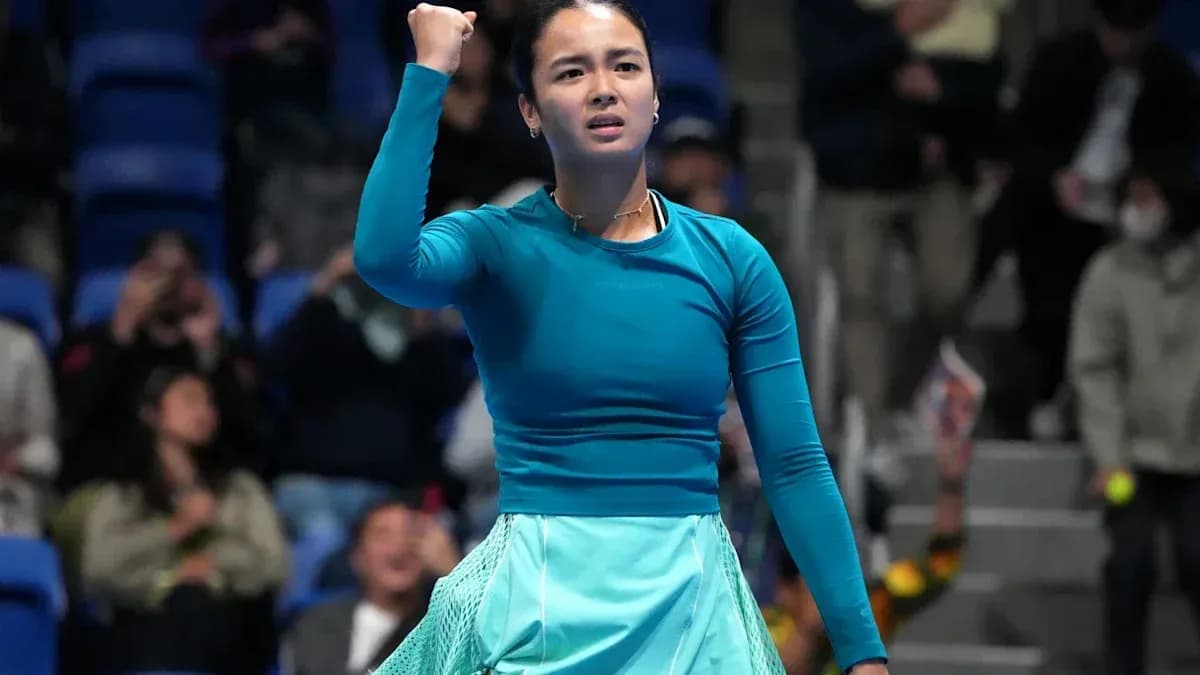
Alex Eala walked out of Tokyo without a trophy, but not without a statement.
The Filipino star, in the middle of the best season of her young career, fell in the quarter-finals of the Tokyo Open. On paper, it was another defeat in a patchy post‑US Open stretch. On court, it felt like something else entirely: a reminder that she is hovering dangerously close to the game’s next tier.
Pushing the Champion to the Brink
Eala’s 2026 campaign has already delivered the big milestones. A maiden WTA title in Washington. A run to the fourth round at Wimbledon. A long-awaited breakthrough into the world’s top 20. For the first time, her name sits naturally alongside the sport’s regular second-week contenders.
The weeks since New York have not been as kind. Just three wins from seven WTA matches after the US Open told of a player searching for rhythm again. The draw did her no favours either. Twice she ran into Diana Shnaider. Twice she lost.
Tokyo, though, changed the tone.
In Ningbo, Shnaider had been too strong. In the Japanese capital, Eala flipped the script early and forced the Russian to dig to the bottom of her reserves. Eala came out blazing, taking the first set 6-2 and putting Shnaider under serious pressure with her depth and tempo off the ground.
Then came the knife-edge moments.
Shnaider clawed her way into a tiebreak in the second set, and that is where the match turned. Eala stood just two points from a straight-sets win over a player who would not drop another match all week. The Russian escaped 7-6(5), then edged the decider 6-4.
By the end, Shnaider had survived, not cruised.
The Russian went on to lift the Tokyo Open title – her first tournament victory of 2026 – beating Leylah Fernandez in the final. Several players dragged her into a third set during the week, but none came as close as Eala to sending her home early. No one else had her on the ropes with a straight-sets win in sight.
For a player wrestling with recent inconsistency, that matters. The gap between a quarter-finalist and the eventual champion, in this case, was a handful of points. Tokyo, judged in that light, was Eala’s sharpest performance since the US Open.
A Different Kind of Threat in Hong Kong
Now comes one last stop: the Hong Kong Open, her final tournament of the 2026 season.
Shnaider is nowhere in the draw this time, a small relief for Eala given their recent history. The path is not clear, though. It is simply different.
First up is Alycia Parks, a volatile first-round opponent with the kind of power that can blow hot and cold. The head-to-head sits at 1-1, but Eala took their most recent meeting, a useful mental edge when margins are tight.
Based on the rankings and projected paths, the names circling in her section are familiar: Tereza Valentova, Xinyu Wang, Maria Sakkari, Sorana Cirstea. Aside from Sakkari, whom she has never faced, Eala has already built mini-rivalries with each of them.
Her record against Parks, Wang and Cirstea is identical: 1-1, with Eala winning the latest encounter in each series. Those trends suggest she knows how to make adjustments, how to learn from previous meetings and tilt the balance her way.
Valentova is the outlier. The Czech has been a genuine stumbling block.
Still only 19, Valentova surged into the spotlight last year, rising as high as world No. 42 in May before injuries and a slump in form dragged her outside the top 80. Even through that turbulence, she has remained a problem for Eala. They have met twice – at the Japan Open in 2025 and the Qatar Open in 2026 – and Valentova won both.
If there is a surprising main threat to Eala’s Hong Kong ambitions, it might be the player whose ranking no longer screams danger, but whose game clearly does.
For that rematch to happen, both have work to do. Eala must first get past Parks in her opener. Valentova needs to come through qualifier Himeno Sakatsume. Only then would their paths cross again, with far more on the line than just another entry in their head-to-head.
The main draw in Hong Kong starts on Monday, November 2, though Eala and Valentova are scheduled to open on Tuesday. By then, the Tokyo near-miss will either linger as a frustration or stand as the spark that pushed Eala into one last deep run.
After pushing a future champion to the brink in Tokyo, the question now is simple: can she turn those inches into a second WTA title before the season runs out?