Andy Roddick Proposes Simple Fix for Grand Slam Runner-Up Speeches
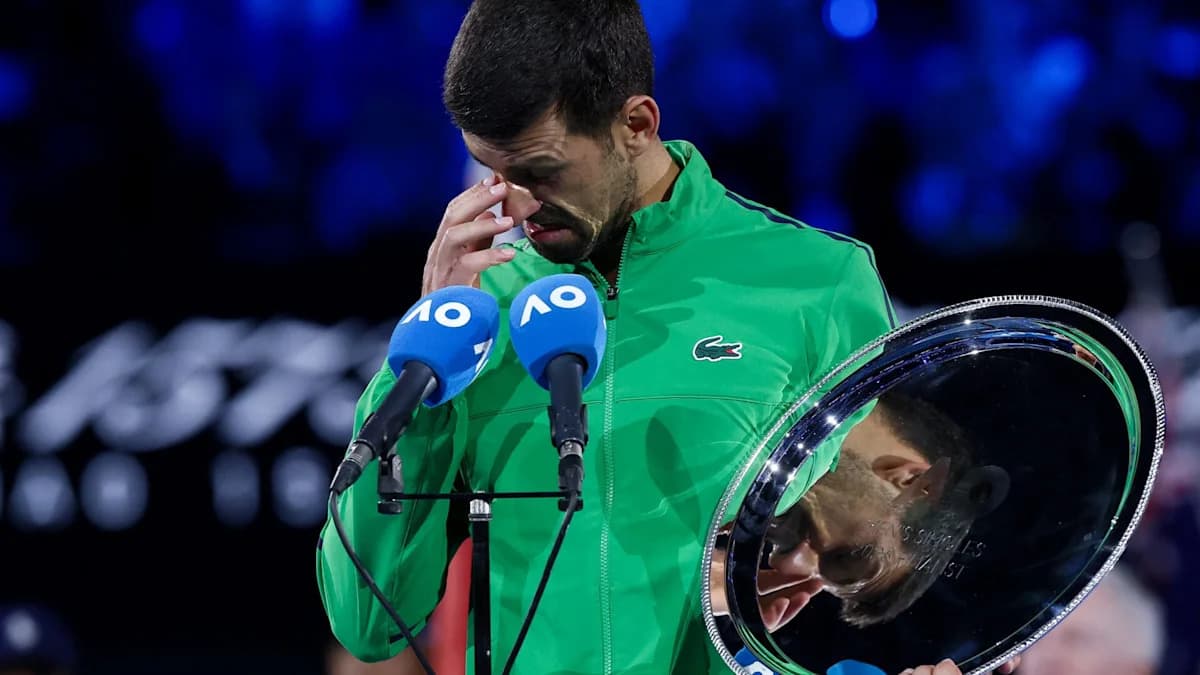
Andy Roddick, who faced runner-up speeches four times out of his five Grand Slam final appearances, shared his thoughts on these post-match moments. The last American man to win a Grand Slam, Roddick took the 2003 US Open title but then lost four major finals consecutively—three at Wimbledon and one more at the US Open—all against Roger Federer.
Roddick's Grand Slam Finals Record
- Win: 2003 US Open (Hard) vs. Juan Carlos Ferrero - 6–3, 7–6(7–2), 6–3
- Loss: 2004 Wimbledon (Grass) vs. Roger Federer - 6–4, 5–7, 6–7(3–7), 4–6
- Loss: 2005 Wimbledon (Grass) vs. Roger Federer - 2–6, 6–7(2–7), 4–6
- Loss: 2006 US Open (Hard) vs. Roger Federer - 2–6, 6–4, 5–7, 1–6
- Loss: 2009 Wimbledon (Grass) vs. Roger Federer - 7–5, 6–7(6–8), 6–7(5–7), 6–3, 14–16
On the Challenge of Runner-Up Speeches
During an episode of his Served podcast, Roddick explained how tough it is to give a speech in such a painful moment. He recalled the 2009 Wimbledon final, saying it was the only time he truly struggled emotionally. He described the fear that breaking down could mean losing control of the match entirely.
"There are two things. It's impossibly difficult, and you can focus on that part of it, and in that moment, where people know that you are torn apart, if you are even just okay, you’re going to get a lot of credit and change a lot of minds about you."
Roddick praised recent runner-up Ben Shelton's post-US Open speech, calling it possibly his best public moment after a loss. He admired Shelton’s words, the way both finalists acknowledged each other's teams, and their respectful conduct following the tournament.
A Simple Option for Runner-Up Speeches
Roddick suggested that giving runners-up the choice of whether to deliver a speech would be best. They could simply thank their team, express gratitude, or opt out entirely if they can't manage a speech at that moment. He admitted broadcasters might dislike this idea, but felt it was straightforward and respectful of the players' feelings.
"It should just be the option of the runner-up. I'm sorry, I'd like to say thanks to my team. Thank you for the opportunity, or I don’t think I can do it right now. I don’t know. Pretty simple."
Many fans want to hear from the losing finalists, yet these speeches often lack impact as players mostly want to leave quickly. The situation worsens when players wait on court during trophy presentation preparations, and officials speak over the microphone. Leaving the choice to players seems sensible, though unlikely to be adopted soon due to tournament and broadcast interests.
This issue extends beyond Grand Slams, affecting speeches throughout ATP and WTA events worldwide.