Argentina Edges Cape Verde Islands in Extra Time
Under the Miami lights at Hard Rock Stadium, this Round of 32 tie felt less like a routine step for the reigning world power and more like a test of nerve. Argentina eventually bent the night to their will, winning 2–1 after extra time against a Cape Verde Islands side that arrived as underdogs but carried the stubborn resilience of a team that had forgotten how to lose in normal time.
I. The Big Picture – Two Different Roads to Miami
Heading into this game, the contrast between the sides could not have been starker. Argentina topped Group J with 9 points from 3 matches, scoring 8 and conceding just 1 overall. Their goal difference of 7 underlined a campaign of control and cutting edge. Across the tournament so far, they had played 4 fixtures in total, winning all 4. At home in World Cup venues, they had 3 wins from 3 with 8 goals for and 2 against, an average of 2.7 goals scored and 0.7 conceded. On their travels, they had added another win, scoring 3 and conceding 1, with a striking 3.0 goals per game away and 1.0 against.
Cape Verde Islands, by contrast, slipped into the knockout phase through grit rather than glamour. They finished second in Group H with 3 points from 3 matches, drawing all three. Their overall group record was 0 wins, 3 draws, 0 defeats, with 2 goals scored and 2 conceded – a perfectly balanced goal difference of 0. In the wider tournament picture, they had played 4 fixtures in total: 3 away and 1 designated home. They were still searching for a first win, with 3 draws and 1 defeat overall. On their travels they had scored 4 and conceded 5, averaging 1.3 goals for and 1.7 against away, while their lone home outing finished goalless.
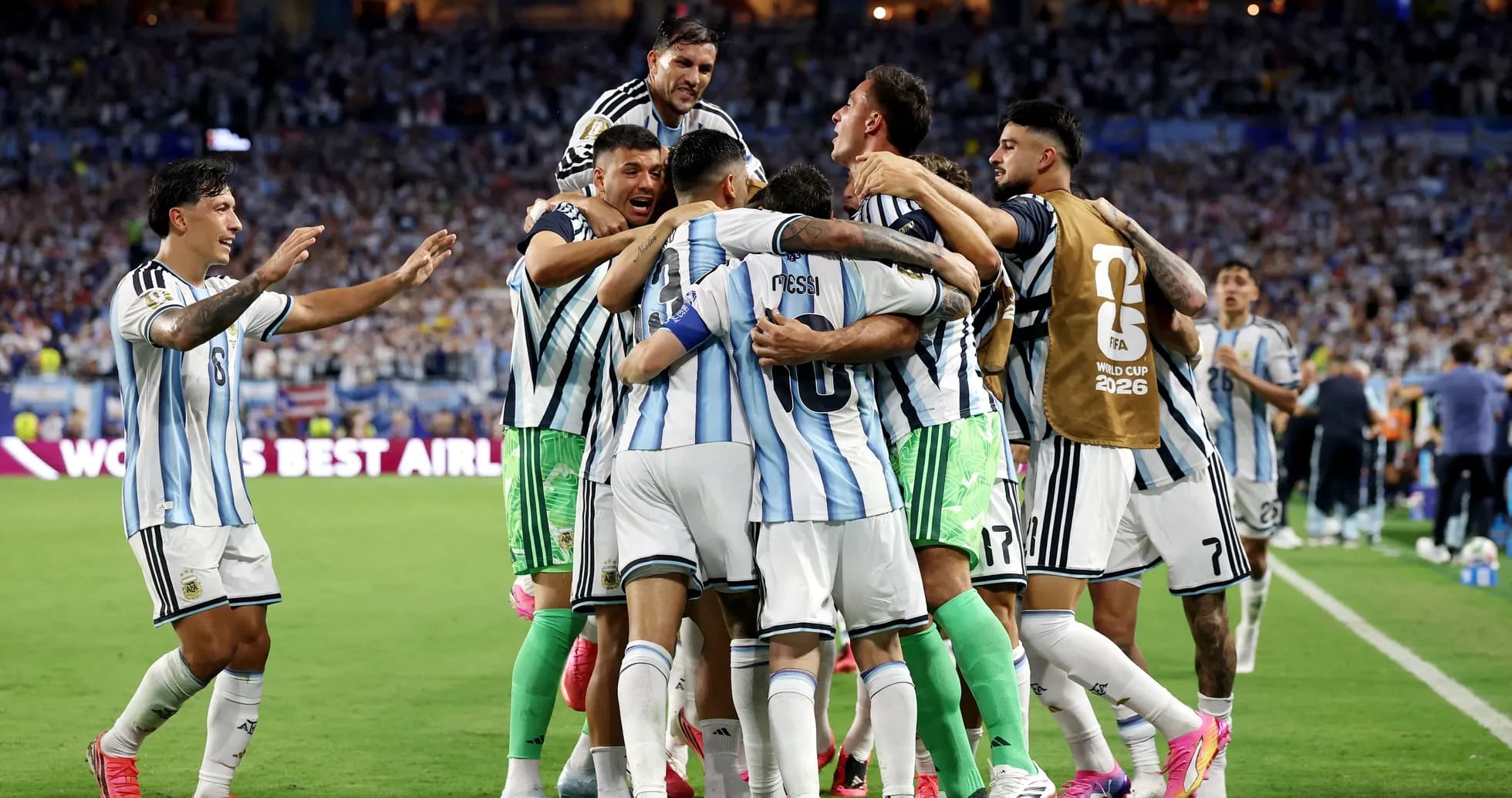
The scoreboard on the night told its own story: Argentina led 1–0 at half-time, were pegged back to 1–1 by full time, and only found separation in extra time, edging ahead 2–1 without the drama of penalties.
II. Tactical Voids and Discipline – Where the Edges Show
Neither side reported absences in the data, so this was essentially full-strength versus full-strength: Lionel Scaloni leaning into his trusted 4-4-2, Pedro Leitao Brito doubling down on Cape Verde Islands’ now-familiar 4-1-4-1.
Argentina’s season-long disciplinary profile hinted at a team that tends to suffer bookings late rather than early. All of their yellow cards in this World Cup had come from the 76th minute onward: 33.33% between 76–90, 33.33% between 91–105, and 33.33% between 106–120. It is the pattern of a side that presses hard in the decisive phases and is willing to take tactical fouls to protect a lead or regain momentum in the dying moments.
Cape Verde Islands, on the other hand, skew heavily towards early and mid-half cautions. Overall, 40.00% of their yellow cards arrive between 0–15 minutes, 20.00% between 16–30, another 20.00% between 61–75, and the final 20.00% between 91–105. This suggests a team that tackles aggressively from the outset to set a tone, then reverts to pragmatic fouling when legs tire and space opens up later.
In a match that stretched to 120 minutes, those patterns intersected dangerously: Cape Verde Islands’ early intensity versus Argentina’s late-game bite. Over a long night, the risk for both was clear – Cape Verde Islands flirting with early bookings that might blunt their pressing, Argentina walking a tightrope in extra time as fatigue and urgency combined.
III. Key Matchups – Hunter vs Shield, Engine vs Enforcer
Hunter vs Shield
At the heart of the narrative was Lionel Messi, the competition’s leading scorer. Across the tournament he had 7 goals in total from 4 appearances, with 22 shots (15 on target) and a towering average rating of 9.28. His finishing volume and accuracy make him the purest “hunter” in this tie, but his numbers also reveal a layer of craft: 141 passes with 10 key passes, an 80% accuracy rate, and 11 fouls drawn. He is both finisher and magnet, bending defensive structures around him.
Cape Verde Islands’ “shield” is more collective than individual. In the group phase they conceded only 2 goals overall, and even with their knockout defeat included, they had allowed 5 goals across 4 matches in total. On their travels, 5 conceded in 3 games at an average of 1.7 against away points to a back line that can be breached, but rarely collapses. The 4-1-4-1 with K. Lenini screening the defence is built to form a compact block in front of the centre-backs R. Lopes and D. Borges, forcing Messi and Lautaro Martinez into crowded central zones and nudging Argentina’s attacks towards the flanks.
Engine Room – Control vs Disruption
Argentina’s midfield four was designed for both control and incision. Rodrigo de Paul and Enzo Fernandez offer verticality and tempo, while Alexis Mac Allister and Thiago Almada add positional intelligence between the lines. In possession, this 4-4-2 often morphs into a 4-2-3-1, with Almada stepping into the half-spaces and Mac Allister drifting infield to create overloads around Messi.
Cape Verde Islands’ engine is more about disruption and transition. With K. Lenini sitting deepest, the line of four – R. Mendes, L. Duarte, D. Duarte, and J. Cabral – is tasked with compressing central zones, denying time to Fernandez and Mac Allister, and springing N. Da Costa on the counter. Their season numbers show a team that can both shut up shop and threaten: 2 clean sheets overall, but also 2 matches in which they failed to score, underscoring their dependence on quick breaks rather than sustained pressure.
IV. Statistical Prognosis – Margins of Superiority
On paper, Argentina’s attacking profile is overwhelming. Overall, they average 2.8 goals scored and 0.8 conceded per game. At home they are even more dominant, with 8 goals for and 2 against in 3 matches, and 2 clean sheets. Cape Verde Islands average 1.0 goal scored and 1.3 conceded overall, with their away profile (1.3 for, 1.7 against) hinting at openness rather than pure containment.
There is also a psychological wrinkle in Argentina’s penalty record. They have earned 2 penalties overall, scoring 1 and missing 1. Messi himself has missed a spot-kick in this tournament. In a tie that reached extra time, the shadow of another shootout was never far away, and the knowledge of a recent miss adds a subtle layer of pressure to Argentina’s otherwise imperious aura.
Yet across 120 minutes, the weight of structure and firepower told. Argentina’s preferred 4-4-2 has been used in all 4 of their World Cup fixtures, reinforcing automatisms in pressing, build-up, and rotations around Messi. Cape Verde Islands have also kept faith with their 4-1-4-1 in all 4 matches, but the talent gap in the final third is stark: Argentina have failed to score in 0 matches, Cape Verde Islands in 2.
In the end, this Round of 32 clash became a study in resistance and inevitability. Cape Verde Islands’ discipline and shape pushed Argentina to the edge of extra time. But the champions’ depth, late-game intensity, and the enduring brilliance of Messi – the tournament’s foremost hunter – eventually pierced the shield, sending Argentina forward and leaving Cape Verde Islands with the bittersweet pride of a side that made a giant sweat deep into the Miami night.