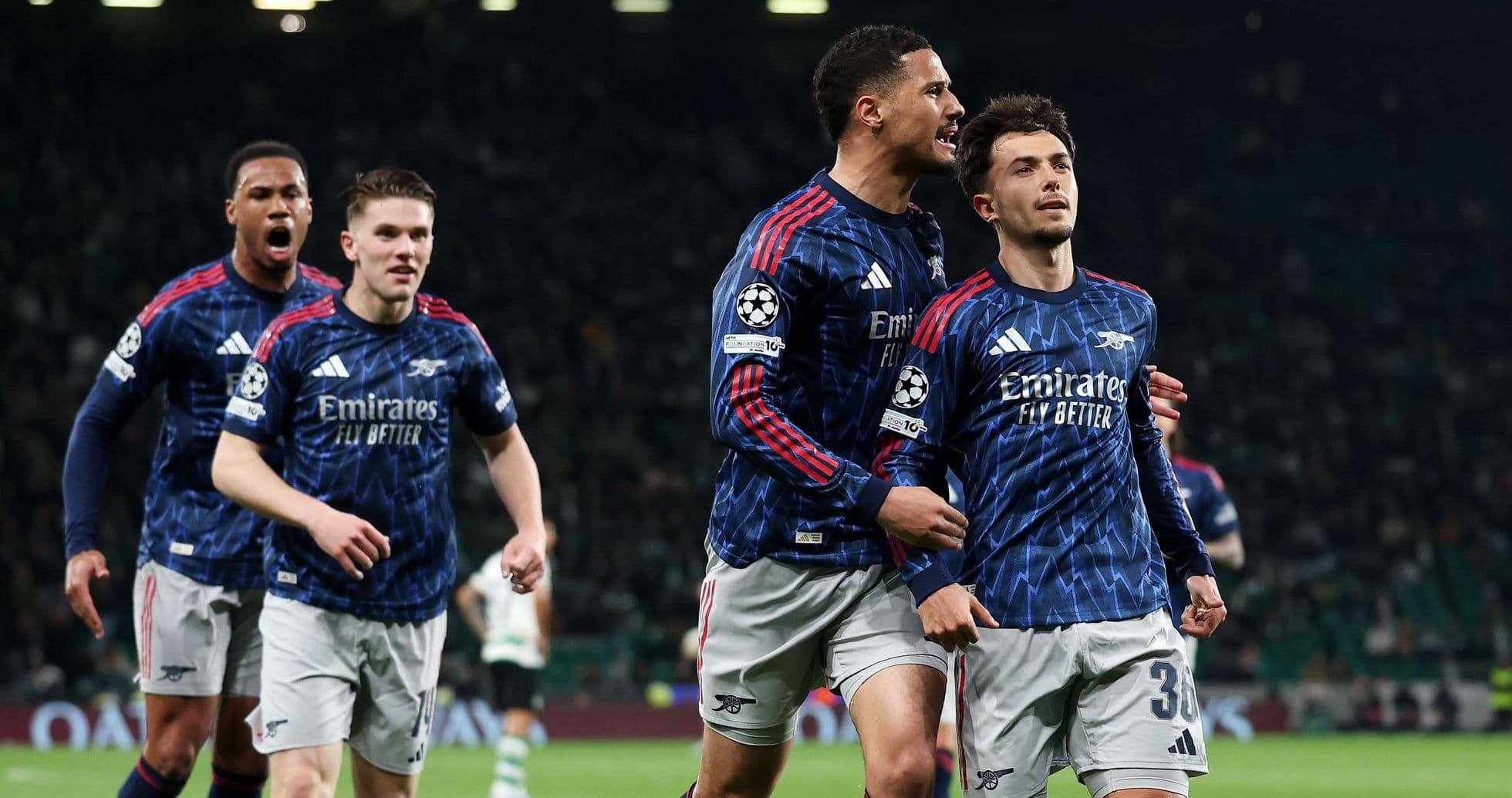
Arsenal Edges Sporting CP 1–0 in UEFA Champions League Clash
At Estádio José Alvalade, Arsenal edged Sporting CP 1–0 in a finely balanced UEFA Champions League quarter-final first leg defined by control versus punch. Arsenal’s 56% possession, superior passing accuracy (92% to 85%) and higher xG (1.33 to 0.71) underpinned their territorial dominance, but they needed a late Kai Havertz goal on 90' to finally break Sporting’s resistance. Sporting, in a 4-2-3-1, produced more shots (11–8) and more efforts on target (5–4), yet Arsenal’s structure and David Raya’s 5 saves tilted the tie. It was a contest of marginal gains, where Arsenal’s bench and game management proved decisive.
Scoring Sequence & Disciplinary Log
The match remained goalless through a cautious first half. The only disciplinary incident before the break came on 31', when Hidemasa Morita was booked for a foul, a yellow card that subtly constrained Sporting’s ability to press and counter-foul in midfield for the remaining hour. No further cards were shown; Sporting finished with 1 yellow, Arsenal with none.
The second half hinged on a series of key interventions. On 62', Sporting made the first structural change: Daniel Bragança (IN) came on for João Simões (OUT), adding more progressive passing from deep. Two minutes later, on 64', Arsenal thought they had the breakthrough, but Martín Zubimendi’s goal was cancelled after a VAR review. The disallowed strike underscored Arsenal’s growing threat between Sporting’s lines but kept the tactical balance intact.
Arsenal then turned to their bench to increase attacking presence. On 70', Kai Havertz (IN) came on for Martin Ødegaard (OUT), shifting the 4-3-3 into a more direct, penalty-box-oriented shape. At 76', Mikel Arteta doubled down on fresh wide energy: Gabriel Martinelli (IN) replaced Leandro Trossard (OUT), and Max Dowman (IN) came on for Noni Madueke (OUT), injecting pace and verticality on both flanks.
Sporting’s response came on 79', when Rafael Nel (IN) replaced Pedro Gonçalves (OUT), looking for more depth in transition. Yet the final word belonged to Arsenal. On 90', Havertz finished the decisive move, assisted by Martinelli, converting Arsenal’s late territorial pressure into a 1–0 away win.
Tactical Breakdown & Personnel
Sporting CP lined up in a 4-2-3-1 with Rui Silva in goal behind a back four of Iván Fresneda, Ousmane Diomande, Gonçalo Inácio and Maximiliano Araújo. The double pivot of Hidemasa Morita and João Simões was tasked with screening Arsenal’s central rotations while feeding an attacking line of Geny Catamo, Francisco Trincão, Pedro Gonçalves and lone striker Luis Javier Suárez.
Sporting’s plan was clear: concede some possession, compress the central lane, and spring quickly once Arsenal’s full-backs advanced. Their 44% possession but 11 total shots (8 inside the box) illustrates that they focused on quick, vertical attacks rather than long phases on the ball. The 3 corner kicks and 2 offsides show they did manage to stretch Arsenal’s line sporadically. However, with only 0.71 xG and 5 shots on target, they ran into a disciplined Arsenal block and a sharp David Raya.
Arsenal’s 4-3-3 was built on control. David Raya sat behind a back four of Ben White, William Saliba, Gabriel Magalhães and Riccardo Calafiori. In midfield, Zubimendi anchored with Declan Rice and Ødegaard as the advanced interiors. Up front, Noni Madueke and Leandro Trossard flanked Viktor Gyökeres. The selection of Zubimendi and Rice together gave Arsenal double security in rest defence, allowing both full-backs to step high and compress Sporting into their own half.
Arsenal’s 510 passes (to Sporting’s 405) and 92% accuracy (versus 85%) reflect a methodical approach: circulate, move Sporting’s block, then look for half-space entries. Despite having fewer shots (8 to 11), Arsenal’s chances were of higher quality, reflected in the 1.33 xG. Their 4 shots on target forced Rui Silva into 3 saves, with the remaining efforts missing or being blocked. The cancelled Zubimendi goal on 64' highlighted how Arsenal’s midfielders could arrive late into the box when Sporting’s double pivot was stretched.
The key tactical turning point came with the substitutions. Removing Ødegaard for Havertz shifted Arsenal’s central occupation: instead of a pure playmaker dropping between lines, Havertz pinned the centre-backs, often joining Gyökeres to create a dual presence in the box. This, combined with Martinelli’s direct dribbling and Dowman’s energy, turned Arsenal’s 4-3-3 into something closer to a 4-2-4 in possession. Sporting’s back four, which had coped well when facing one central reference (Suárez at the other end, Gyökeres for Arsenal), now had to deal with constant box occupation and late runs.
Sporting’s only booking, Morita on 31', had subtle tactical consequences. Already key to breaking up play, he had to moderate his aggression, which in turn allowed Rice and Zubimendi more freedom to receive and turn under less pressure. Sporting’s 11 fouls to Arsenal’s 10 show a relatively balanced physical contest, but with Arsenal able to keep their midfielders on the edge of challenges without disciplinary risk.
In goal, Raya’s 5 saves versus Rui Silva’s 3 underline Arsenal’s slightly higher shot quality and Sporting’s reliance on lower-probability efforts. The team-level “goals_prevented” metric (1 for each side) suggests both defences and goalkeepers combined to keep the scoreline lower than the underlying chances might have allowed.
The Statistical Verdict
The numbers confirm a match of narrow but clear Arsenal superiority. They led in possession (56%–44%), passing volume (510–405) and accuracy (92%–85%), while also posting the higher xG (1.33–0.71). Sporting, however, were not passive: they attempted more shots (11–8), matched Arsenal in blocked shots (2–2) and generated 8 efforts inside the box, indicating that their counter-attacking and set-piece patterns did create moments of jeopardy.
Discipline was clean: Sporting’s single yellow (Morita 31') contrasted with Arsenal’s zero cards, reflecting the visitors’ control of tempo and duels. In goal, David Raya’s 5 saves versus Rui Silva’s 3, with both teams credited with 1 goal prevented, encapsulate a tight contest where fine margins in the box and on the touchline decided the outcome. Ultimately, Arsenal’s structural control, bench impact and late execution via Havertz and Martinelli transformed statistical superiority into a precious 1–0 away advantage.