Arsenal Targeting Morgan Rogers as Top Forward
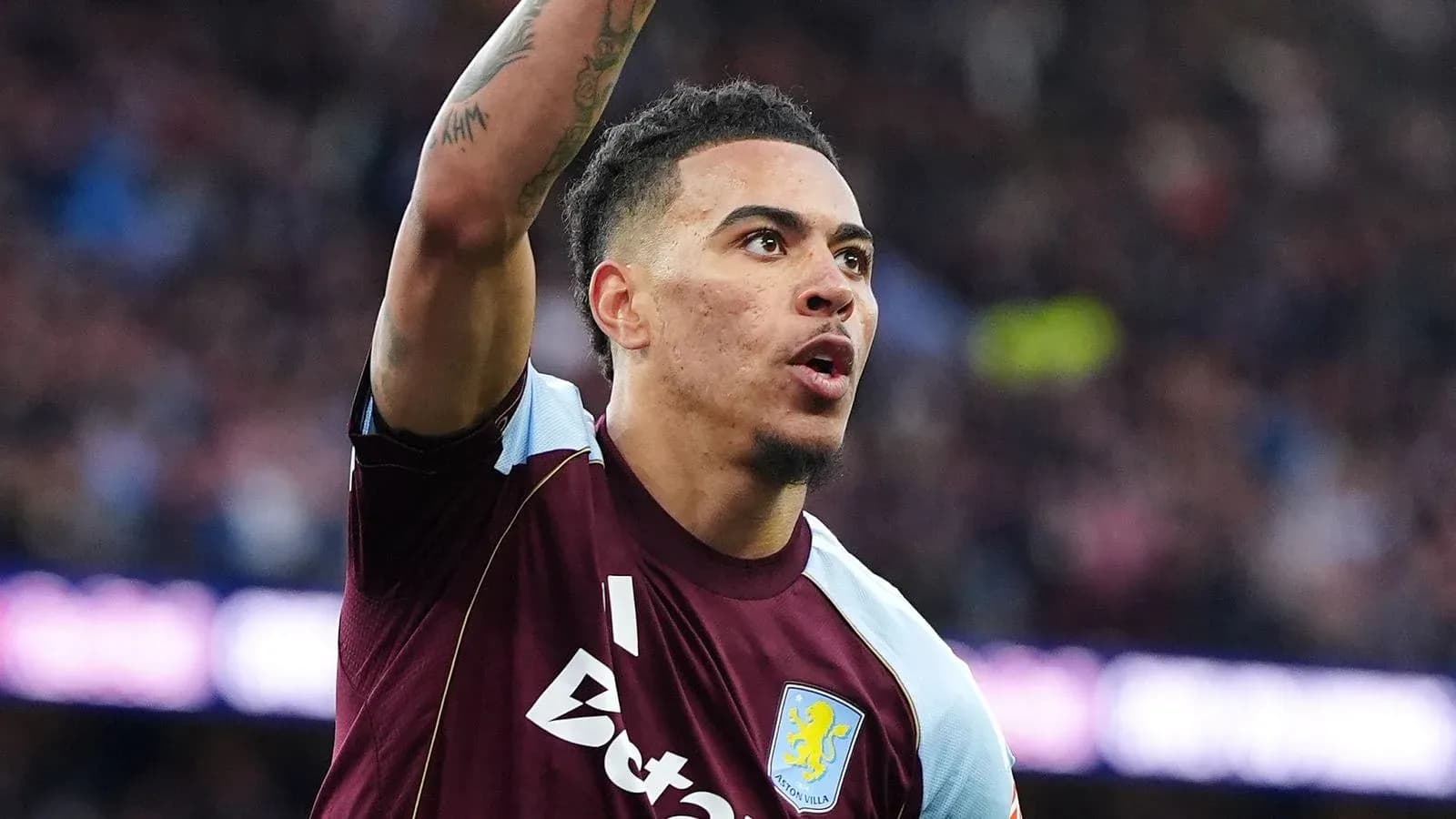
Arsenal have locked in on Morgan Rogers. Not as a passing fancy, not as one name on a long list, but as their top forward target of the summer.
An approach to Aston Villa is now expected. The timing is no coincidence. England are out of the World Cup, the dust is settling, and Arsenal have already pushed through a £34m deal for Christos Tzolis. The focus in north London has turned sharply to the left-hand side of Mikel Arteta’s attack – and to the 23-year-old who has just produced a breakout season under Unai Emery.
There have been no club-to-club talks yet between Arsenal and Villa, but that is likely to change as the window develops and the market continues to inflate around them. Any deal for Rogers will be eye-watering. His transfer is expected to cost more than £100m, shaped by the fees already paid this summer for midfielders such as Elliot Anderson and Sandro Tonali. The going rate for elite, multi-functional attackers has shifted. Arsenal know it. Villa know it even more.
Villa’s hard line – and strong hand
Villa’s stance is blunt: they do not want to sell.
They can back it up. Rogers signed a new contract last November, tying him to Villa Park until 2031. That deal gives Emery’s side enormous leverage. There is no looming deadline, no pressure point for a cut-price exit, no easy angle for a buying club to exploit. If Arsenal want him, they will have to pay like a team prising away the face of another club’s project.
They would not be alone in trying. Manchester United, Chelsea and Paris Saint-Germain are also interested, circling a player whose numbers last season demand attention: 14 goals and 11 assists in 55 appearances for Villa. Since arriving from Middlesbrough in 2024 for £16m, Rogers has gone from promising Championship talent to full England international at speed, collecting 21 caps already.
Five of those came at the 2026 World Cup, where he supplied the assist for Anthony Gordon in England’s semi-final defeat to Argentina. On the biggest stage, under the brightest lights, he did not shrink.
That is part of the attraction. Arsenal are not just buying output. They are targeting temperament.
Arteta’s left-side rebuild
This is not a scattergun search. Arsenal’s interest in Rogers is tied directly to how Arteta wants to reshape his attack.
With Tzolis on his way in and Leandro Trossard departing, the left-hand side is being ripped up and redrawn. Martin Odegaard and Eberechi Eze give Arsenal a wealth of central creativity, so the plan is to view Rogers as a wide option rather than another No 10 clogging the middle of the pitch.
On paper, that raises a question. Rogers made his name as an attacking midfielder, even pushing Jude Bellingham for England’s No 10 shirt at times. Is he really a winger?
The numbers say yes. Around 45 per cent of his Premier League minutes for Villa last season came from the left flank. Emery’s fluid system behind Ollie Watkins regularly used Emiliano Buendia and John McGinn in advanced roles, shuffling positions and angles. In that chaos, Rogers thrived, stepping wide, drifting inside, linking play and still finding penalty-box moments.
His career has been a rolling demonstration of flexibility. He was a winger at Lincoln City. At Middlesbrough he was occasionally used as a false nine and a more orthodox centre-forward. For England’s World Cup semi-final against Argentina he started on the right, and from there created Gordon’s goal.
That kind of versatility is gold for a coach like Arteta. At 23, Rogers is still young enough to be moulded, drilled and refined into a specialist role without losing the unpredictability that makes him so dangerous. There is no obvious reason he cannot grow into Arsenal’s long-term solution on the left.
If the deal happens, he would not just fill a gap. He would reshape the way Arsenal attack that side of the pitch.
Alternatives on the board – but complications everywhere
Rogers is not the only forward on Arsenal’s radar, but he is the one they are pushing to the top of the board.
They remain interested in Julian Alvarez, whose work rate, movement and finishing would appeal to almost any elite manager. The problem lies away from the pitch. The player’s family prefer to remain living in Spain, and Alvarez himself wants to join Barcelona. That turns a difficult deal into a near-impossible one unless something dramatic changes at Camp Nou.
Another name under consideration is Bradley Barcola at PSG, a forward whose profile fits the high-pressing, high-tempo model Arsenal are building. Liverpool are also tracking him. There has been no direct contact yet between Arsenal and PSG, but the conditions of a potential deal have already been explored behind the scenes.
PSG, like Villa with Rogers, do not want to sell. Barcola’s future, though, could hinge on how the French champions move in the rest of the window. One big arrival in Paris can change the picture for a young attacker very quickly.
For now, the clearest line runs back to Birmingham. To Villa Park. To a 23-year-old England international under a long contract, coming off the best season of his career, and sitting at the heart of a tug of war between ambition and resistance.
Arsenal have chosen their man. The question now is simple: how far are they willing to go to get him?