Who Is the Father of Cricket? Exploring the Legacy of W.G. Grace and Indian Cricket's Pioneer
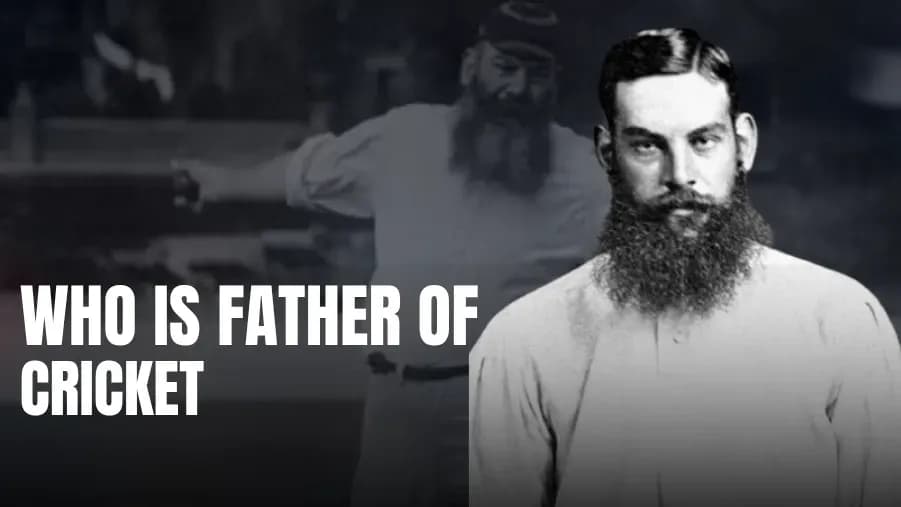
Cricket began in England and gradually spread to countries like South Africa, New Zealand, and India. Over time, the sport has changed significantly, adopting new formats and competitions that entertain millions worldwide. Among the figures credited with shaping cricket into what it is today, one name stands out globally: William Gilbert Grace, often hailed as the father of cricket.
William Gilbert Grace: The Real Father of Cricket
Born on July 18, 1848, in Downend, Bristol, W.G. Grace was more than just a cricketer; he was a phenomenon who transformed the game. His career spanned an astonishing 870 first-class matches, where he amassed over 54,000 runs and took nearly 2,800 wickets. Despite playing only 22 Test matches, his impact was monumental. Grace's style combined innovation, skill, and athleticism, pushing cricket from a simple pastime into a global sport.
- Full Name: William Gilbert Grace
- Birth: 18 July 1848, Downend, Gloucestershire, England
- Death: 23 October 1915, Mottingham, Kent, England
- Test Debut: 6 September 1880 vs Australia
- Test Matches: 22
- First-Class Matches: 870
- Runs Scored: Test - 1,098; First-Class - 54,211
- Wickets Taken: Test - 9; First-Class - 2,809
- Known For: Revolutionizing cricket with batting technique and all-round skills
- Profession: Cricketer and Physician
Early Life and Rise
Grace grew up in a medical family and was encouraged by his father and older brothers to pursue cricket. By age 15, he played for Gloucestershire County and participated in the prestigious "Gentlemen versus Players" matches. Before Test cricket started in 1877, these fixtures were the highest level of competitive play. Grace’s early centuries and consistent performances made him a star even as a teenager.
A Trailblazer in Cricket
Grace was not only a gifted batsman and bowler but also a charismatic figure who drew huge crowds. Known for his trademark beard and commanding presence, he helped popularize cricket beyond club grounds. Memorials including the W.G. Grace Memorial Gates at Lord’s Cricket Ground testify to his lasting influence.
Game-Changing Contributions
His mastery over batting technique—footwork, shot selection, and strategy—set new standards. Grace helped formalize cricket’s transition from casual play to organized sport. He played during a period when many rules were evolving, such as the introduction of overarm bowling and run-outs. His competitive nature sometimes pushed the boundaries, influencing the Marylebone Cricket Club (MCC) to refine the laws. Grace’s career helped cricket gain structure, professionalism, and international reach.
Why He Is Called the Father of Cricket
Grace earned this title not just by stats but because he redefined the game's image. His longevity, scoring feats, and leadership inspired countless players. Fans flocked to watch him, marking the shift from informal matches to major county and international contests. His legacy remains central to cricket’s history, making him a true pioneer and icon.
The Father of Cricket in India: Sir Ranjitsinhji Vibhaji Jadeja
In India, the title of father of cricket belongs to Sir Ranjitsinhji Vibhaji Jadeja, affectionately called Ranji. A prince from Nawanagar, he first gained fame playing university cricket in England, later joining county cricket and the England national team. His elegant batting, especially the leg glance, earned him widespread acclaim.
- Legacy: The prestigious Ranji Trophy, India’s main first-class cricket tournament, is named after him.
- Achievements: Broke records including surpassing W.H. Grace’s aggregate score in a season.
- Awards: Wisden Cricketer of the Year in 1896 for his classic batting style.
Impact and Enduring Influence
Both Grace and Ranji left marks that shaped generations of cricketers. While others like Sachin Tendulkar, Ricky Ponting, and Jacques Kallis have advanced the sport, none match the foundational legacy of Grace. His career came when cricket was still gaining popularity, yet his talent and charisma elevated it worldwide. His influence endures in how cricket is played and celebrated today.
Frequently Asked Questions
- Who is the father of cricket? W.G. Grace is widely recognized as the father of cricket.
- Who is called the king of cricket? Virat Kohli is often referred to as the king of cricket.
- Who is the king of God in cricket? Sachin Tendulkar holds this title.
- Who is the prince of cricket? Shubman Gill is known as the prince of cricket.
- Who is the father of cricket in India? Sir Ranjitsinhji Vibhaji Jadeja, or Ranji, is recognized as the father of Indian cricket.
- Who is Mr. 360? AB de Villiers earned this nickname for his versatile batting.