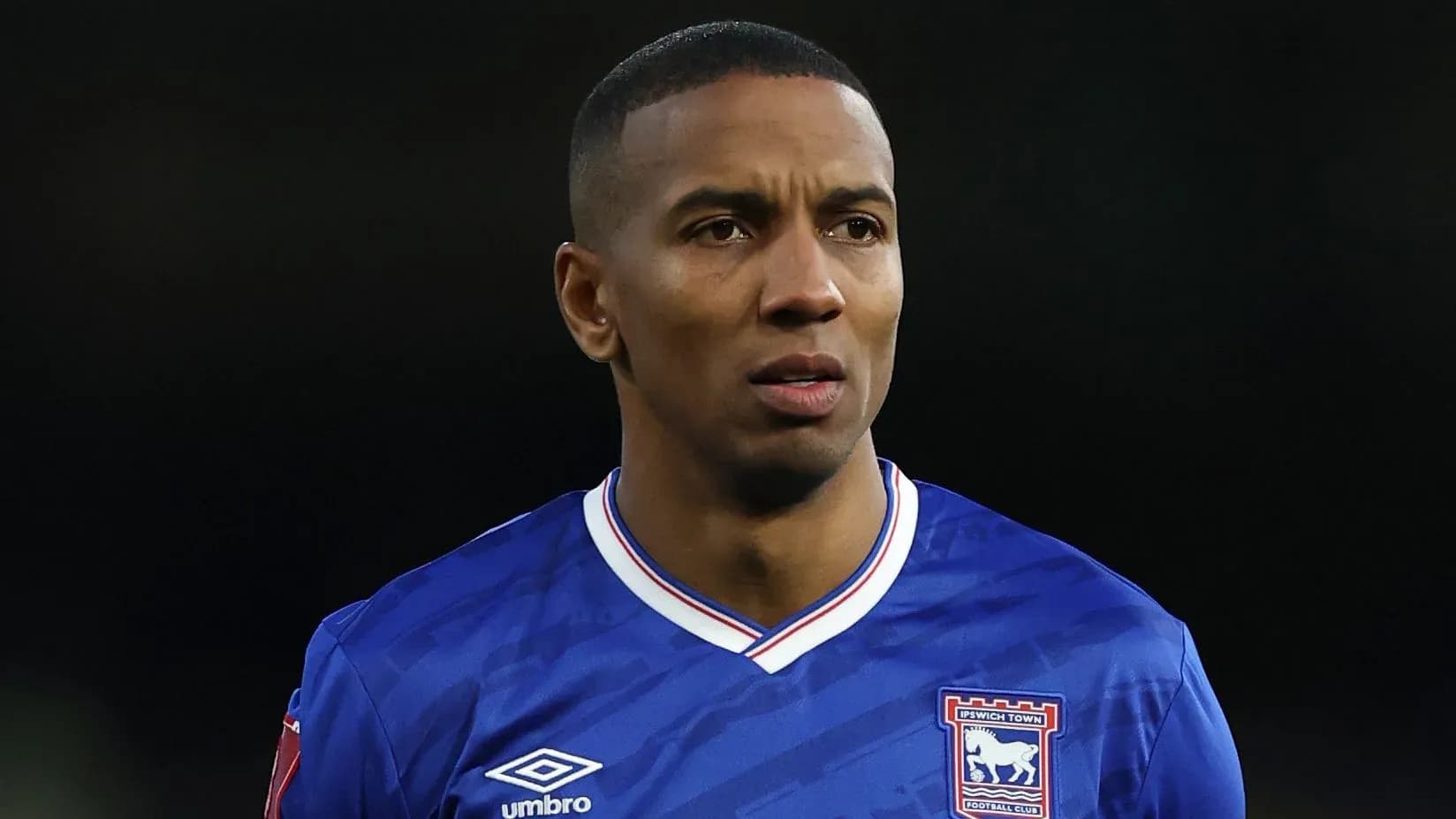
Ashley Young's Retirement: A Farewell Defined by Determination
Ashley Young has never been one to slip quietly out of the back door. Not at Watford, not at Aston Villa, not at Manchester United, not in the twilight of his career at Ipswich Town. So it is brutally fitting that his farewell to professional football comes with a stark confession: at 41, barely weeks into retirement, he already needs a hip replacement.
The former England international, who finally called time on a 23-year career this summer after helping Ipswich back into the Premier League, laid bare the reality of his final months on the High Performance Podcast. No gloss. No romance. Just a body that had finally stopped listening to his will.
He traces the beginning of the end back to November.
“I went down on my hip in November and had an injection,” he said. For a player who always prided himself on durability, that crossed an invisible line. “I have always said to myself: ‘If my body is saying you need injections, there is a problem, you need to think about retiring.’”
The diagnosis was sobering. The specialist told him he would need a hip replacement in roughly a decade. Young tried to treat that as a distant problem, something for his 50s, not his final promotion push.
So he bargained with his body.
He was due another injection in January, a short-term fix to carry him through to the end of the season as Ipswich chased a place in the Premier League. “I know it is painful,” he told the specialist, “but I want to make sure I do everything I can possibly do to help the team.”
That was the mindset that carried him through more than two decades at the top. The game, though, rarely respects sentiment.
About a week before that planned second injection, during what should have been a routine training session, everything changed. Young went down on the hip again. This time, the alarm bells were deafening. “I am like ‘this is worse, I know it is a lot worse’,” he recalled.
The damage was severe enough that he simply could not train for the next two to three months. For a veteran whose career had been built on work, repetition and sharpness, that absence cut deep. The hip wasn’t just sore; it was shutting him down.
From January onwards, the pain dictated his days. “From January to the end of the season, I literally had two or three months where I couldn't train it was that painful,” he said. The specialist confirmed what his body had been screaming. The hip was gone. The future operation was no longer a distant warning; it was looming.
Young’s response was pure defiance.
“I saw the specialist again and said ‘I'm not going out like this’.” He refused to accept that his career would end in a treatment room, reduced to a medical note on a promotion-winning season.
He pushed back at the idea that he might have played his last minute. “I asked him ‘are you telling me I can't play football again, you can say it if you want, trust me if I get an opportunity to be back on the pitch, I'll be back on the pitch’.”
The chance never quite came. Young did not step onto the pitch on the final day, when Ipswich sealed second place in the Championship and their return to the Premier League. But he found another role, one less visible yet no less important, in the dressing room and on the training ground.
That, in the end, became his final stand.
“The last two months of the season I was training every day,” he revealed, a remarkable admission given the state of his hip. The medical advice was blunt: “He was like ‘it is not possible, you shouldn't be training’.”
Young trained anyway.
He chased every last session, every last involvement, knowing full well what it was costing him physically. This was not the flying winger of his early years or the adaptable full-back of his Manchester United days. This was a 41-year-old fighting a clock that had already struck midnight, just to be part of something one more time.
“It would have been incredible to come onto the pitch for the last game of the season,” he admitted. That moment never arrived, but the week leading into it did. He trained, he led, he stayed present. Ipswich got over the line. Promotion secured on the final day. For Young, that was enough.
“For us to be promoted on the last day of the season, it was fitting,” he said.
Fitting, because his last contribution to professional football was not a cameo for the cameras, but the unseen graft that has defined so much of his career. Fitting, because even as his hip gave way, his standards did not.
The operation will come. The hip will be replaced. The pain that stalked his final months will, in time, ease. What remains is a final chapter that underlines who Ashley Young has always been: a player who refused to let go until his body quite literally took the game away from him.