Aston Villa Overpowers Viking 3-1 in UEFA Champions League
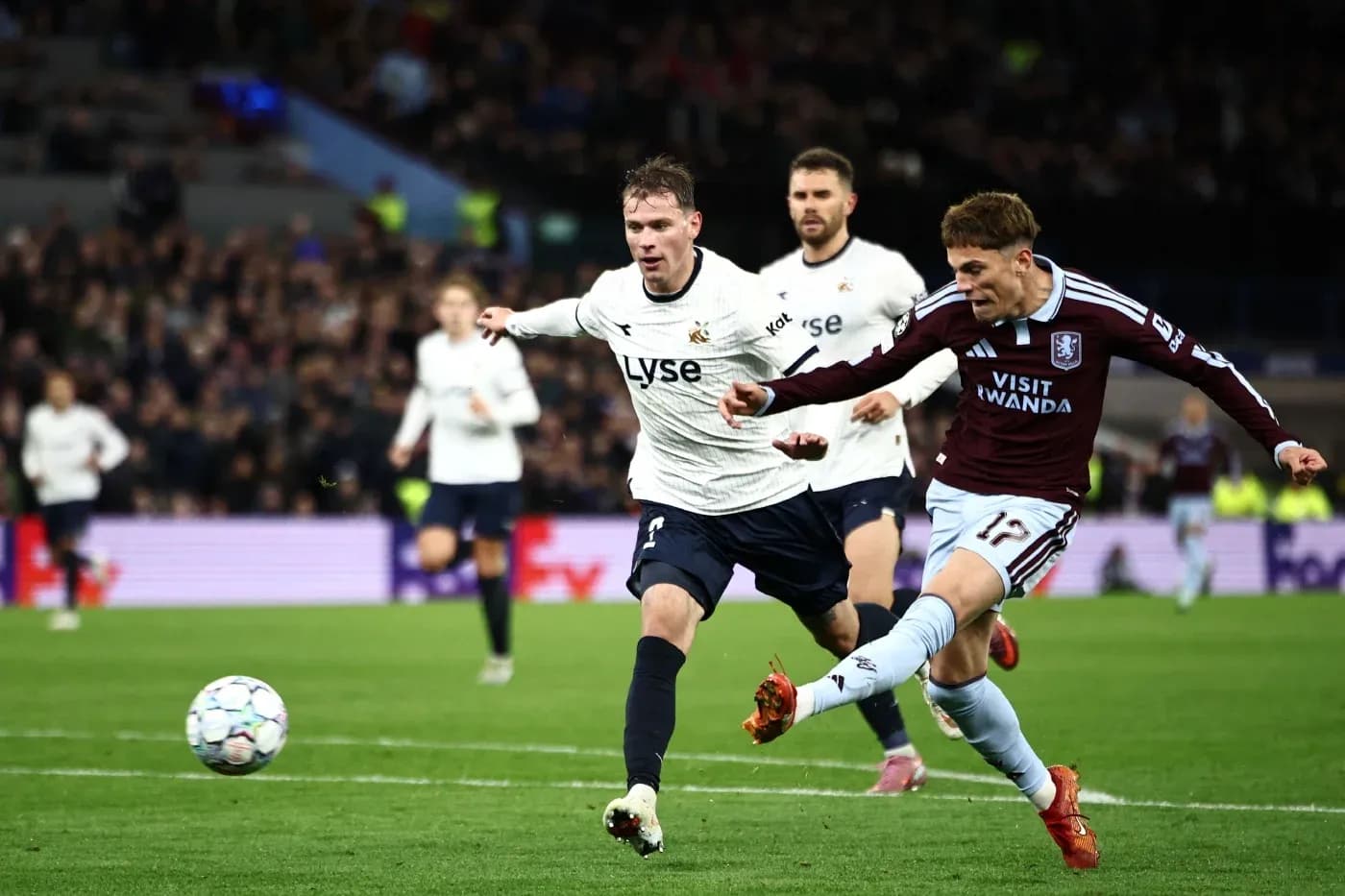
Under the lights at Villa Park, this League Stage - 3 encounter in the UEFA Champions League finished with Aston Villa overpowering Viking 3–1, a result that crystallised the contrasting trajectories of the two squads. Villa, already flying, tightened their grip near the top of the standings; Viking, spirited but stretched, were reminded of the gulf in European pedigree.
Overall in this Champions League campaign, Aston Villa have been ruthless. They sit 2nd with 9 points from 3 matches, winning all three with a goal difference of +9, built from 12 goals scored and 3 conceded. At home they have been even more ferocious: 2 wins from 2, 9 goals for and just 1 against, an attacking average of 4.5 goals at Villa Park balanced by only 0.5 conceded. Viking arrive from the opposite end of the table, 33rd with 1 point from 3 games and a goal difference of -4 (5 scored, 9 conceded overall). Away from home in this competition, Viking have lost both matches, scoring 2 and conceding 6, an away average of 1.3 goals for and 2.7 against that underlines their fragility on their travels.
Tactical Setup
Unai Emery stayed faithful to Villa’s season-long blueprint: a 4-2-3-1 that has started all three Champions League games. Z. Suzuki in goal was protected by a back four of João Gomes, V. Lindelöf, Pau Torres and T. Mings. In front, J. McGinn and R. Barkley formed the double pivot, with a fluid line of three – Alysson Edward, E. Buendía and I. Mbaye – supporting lone striker N. Jackson. It is a structure designed for territorial control and layered pressure: the centre-backs comfortable stepping into midfield, the full-backs narrowing to help circulation, and the three attacking midfielders constantly rotating between half-spaces.
Viking’s 4-3-3 under B. Aarsheim mirrored their season identity as well: it is the only shape they have used in their five Champions League outings. A. Østbø started in goal behind a back four of H. Haugen, G. Stensness, J. Daland and H. Heggheim. The midfield trio – T. Moi, J. Bell and K. Askildsen – was tasked with screening and springing transitions, while the front three of P. Christiansen, E. Botheim and Z. Tripić carried the attacking threat. On paper it is an aggressive, front-foot shape; in practice, against Villa’s 4-2-3-1, it often became a 4-5-1 under pressure.
Injury Concerns
Injury and absence shaped both benches. Aston Villa were without M. Cisse and B. Madjo (both off the roster), as well as J. Manzambi (calf injury), A. Onana (knee injury), M. Ruggeri (muscle injury) and A. Wan-Bissaka (muscle injury). That stripped Emery of some rotation options, particularly in wide defensive areas and secondary attacking roles, but the core spine remained intact. Viking’s list was even more consequential: A. Baertelsen (foot injury), V. Berisha (thigh injury), S. Bjorshol (knee injury), N. D’Agostino (leg injury), K. Frimpong (off the roster) and M. Roseth (knee injury) all missed out. The absence of Berisha and D’Agostino, in particular, thinned Viking’s attacking depth, forcing heavy minutes onto the starting front three.
Disciplinary Landscape
The disciplinary landscape added another subtle layer. Overall this Champions League season, Aston Villa’s yellow cards cluster late: 66.67% of their bookings arrive between 76–90 minutes, with only 33.33% in the opening 15. That hints at a side that pushes the intensity to the end and is willing to foul to protect leads. Viking’s bookings spike in the heart of the second half: 50.00% of their yellows fall between 46–60 minutes, another 30.00% between 61–75. It suggests a team that struggles to cope with post-interval surges, often arriving a step late into duels as the game opens up.
Key Matchups
Within that context, the key matchups told the story of the night. In the “Hunter vs Shield” battle, Viking’s chief marksman P. Christiansen – 3 goals in 5 Champions League appearances, with 9 shots and 5 on target – ran into a Villa defence that, overall, concedes just 1.0 goal per game in this competition and only 0.5 at home. Lindelöf and Pau Torres, flanked by the aggression of Mings, were able to compress the space between the lines, forcing Christiansen to receive with his back to goal and far from the box. His work rate and duels (45 contested, 19 won overall this campaign) kept Viking competitive in moments, but Villa’s compactness limited his penalty-box touches.
On the other flank of that duel, Aston Villa’s collective attack – 4.0 goals per game overall, 3.0 on their travels but devastating at home – met a Viking rearguard that has allowed 12 goals in 5 matches, an overall concession rate of 2.4 per game and 2.7 away. With Buendía drifting inside from the left, Alysson Edward attacking the right half-space and Mbaye tucking infield, Villa repeatedly created overloads against Viking’s full-backs Haugen and Heggheim. Stensness and Daland were dragged wide to plug gaps, leaving channels for Jackson’s diagonal runs. That structural mismatch was evident in the 2–0 half-time scoreline and ultimately in the 3–1 full-time margin.
Engine Room
In the “Engine Room”, Viking’s J. Bell – their leading yellow-card recipient with 3 bookings and 11 fouls committed – was tasked with disrupting Villa’s rhythm. His duel with McGinn and Barkley was always going to be attritional. Bell’s overall Champions League numbers (182 passes at 86% accuracy, 11 tackles, 5 interceptions) speak to a midfielder who can both screen and circulate. Yet against Villa’s double pivot, he was often outnumbered: when Buendía and Alysson Edward tucked inside, Villa created 4v3 scenarios in central zones, forcing Bell into fire-fighting rather than proactive pressing. That imbalance tilted the midfield battle decisively in the hosts’ favour.
Further forward, Viking’s creative axis of Z. Tripić and T. Moi offered their best route back. Tripić, one of the competition’s standout performers with 3 goals, 2 assists, 11 key passes and 12 dribble attempts, tried to isolate João Gomes and Mings on Villa’s left. Moi, with 2 assists and 6 key passes at an impressive 82% passing accuracy, sought pockets between the lines. But Villa’s structure – the back four supported by McGinn’s relentless covering – narrowed those spaces, forcing Viking wide and into lower-probability crosses rather than central combinations.
Statistical Prognosis
From a statistical prognosis, this result fits the broader pattern. Villa’s offensive volume and efficiency in the Champions League – 12 goals from 3 matches, backed by a perfect penalty record (2 scored from 2 overall, with no misses) and only 1 match without a clean sheet at home – point to a side whose underlying xG profile would be expected to outstrip a Viking defence conceding 2.7 goals per game away. Viking, for their part, have yet to keep a clean sheet in this competition, and their inability to shut down Villa’s rotations between the lines was entirely consistent with that trend.
Following this result, the narrative is clear: Aston Villa look every inch a side destined for the Champions League play-offs, their 4-2-3-1 humming with control and cutting edge. Viking, adventurous but porous, will need to tighten their mid-block and better protect their full-backs if they are to turn respectable performances into points on their travels.