Inter's Tactical Victory Over Shakhtar: A Statement in Recalibration
Under the San Siro lights, Inter’s 1–0 win over Shakhtar Donetsk felt less like a routine group-stage victory and more like a statement of recalibration. Heading into this game, both sides were jostling in the middle tranche of the UEFA Champions League league-stage table: Inter sat 21st with 3 points and a goal difference of -1 (5 scored, 6 conceded), Shakhtar 17th with 4 points and a goal difference of 1 (4 scored, 3 conceded). On paper, it was a meeting of contrasting football identities; on the pitch, it became a study in how those identities are evolving.
Inter’s seasonal DNA in this competition has been paradoxical: high event, high risk. Overall they had scored 5 and conceded 6 in 3 matches, with a total goals-against average of 2.0 per game. At home they had been both prolific and vulnerable, averaging 2.0 goals scored and 2.0 conceded. The minute map of their goals told its own story: 80.00% of Inter’s goals in total this campaign had arrived between 76–90 minutes, with the remaining 20.00% in the 31–45 window. They are a side that grows into games and punishes late.
Shakhtar, by contrast, arrived as a team defined by balance and opportunism. Overall they had scored 4 and conceded 3 in 3 matches, with a total scoring average of 1.3 and a total goals-against average of 1.0. At home they had been explosive – 3.0 goals scored on average – but on their travels their attacking output dropped sharply to 0.5 goals per game. They had yet to keep a clean sheet in total this campaign and had failed to score once, but their defensive numbers suggested a compact, disciplined block that rarely gets blown away.
The tactical voids on both sides shaped the narrative before a ball was kicked. Inter were without C. Jones, L. Martinez, B. Pavard and J. Stones – a quartet that strips depth from both penalty areas. The absence of Pavard and Stones removed high-level defensive rotation options for the back three, while losing L. Martinez robbed Inter of a natural penalty-box reference point and pressing leader. For Shakhtar, the missing list was longer: I. Azarovi, Eguinaldo, V. Korniyenko, Marlon, P. Obah, T. Puzankov, M. Shved and D. Tvardovskyi all sidelined or off the roster. The headline loss was Marlon, a natural defensive anchor, forcing Shakhtar to lean more heavily on M. Matvienko and V. Bondar at the heart of the back four.
Cristian Chivu doubled down on Inter’s structural identity, rolling out a 3-5-2 that has been their constant in this competition. Josep Martínez started behind a back three of M. Akanji, A. Bastoni and Carlos Augusto. The wing lanes were entrusted to D. Spence on the right and F. Dimarco on the left, with N. Barella, H. Çalhanoğlu and P. Sučić forming a central trio. Up front, M. Thuram and A. Bonny offered a blend of power, depth runs and link play.
Across from them, A. Turan’s Shakhtar lined up in a 4-1-4-1, one of two systems they have used in this campaign alongside the 4-2-3-1. D. Riznyk was shielded by a back four of Vinícius Tobias, Bondar, Matvienko and the defensive Pedrinho. O. Ocheretko sat as the single pivot, with a band of four – Alisson Santana, the attacking Pedrinho, Marlon Gomes and G. Mendoza – supporting lone forward Kauã Elias.
The “Hunter vs Shield” duel played out in the wide zones and half-spaces rather than through a single star striker. With no L. Martinez, Inter’s attacking responsibility was spread: Thuram’s ability to stretch the line and Bonny’s willingness to contest duels gave Çalhanoğlu and Barella pockets to exploit. Inter’s late-game scoring profile intersected ominously with Shakhtar’s tendency to pick up cards in the second half: 33.33% of Shakhtar’s yellow cards this season had come between 46–60 minutes, 22.22% between 61–75, and another 11.11% in each of the 76–90 and 91–105 windows. That pattern hinted at fatigue and desperation fouls just as Inter typically ramp up their pressure.
In the “Engine Room” matchup, Çalhanoğlu and Barella faced a Shakhtar midfield built on industry and bite. Marlon Gomes, already on 3 yellow cards in this Champions League campaign, embodies Shakhtar’s combative core: 15 tackles, 2 interceptions, 43 duels contested and 8 fouls committed in 261 minutes. His role as enforcer in front of Ocheretko was to disrupt Inter’s rhythm between the lines, even at the risk of disciplinary trouble. On the other side, A. Bastoni’s presence was equally decisive. Across the season he had blocked 3 shots, contributed 6 tackles and 1 interception, but also carried the stain of a red card – a reminder that Inter’s aggression at the back can spill over.
Cards were always likely to be a subplot. Inter’s yellow distribution is spread, but 25.00% of their bookings this campaign had come between 31–45 minutes and another 25.00% between 61–75, with a red card already shown in the 61–75 band. Shakhtar’s bookings cluster around the middle third of the match. That overlap around the hour mark made the central corridor a fault line of risk, where one mistimed press or late tackle could tilt the contest.
From a statistical prognosis standpoint, this fixture was primed for a narrow margin. Inter’s home profile – 4 goals for and 4 against in 2 matches – suggested volatility, but their late scoring surge pattern and capacity to avoid failing to score (0 blanks in total this campaign) always made them likelier to land the decisive blow. Shakhtar’s away record – 1 goal for and 2 against across 2 matches – hinted at a side more focused on containment than ambition on their travels, despite an overall penalty record of 1 taken and 1 scored.
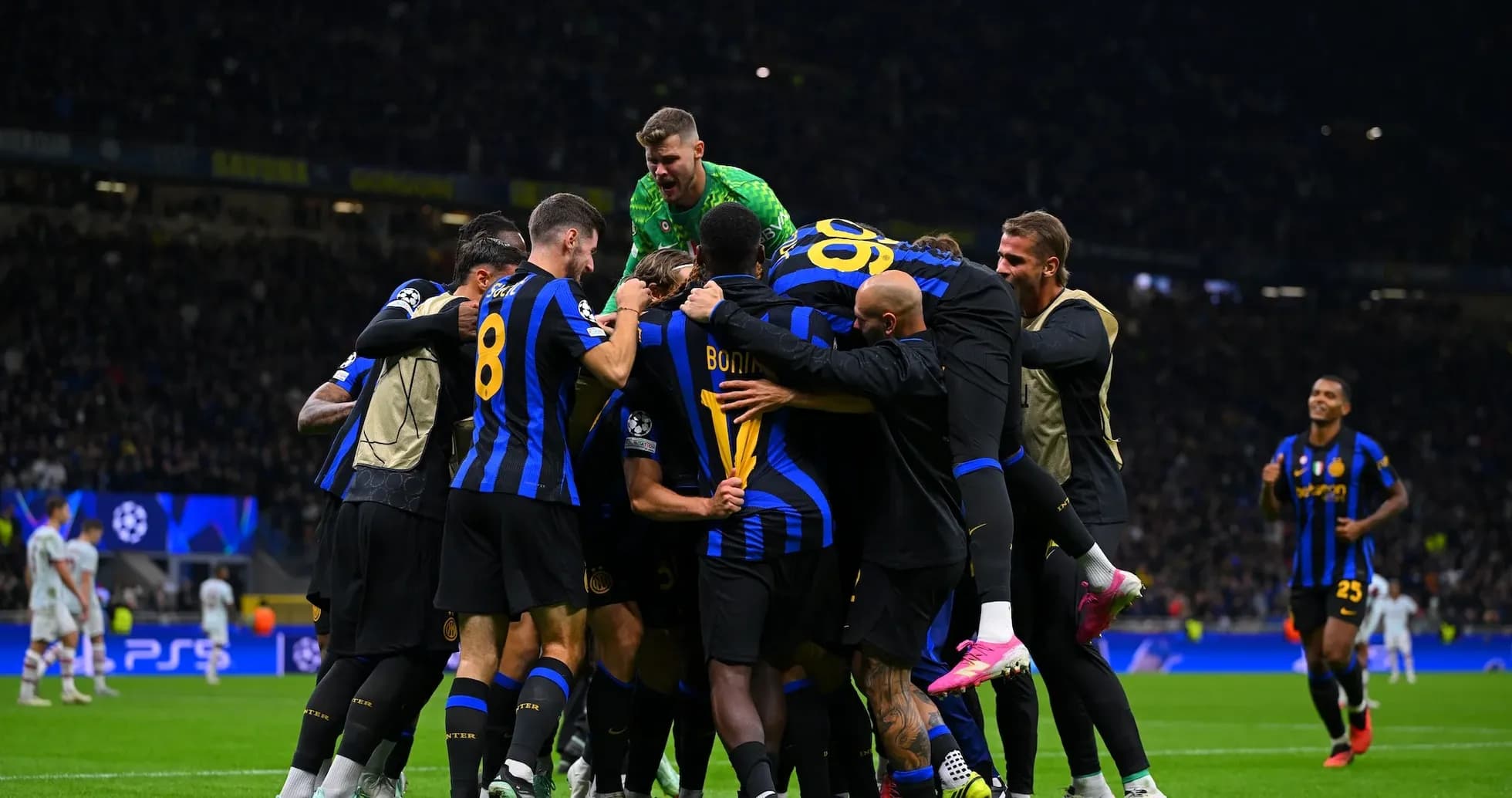
In the end, the 1–0 scoreline at San Siro felt like the logical meeting point of those curves: Inter’s late-game intensity and structural familiarity in the 3-5-2 overcoming Shakhtar’s disciplined but limited 4-1-4-1. Following this result, Inter not only bank vital points in a congested league-stage table, they also reassert a version of themselves that is more controlled without losing their defining late-game edge. Shakhtar leave with their defensive credibility largely intact, but their away attacking anemia remains the question that could yet define their Champions League fate.