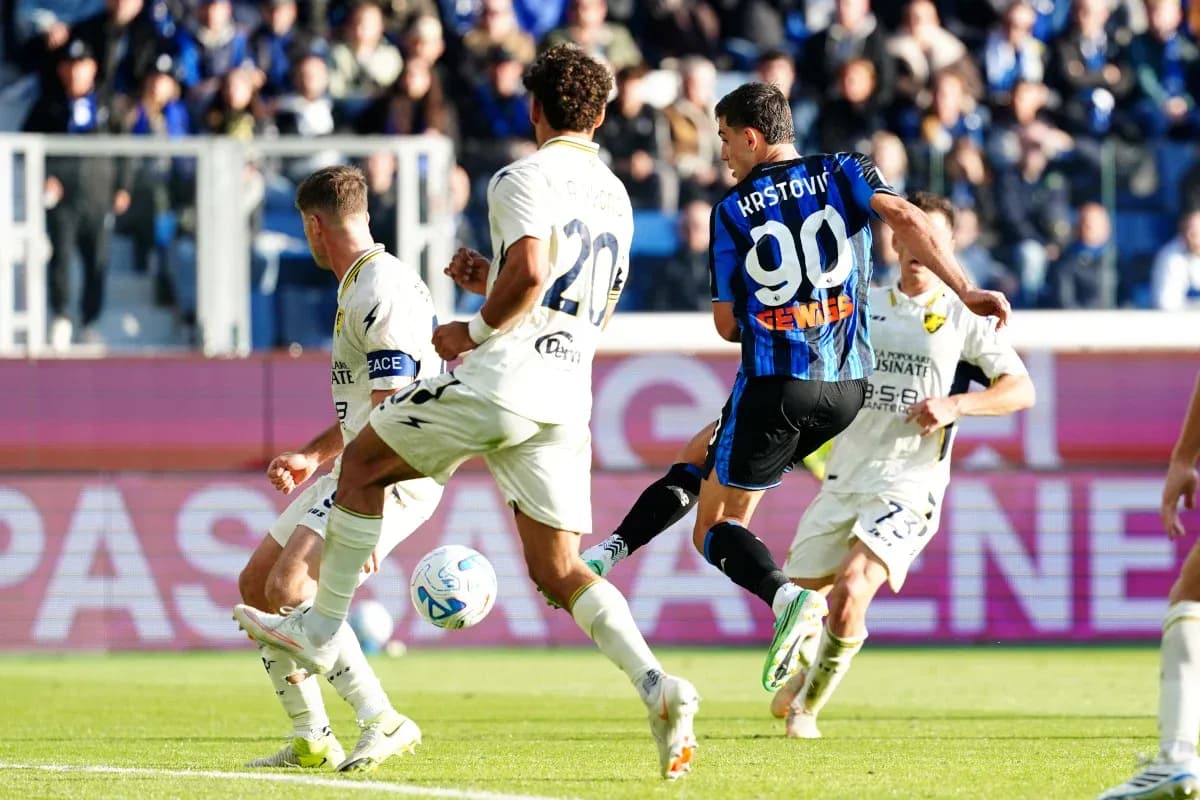
Atalanta vs Frosinone: A Serie A Thriller Ends 4–4
New Balance Arena had barely caught its breath when the final whistle confirmed the chaos: Atalanta 4–4 Frosinone, a Serie A thriller in Bergamo that said as much about these squads’ identities as any dry league table could.
I. The Big Picture – Two Identities Colliding
Heading into this game, Atalanta were an enigma. Eleventh in Serie A with 10 points from 8 matches, their overall goal difference was -1, scoring 14 and conceding 15. At home, though, they were a very different animal: 3 wins, 1 draw, 1 defeat, with 11 goals for and 8 against, averaging 2.2 goals scored and 1.6 conceded at New Balance Arena. On their travels they had lost all three, but this was their fortress, and Maurizio Sarri leaned into that with an aggressive 4-2-3-1.
Opposite them, Frosinone arrived as one of the early-season revelations. Sixth in the table with 14 points from 8 games, they carried a positive overall goal difference of 4, built from 17 goals scored and 13 conceded. Their attacking output has been striking: overall they average 2.1 goals per match, with 2.3 at home and 2.0 away. Massimiliano Alvini’s side also lined up in a 4-2-3-1, but with a more vertical, transition-heavy personality.
The 4–4 scoreline mirrored the numbers. Atalanta’s overall average of 1.8 goals for and 1.9 against, plus Frosinone’s 2.1 for and 1.6 against, pointed to an open, volatile contest. The league data simply exploded into life on the pitch.
II. Tactical Voids – Absences and Discipline
The real story before kick-off was who was missing. Atalanta’s defensive core was shredded: I. Hien (muscle injury), S. Kolasinac and G. Scalvini (both thigh injuries), and O. Kossounou (thigh injury) all absent. In midfield, F. Kessie (calf injury) and K. Sulemana (knee injury) stripped Sarri of physical presence and ball-winning in the engine room. In attack, the absence of G. Raspadori (thigh injury) removed a flexible second striker option.
Those gaps forced Atalanta into a relatively makeshift back line: T. Kristensen and R. Obric in central defence, flanked by R. Bellanova and D. Zappacosta. Ahead of them, G. Gaetano and Ederson formed the double pivot. Both Gaetano and E. Elmas carry recent red-card histories in the league, underlining how fine the disciplinary line is in this aggressive structure. Atalanta’s season-long card profile is telling: 42.86% of their yellow cards arrive between 61–75 minutes and 28.57% from 76–90, with late reds as well. This is a side that often finishes games on the edge.
Frosinone’s only repeated absentee was F. Grillitsch (thigh injury), a potential deep-lying organiser who would have added composure in front of the defence. Without him, G. Calò and P. Masini anchored midfield, with R. Schmid as the creative connector and G. Kvernadze plus F. Ghedjemis providing width. Discipline-wise, Frosinone spread their yellows more evenly, but with notable late-game risk: 18.75% of their yellow cards fall between 91–105 minutes, often as they scramble to protect or chase results.
III. Key Matchups – Hunter vs Shield, Engine Room Battles
The “Hunter vs Shield” duel was irresistible. For Frosinone, A. Raimondo came in as Serie A’s leading scorer with 7 goals in 8 appearances. He had taken 22 shots, 10 on target, and lived on the shoulder of defences that dare to hold a high line. His direct opponent was not one star centre-back, but Atalanta’s collective defensive structure, already weakened by injuries and conceding an overall average of 1.9 goals per game.
Atalanta’s own spearhead, N. Krstovic, arrived with 6 league goals and 2 assists from 8 appearances, plus a strong 7.38 average rating. He had 20 shots (10 on target) and 6 key passes, combining penalty-box instincts with link play. Behind him, C. De Ketelaere, Elmas and J. Rowe formed a fluid line of three, with De Ketelaere already contributing 2 assists and 16 key passes this season. Their task was to overload the half-spaces around Frosinone’s double pivot and drag the back four out of shape.
On the other side, the creative axis of Calò and Schmid was central to Frosinone’s plan. Calò’s 420 passes and 30 key passes in 8 matches show a metronome who can also hurt you between the lines, while Schmid has 3 assists, 13 key passes and a knack for arriving in pockets between midfield and defence. Kvernadze, with 3 goals, 1 assist and 21 successful dribbles from 37 attempts, offered a one‑v‑one threat that tested Bellanova and Zappacosta repeatedly.
Defensively, G. Bracaglia’s role was crucial. The Frosinone full-back had already collected 4 yellow cards, made 16 tackles, 8 successful blocks and 9 interceptions. His duel with Rowe and the overlapping Zappacosta was a constant balancing act between aggression and survival.
IV. The Statistical Intersection – When Patterns Collide
Frosinone’s scoring patterns framed the narrative of the match. Overall this season, 23.53% of their goals arrive between 0–15 minutes and 29.41% between 16–30. They are a fast-starting side. Atalanta, meanwhile, concede an overall average of 1.9 goals per match and have a tendency to lose control in phases rather than in isolated moments. The first half finishing 3–2 to Atalanta fit perfectly with that chaos: both teams leaning into their attacking strengths, both defences exposed.
Defensively, Frosinone’s softest window is between 31–45 minutes, where 30.77% of their conceded goals occur. That aligned ominously with Atalanta’s ability to build pressure at home once their passing rhythm settles. The hosts’ best home attacking numbers – 2.2 goals per game – often come from sustained waves rather than counters, and the late first-half flurry on the scoreboard was a direct manifestation of that pattern.
The second half continued as a statistical tug of war. Frosinone’s attack tends to fade slightly after the break (only 11.76% of goals between 46–60 and another 11.76% from 76–90), but their willingness to commit numbers forward, especially with Kvernadze and Ghedjemis, kept exploiting Atalanta’s patched-up defence. At the same time, Atalanta’s late-game disciplinary issues lurked in the background; even when no red card appears, the pattern of late yellows and fatigue-induced errors invites pressure and chaos.
V. Prognosis – What This 4–4 Draw Tells Us
Following this result, the raw scoreline reinforces the broader season arc. Atalanta remain a high-variance side: at home they can blow teams away (their biggest home win is 3–1, with a 4-goal home outing already in the books), but their structural fragility and injury-hit back line mean no lead feels safe. Their overall numbers – 14 scored, 15 conceded in 8 games – are those of a mid-table side that lives on a knife-edge.
Frosinone, on the other hand, look every inch a genuine attacking force rather than an early-season anomaly. With 17 goals in 8 matches and a well-defined 4-2-3-1 built around Raimondo, Calò, Kvernadze and Schmid, they can hurt opponents in multiple ways and in multiple time windows. Their away record – 1 win, 2 draws, 1 defeat, 8 goals for and 8 against – suggests they will continue to trade chances rather than lock games down.
If we overlay the attacking and defensive trends, the draw feels almost inevitable: Atalanta’s home firepower versus Frosinone’s fast starts and multi-pronged attack, all underpinned by two defences whose numbers still lag behind their forward lines. In a league increasingly defined by pressing and verticality, this fixture at New Balance Arena was a vivid snapshot: two ambitious 4-2-3-1 projects, both compelling, both flawed, and both destined to keep delivering scorelines that thrill statisticians and storytellers alike.