Auqib Nabi Emphasizes Skills Over Speed Ahead of New Zealand Test
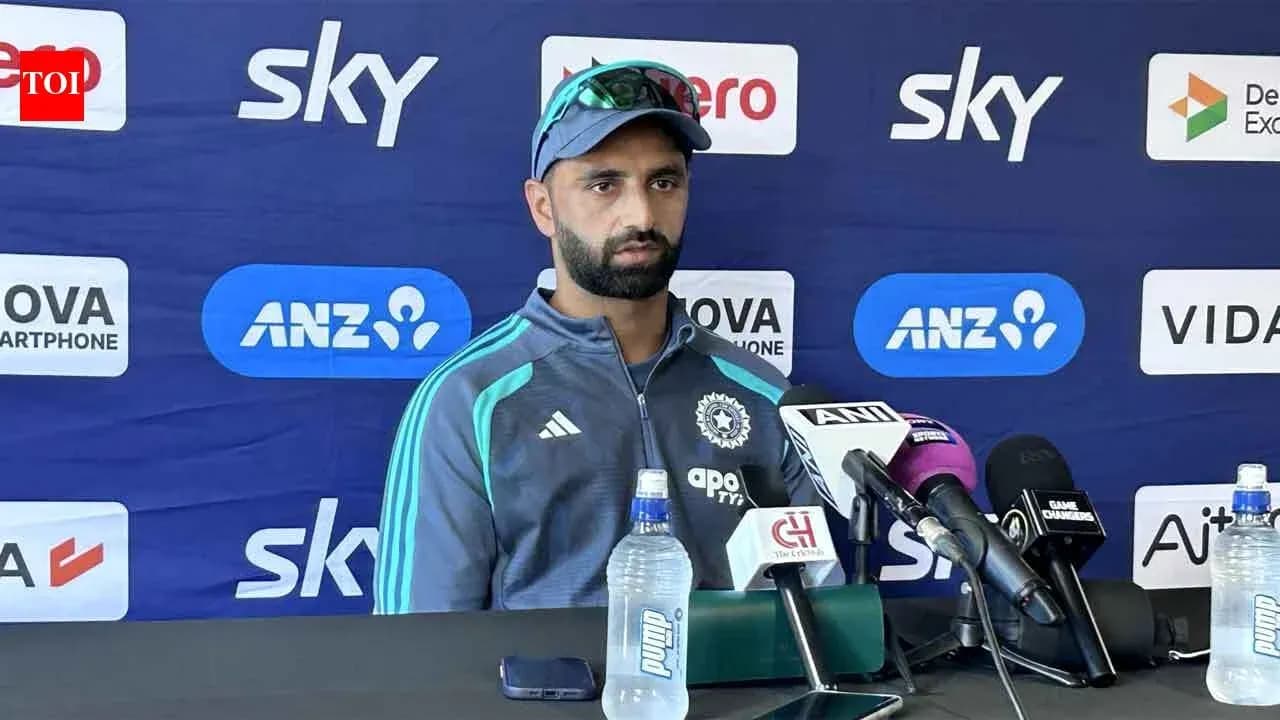
On a grey New Delhi afternoon, there was no swagger in Auqib Nabi’s voice, only a clear-eyed conviction. Pace, he knows, turns heads. But it is not what he wants to be known for.
“Having pace is good but I back my skills,” the Jammu and Kashmir quick said ahead of the fourth ODI against New Zealand. “I will do what I have been doing and what has brought me here. I will just do what I did in domestic cricket, and that will help me here too.”
It sounded simple. It has taken years of hard, unforgiving domestic cricket to make it look that way.
A quiet start, a sharp response
Nabi’s first touch of international cricket in this series barely made a ripple on the scorecard: 0 for 33 in the opening ODI, a game India still closed out by five wickets via the DLS method. For many young fast bowlers, that kind of debut can tighten the shoulders and cloud the mind.
His response in the second ODI was the opposite of tense.
Given the new ball again, the ‘Baramulla Express’ ripped out both New Zealand openers, Will Young and Tim Seifert, and turned what might have been a routine chase into a scrap. Those early strikes forced the hosts to rebuild, and India clung on to a four-run win, again on DLS, to move 2-0 up.
The third match in Hamilton never got going, washed away by rain. The series, though, has already offered a glimpse of what Nabi brings: a heavy ball, a hungry attitude, and a willingness to learn fast.
Next stop: Bay Oval in Mount Maunganui on Friday, where the margins for bowlers are notoriously thin.
Cracking New Zealand’s code
For Nabi, this is all new. First tour of New Zealand. First extended look at pitches that tease you with carry and bounce, then punish the slightest error.
“It is my first time in New Zealand. You need to rely more on seam here. Use scrambled seam because swing can be dealt with,” he explained.
That one line tells you he has been watching closely. In these conditions, pretty, hooping outswing is often a luxury. Hit the seam, hit it hard, and make the ball talk off the pitch instead.
“You need to bowl well no matter how good or flat the pitches are,” he said. “When wickets are good, you need to bowl with discipline because you can go for runs.”
On drop-in surfaces, where character can change from venue to venue and even day to day, those conversations inside the bowling unit matter. Nabi spoke of constant planning with fellow quicks Arshdeep and Anshul, searching for small edges in a format that rarely forgives.
“We keep discussing amongst ourselves about plans for drop-in pitches. With Arshdeep and Anshul both,” he said.
The weather, he pointed out, feels familiar. The challenge does not.
“Weather back home and here is similar. Opposition and level of cricket is different,” he said, drawing a clear line between the comfort of home conditions and the step up in class he now faces.
From Ranji workhorse to India cap
Nabi has not arrived here on the back of one hot season or a viral clip. His rise has been built over two relentless Ranji Trophy campaigns that changed the story of Jammu and Kashmir cricket.
Across the 2024-25 and 2025-26 seasons, he took 104 wickets. The 2025-26 campaign was the one that turned whispers into noise: 60 wickets in 17 innings at an average of 12.65. Those are numbers that belong to bowlers who bend games to their will.
Jammu and Kashmir rode that wave all the way to their maiden Ranji Trophy title. Nabi did not just share in the triumph; he drove it, and walked away as Player of the Tournament.
From there, an India call was inevitable. The format, in his mind, was not.
A red-ball heart in a white-ball debut
“I was expecting a red-ball call-up before white-ball cricket,” he admitted. It is a rare thing for a fast bowler to say out loud in an era where white-ball fame and franchise deals often dominate ambition.
He is not complaining. He sees this ODI stint as a bridge, not a detour.
“This experience will also be very helpful. And then also staying with the Test team,” he said, already looking at how these overs with the white ball might sharpen him for the red.
The emotion of the India cap, though, cuts through the analysis.
“Very happy to play for India. Khelna India ke liye bahut badi baat hai. Mera bhi wohi tha,” he said, summing up a boyhood dream in one simple sentence.
Facilities, pathways, resources in Jammu and Kashmir have often been questioned. Nabi’s answer is rooted in the same stubborn belief that fuelled his domestic grind.
“Whenever people say about facilities, I always say do your best and things will fall in place,” he said.
On Friday at Bay Oval, there will be no talk of Ranji numbers or infrastructure. Just a young quick from Baramulla, a white ball in hand, testing whether the methods that carried him this far can stand up to New Zealand’s batsmen and the unforgiving glare of international cricket.