Australia vs Egypt: World Cup Round of 32 Penalty Drama
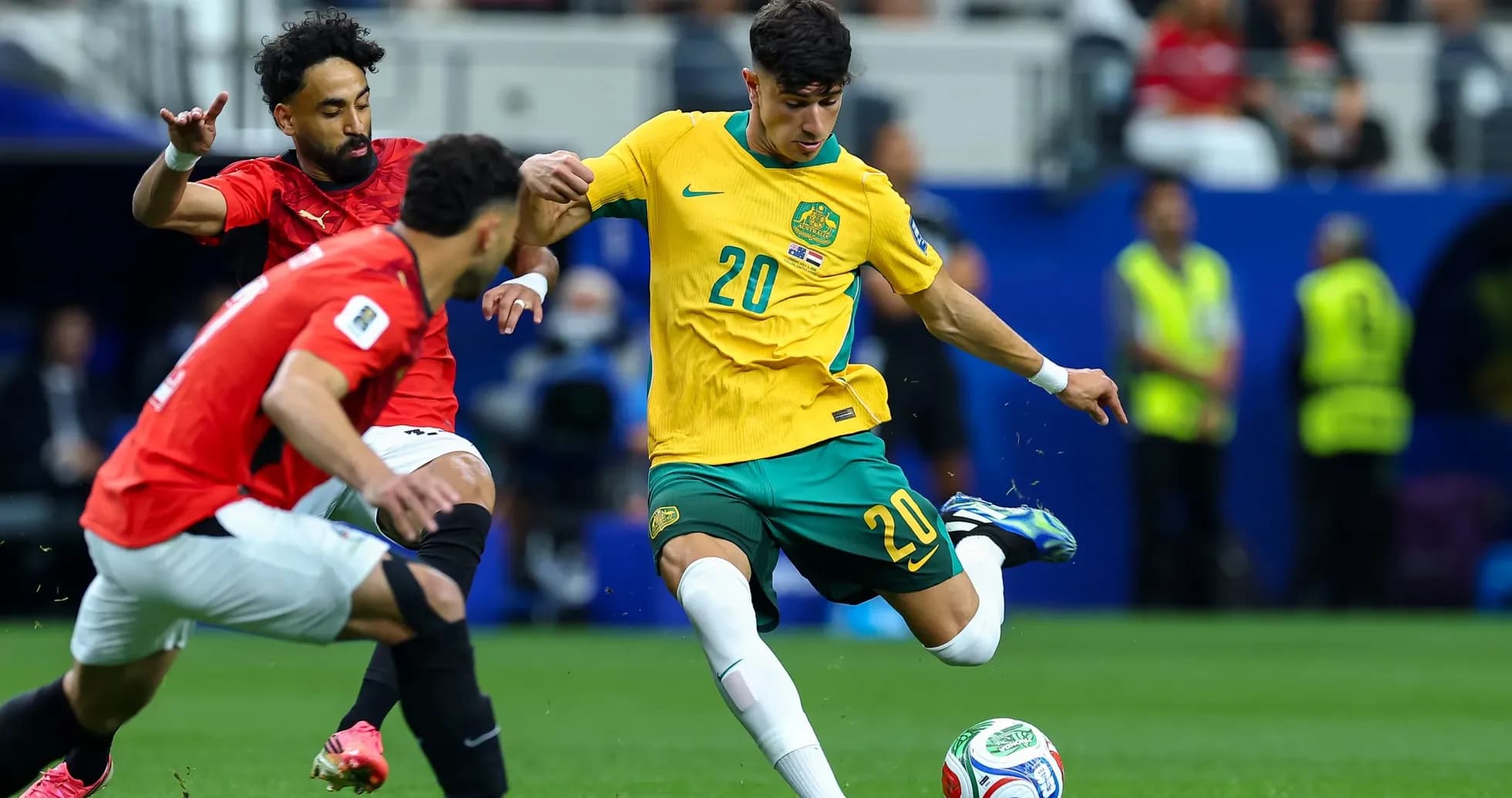
Under the closed roof of AT&T Stadium in Dallas, Australia and Egypt pushed each other to the limit for 120 minutes, only for the World Cup Round of 32 tie to be decided in the most brutal way possible: penalties. The scoreboard read 1–1 after extra time, Egypt having led at half-time before Australia dragged themselves level. From the spot, Egypt held their nerve, converting four to Australia’s two to edge through after a contest that was as much about structure and discipline as it was about moments of individual quality.
I. The Big Picture – contrasting tournament identities
Heading into this game, the numbers already framed a clash of styles. Overall this campaign, Australia had been pragmatic: in total they had played 4 matches, winning 1, drawing 2 and losing 1. At home they had been efficient, with 2 fixtures yielding 1 win and 1 draw, scoring 3 and conceding 1. That gave Australia a home average of 1.5 goals scored and 0.5 conceded per game, a goal difference of +2 at home, but a total goal difference of 0 across the tournament, with 3 scored and 3 conceded overall. On their travels, they had failed to score in 2 away games, a warning sign for knockout football when margins tighten.
Egypt arrived in Dallas with a more expansive statistical profile. In total they had played 4 matches without a single defeat: 1 win and 3 draws overall. On their travels they had been especially productive, with 3 away games yielding 5 goals, an away scoring average of 1.7 per match. Overall they had scored 6 and conceded 4, a total goal difference of +2, reflecting a side that could trade punches yet stay upright. The group-stage standings underlined that solidity: both sides had progressed as group runners-up, Australia second in Group D with 4 points and a goal difference of 0, Egypt second in Group G with 5 points and that same +2 cushion.
Those identities were mirrored in the starting formations. Tony Popovic doubled down on structural control with a 3-4-2-1, trusting a back three of P. Beach behind A. Circati, H. Souttar and L. Herrington, and a broad midfield band of J. Bos, J. Irvine, A. O’Neill and A. Behich. Ahead of them, C. Volpato and C. Metcalfe floated behind the spearhead N. Irankunda. Hossam Hassan, by contrast, opted for a more orthodox 4-4-2, but with a twist: O. Marmoush was listed as a midfielder, drifting in from the left to support the front two of M. Salah and M. Ziko. Behind them, a back four of M. Hany, Y. Ibrahim, R. Rabia and K. Hafez screened goalkeeper O. Shobeir.
II. Tactical Voids – absences that bent the plan
Both managers were forced to redraw their maps before a ball was kicked. Australia were without M. Leckie, ruled out by a hamstring injury, and J. Italiano, sidelined with ankle problems. In a squad that had already failed to score in total in 2 away fixtures, losing Leckie’s direct running and experience reduced Popovic’s options to change the tempo from the bench. It placed additional creative burden on Volpato between the lines and on Irankunda to stretch Egypt’s back line.
Egypt’s absences were even more concentrated in the spine. Mohamed Abdelmonem’s ankle problems removed a first-choice centre-back option, while Ahmed Abou El Fotouh’s hamstring injury and Mohanad Lasheen’s suspension stripped away both left-sided balance and midfield bite. Lasheen’s absence was particularly acute: he had already shown his influence as one of the tournament’s leading yellow-card collectors, with 2 bookings born of 13 tackles, 4 blocks and 4 interceptions. His ability to disrupt rhythm and win 21 of his 37 duels had been a key part of Egypt’s midfield steel. Without him, H. Fathy and M. Attia had to shoulder more defensive responsibility in the middle.
Discipline itself was a quiet subplot. Overall this campaign, Australia’s yellow cards had clustered late: 40.00% of their cautions arrived between 76 and 90 minutes, suggesting a team that often had to foul to protect leads or chase games as fatigue set in. Egypt, by contrast, tended to pick up bookings earlier, with 25.00% of their yellows between 16 and 30 minutes and another 25.00% between 31 and 45, then a further 25.00% between 91 and 105. It painted a picture of a side that set an aggressive tone early and then reasserted that edge in extra time.
III. Key Matchups – Hunter vs Shield, and the battle for control
The headline duel was always going to be Mohamed Salah against Australia’s defensive structure. Salah entered this tie as one of the World Cup’s leading creators, with 1 goal and 2 assists in total, 16 key passes and 13 dribble attempts, 6 of them successful. Operating nominally as a forward in the 4-4-2, he drifted into pockets between Souttar and the wide centre-backs, forcing Australia’s back three to constantly hand him off. With Australia having conceded in total 3 goals from 4 matches at an average of 0.8 per game, their defensive record was respectable, but they had not yet faced a playmaker-finisher of Salah’s calibre.
Behind Salah, Yasser Ibrahim was Egypt’s shield. His tournament numbers underlined why he is trusted in the heart of defence: 236 passes at 91% accuracy, 7 tackles, 3 successful blocks and 2 interceptions, plus 52 duels contested, 22 of them won. His capacity to step out of the line to meet Irankunda or Volpato was crucial against Australia’s narrow front three. Every time he blocked space or a shot, he reduced the already thin margin for an Australian side that had failed to score in total in half of their matches.
On the other side, Australia’s “engine room” of J. Irvine and A. O’Neill had to outthink Egypt’s reshaped midfield. With Lasheen missing, Fathy’s muscle and Attia’s distribution became Egypt’s central axis. Australia’s plan was clear from the lineup: use the double pivot to screen transitions, then push Bos and Behich high to pin back Hany and Hafez. If those wing-backs could isolate Egypt’s full-backs, Irankunda’s pace and Metcalfe’s movement could drag Ibrahim and Rabia into wide, uncomfortable zones.
IV. Statistical Prognosis – how the numbers met the narrative
Across the tournament, Egypt’s attack had been the more reliable weapon. On their travels they averaged 1.7 goals per game, and in total they had yet to fail to score in any of their 4 fixtures. Australia, by contrast, had shown a split personality: at home they averaged 1.5 goals scored, but in total they sat at just 0.8, with 2 clean sheets balanced by 2 matches without a goal. That inconsistency ultimately loomed over their Round of 32 exit. They found an equaliser in Dallas, but could not tilt the balance in 120 minutes.
Penalty records offered no edge either way; both teams came into the tie without a single spot-kick in the tournament, and neither had missed one. The shootout therefore became a pure test of nerve rather than a continuation of any statistical trend. Egypt, emboldened by an unbeaten run of 1 win and 3 draws in total, carried the quiet confidence of a side that had learned how to survive tight games. Australia, with a form line of 1 win, 2 draws and 1 loss overall, lacked that same sense of inevitability.
Following this result, the story of the tie is one of small margins aligning with the broader data. Egypt, the more consistently dangerous attacking side, found their early goal and then trusted their structure and their stars – Salah’s creativity, Ibrahim’s composure – to carry them through the long night. Australia, organised and brave in their 3-4-2-1, once again showed they can defend at this level, but their total scoring average of 0.8 hinted at the problem that ultimately undid them: in the World Cup’s sharpest moments, they simply did not have enough goals in the squad.