Australia vs USA: A Tough Battle Unfolds
The first roar came early, and it wasn’t for a goal.
Inside Enmore’s Golden Barley, every time USA manager Mauricio Pochettino appeared on the screen he was met with a wall of boos. The military flyover before kick-off drew even louder scorn. It was rowdy, raucous, very Sydney.
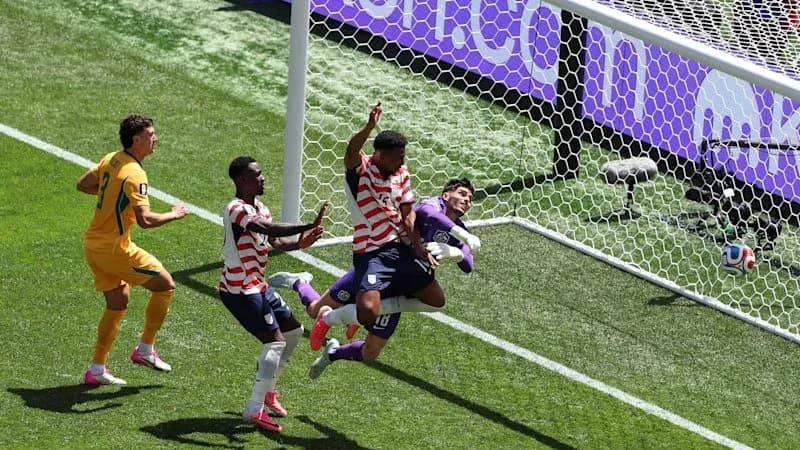
Then Cameron Burgess scored the opener – for the USA – and the noise died in an instant.
You could hear the clink of glasses, the shuffle of stools, the low groan rolling through the bar. All that early bravado suddenly felt a long way from the reality unfolding on the screen: the USA dominating the ball, dictating the tempo, and Australia pinned back, chasing shadows.
When the second US goal arrived, helped along by a decision the locals in the bar branded “controversial” before the replay had even finished, the mood sagged further. One punter, half serious, half broken, muttered that he might just go home.
He didn’t. None of them did.
By half-time, the shock gave way to habit. More pints. More party pies. A rush for the bathrooms and a reset of belief. This crowd has seen enough football to know that 45 minutes is a long time, especially with Nestory Irankunda still to come.
“It’s not over yet,” came the call from another fan, a simple line that cut through the gloom and stuck. Heads turned back to the screens. Shoulders straightened. Wise words. Play on.
Heat, mistakes and a US masterclass
On the pitch, the picture was far less forgiving.
“Conceding so early wasn’t ideal,” Socceroos assistant coach Paul Okon told SBS, summing up what every Australian fan had felt in their gut.
“It’s hot out there. We struggled a little bit in the heat. We’re not getting our line high enough to put pressure on the ball. But it’s difficult.”
The USA made it look anything but. They were sharper in every contest, stronger in every duel, cleaner with every touch. They won the 50-50s, then the 60-40s, and by the time the half wore on, they were winning the ones they had no right to reach at all.
“What we don’t want to do is fall out of our structure and start chasing the ball,” Okon added. “We need to stay compact as much as possible and obviously try and have enough legs that once we get the ball we can hurt them.
“We’ll see some fresh legs in the second half, a bit of speed to hurt them once we have the ball.”
The problem was simple and brutal: the USA had the ball, almost all of it. Australia were being forced into constant mistakes, pressed into corners, hurried into poor decisions. The Americans looked composed, confident, and completely in control. For Tony Popovic and his players, the margin for error had already vanished.
Fed Square soaks, sings and refuses to budge
Across the country, the story was the same, just wetter.
At Melbourne’s Fed Square, fans had queued from 2am, staking out their place in the famous viewing area under persistent rain. By the time the USA’s dominance on the scoreboard matched their dominance on the pitch, the ponchos were soaked but the mood refused to break.
There were flares. A rogue beach ball bouncing above heads. A thick band of green and gold cutting through the grey morning.
Mel, a veteran of two decades of Fed Square watch parties, turned up in a Socceroos jersey and a Donald Trump costume that made it look like he was being carried on the former president’s shoulders. It was absurd, defiant, very on brand for the Square.
Who wins? “Aussies of course,” he said, the scoreline be damned.
For Madison Cambora, it was a first taste of the ritual: the early alarm, the dark streets, the communal jolt of watching the national team on a big screen. Even trailing, she didn’t regret a second.
“I hope they come back from this,” she said. “I’m hoping all good things, but it’s not looking good.”
She wasn’t wrong. From the stands to the pubs to the public squares, the same conclusion was forming: the USA were better in every department – physically, psychologically, technically. They looked like a side that knew exactly who they were and how they wanted to play. Australia looked like a side hanging on.
Popovic’s dilemma and the Irankunda card
So where do you go when there seems to be nowhere to go?
For Popovic, the answer had to be risk. Australia could not sit in and survive; they had to step out and swing. That, of course, is exactly what the USA wanted – more space to run into, more gaps to exploit, more chances to turn a strong performance into a statement win.
At a minimum, one change felt non-negotiable: Nestory Irankunda had to start the second half. If the USA had “nothing to worry about” in the first 45, the teenager’s arrival offered at least a question, a jolt of pace and unpredictability that might unsettle a back line that had cruised through the opening period.
Popovic turned to his bench. Last weekend’s scorers, Irankunda and Connor Metcalfe, came on, along with Jason Geria. Toure, Velupillay and Burgess made way. Mathew Leckie slid across to the left, Metcalfe took up station on the right. Fresh legs, new angles, a different kind of threat.
The tactical tweaks were clear. The emotional shift was bigger. Inside Golden Barley, the volume lifted again as Irankunda’s name flashed up. At Fed Square, flags went higher, voices rose. One more roll of the dice. One more reason to believe.
The USA still held all the cards. They still controlled the tempo, the scoreboard, the narrative. But football has a way of bending to a moment, to a spark, to a player who doesn’t yet know what he can’t do.
If Australia were going to claw their way back, it would be from here, from this gamble, from this injection of raw, fearless energy.
The Americans looked like they had nothing to worry about.
For the Socceroos, that was precisely the problem – and the challenge that had to be answered.