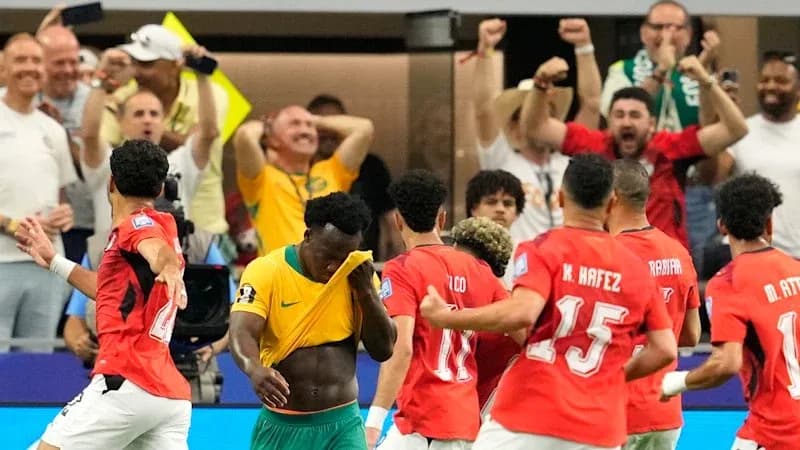
Australia vs Egypt: Socceroos Seek Comeback After Frustrating First Half
Australia walked into the break a goal down to Egypt, frustrated, bruised, but very much still alive.
The Socceroos had done most of the running. Egypt had done most of the damage.
Egypt strike, Australia seethe
The opening goal will sting for a while. It came from the kind of moment this Australia side usually swallows whole: a set piece, poorly defended, cheaply conceded. The line stepped late, the marking went loose, and the Pharaohs pounced. For a team that prides itself on organisation at dead balls, it was a lapse completely out of character.
On the touchline and in the dressing room, the reaction was blunt. The Australians knew they had handed Egypt something to cling to, a platform to sit behind and manage the game on their terms.
They also felt the referee had played his part in the irritation. Advantage was allowed to run after a heavy challenge, but the expected yellow card never came when the play stopped. No booking, no real deterrent. The sense of injustice was obvious, but so was the message from within the camp: park it, improve, and win the second half.
Time, tactics, and a five‑minute insult
The end of the half brought another flashpoint. Only five minutes of added time went up on the board. Five minutes, after a three-minute hydration break, a goal, repeated stoppages, and a steady stream of Egyptian players taking every opportunity to slow the game down.
From an Australian perspective, it felt like an insult. From Egypt’s, it was smart game management. They were tough in the tackle, aggressive in the duels, and then utterly shameless when it came to milking contact. It worked. It broke rhythm, killed tempo, and turned every pause into a breather.
Still, the side doing the more convincing attacking was Australia. Before and after the goal, they carried the greater threat. The chances were there. The finishing was not.
Bos blow rocks the Socceroos
Then came the moment that could reshape more than just this match.
Jordan Bos, one of Australia’s most dynamic outlets, went down and stayed down. When he finally rose, it was only with the help of two trainers, unable to put any weight on his left foot. As he was carried off, the mood shifted. This wasn’t just a knock. It looked serious, and any hope of seeing him after the break all but vanished.
Losing that thrust on the flank stripped the Socceroos of a key weapon, just as they were beginning to stretch Egypt’s shape.
Penalty shouts and near misses
The half still had time for chaos in the Egyptian box. A looping ball dropped towards an Australian header, squeezed between two defenders. The effort lacked power, but as it skimmed goalwards, Rabia’s arm came into play. The contact looked more ball-to-arm than arm-to-ball, and the referee waved it away, tapping his own arm as if to say he’d seen it clearly.
Behind them, Cristian Volpato was hauled down by Havez at the back post. Again, nothing. No whistle, no VAR intervention, just a rising roar of disbelief from the Australians.
They kept coming. Aziz Behich drove at Hany down the left, forcing Egypt deep into their own defensive third. A long throw from Alessandro Circati turned into a scramble: Jackson Irvine and Harry Souttar both challenged, Herrington flicked it on, and the ball dropped to Nestory Irankunda. He recycled it neatly back to Behich, who unleashed a low strike towards the near post. The goalkeeper got down smartly to his right, but it was a clear sight of goal and a reminder that Egypt’s lead sat on thin ice.
Moments later, Irankunda almost made them pay again, sniffing around the box and threatening to turn half-chances into something far more serious.
Salah’s quiet threat
Mo Salah had not yet taken over the contest, but his shadow still loomed over it. Nursing hamstring tightness, he played within himself, picking his moments rather than exploding into every run. Even at that gear, he remained dangerous.
One clever movement off Souttar’s shoulder almost opened Australia up, only for Herrington to read it and step in decisively. At a free kick, Salah opted for guile rather than glory, rolling a short pass square to Attia. The midfielder’s long-range effort was struck cleanly, arrowing towards the back post, but Australia’s defence had the lane covered.
Egypt’s threat felt sporadic, opportunistic. Australia’s felt more sustained, more deliberate. That only made the scoreline more aggravating.
A half to chase, a moment to seize
As the whistle went at 45+3 minutes with Australia trailing 1-0, one truth hung over the contest: this game remained absolutely gettable.
Egypt had capitalised on a single moment. So could Australia. The running was hard, the spaces tight, but when the Socceroos strung five, six, seven passes together, gaps appeared. Pockets of space opened. Egypt did not enjoy being turned and forced backwards.
The message for the second half was simple, almost brutal in its clarity: keep the ball better, be braver in possession, and when the next chance arrives, do what Egypt did with theirs.
Take it.