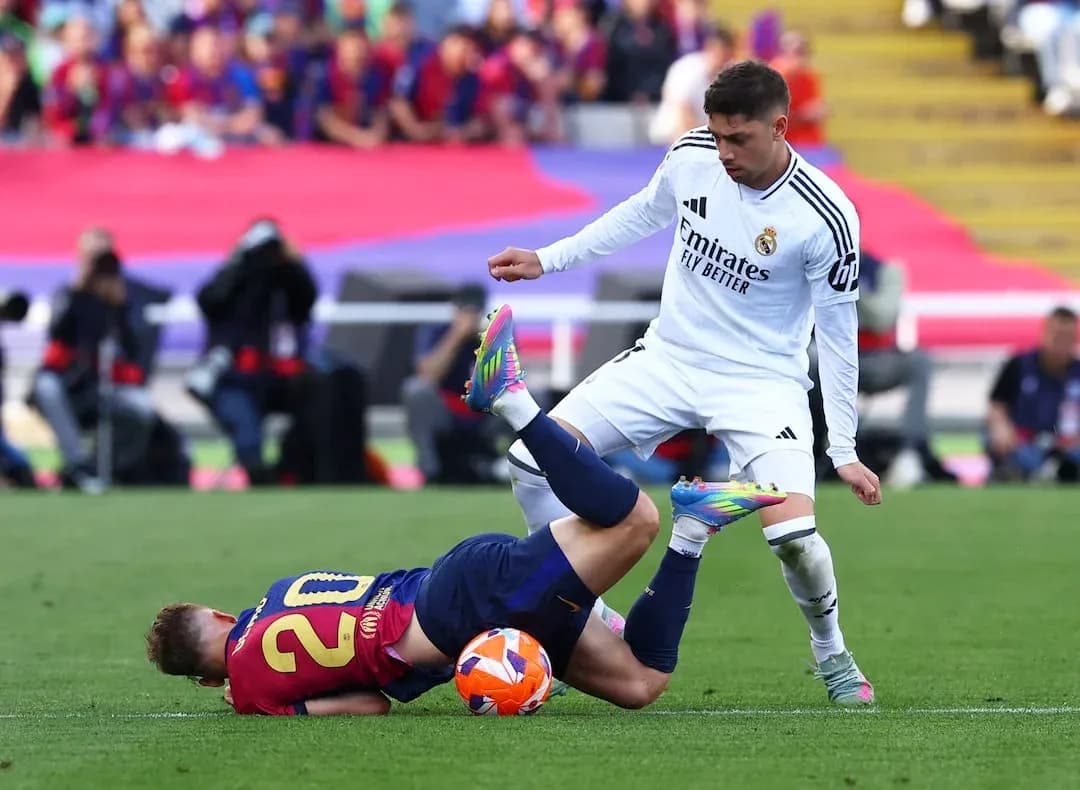
Barcelona vs Real Madrid: Clásico Showdown on May 10, 2026
Camp Nou stages another era-defining Clásico on 10 May 2026, with La Liga’s top two going head-to-head. Barcelona start the weekend top of the table on 88 points, 11 clear of second-placed Real Madrid on 77. The title is within touching distance for the hosts, but a meeting of the division’s two outstanding attacks and two of Europe’s most decisive match-winners means narrative, prestige and psychological dominance are all on the line.
Context and stakes
In the league, Barcelona have been close to flawless. They arrive with a 29‑1‑4 record from 34 games, the best attack (89 goals) and the best defence jointly (31 conceded). Most striking is their perfection at Camp Nou: 17 home games, 17 wins, 52 goals scored and only 9 conceded.
Real Madrid’s season would look title-winning in almost any other year: 24‑5‑5, 70 scored and 31 conceded. Away from home they are robust (10‑4‑3, 31‑17), but that still leaves them seven points worse than Barça’s home return alone. This fixture is less about keeping the title race alive and more about denting the champions-elect’s aura and reasserting their own.
Tactical shapes and stylistic clash
The data points to a clear structural contrast.
Barcelona’s most-used formation is 4‑2‑3‑1 (24 league games), with 4‑3‑3 deployed 10 times. Both systems underpin an aggressive, front-foot side: 2.6 goals scored per game, only 0.9 conceded, and zero league fixtures where they have failed to score. At Camp Nou that attacking output spikes to 3.1 goals per match, with just 0.5 against.
Real Madrid have leaned most often on 4‑4‑2 (16 matches), but have also used 4‑2‑3‑1, 4‑3‑3 and several hybrid shapes. They average 2.1 goals for and 0.9 against, with a slightly more conservative away profile (1.8 scored, 1.0 conceded). Their flexibility allows them to morph between a narrow 4‑4‑2 to crowd the middle and a more expansive 4‑3‑3 when chasing games.
This sets up a familiar pattern: Barcelona likely to dominate territory and possession with a high line and wide wingers, Real Madrid poised to compress the centre and spring in transition.
Barcelona: form, weapons and balance
Across all phases, Barcelona’s form line is extraordinary: “WWDWWWWLWLWWWWWWWWWLWWWLWWWWWWWWWW”, with a longest winning streak of nine. They have kept 14 clean sheets and never once failed to score in the league. At home, the defensive record is elite – 9 clean sheets in 17 – and they have not lost a single league game.
In attack, the load is shared among a potent front line:
- Lamine Yamal has been the standout creative force. With 16 league goals and 11 assists from midfield, plus 72 key passes and 244 dribble attempts (135 successful), he is the primary conduit between midfield and attack. His 7.95 average rating underlines both end product and influence. From the right or as a roaming playmaker in a 4‑2‑3‑1, he can overload half-spaces, combine with the full-back and attack the box.
- Ferran Torres offers direct penalty-box threat: 15 goals from 1,796 minutes, with 34 of his 54 shots on target. Often used either off the left or as a central forward, he provides vertical runs that stretch defences, opening pockets for Yamal and the No. 10.
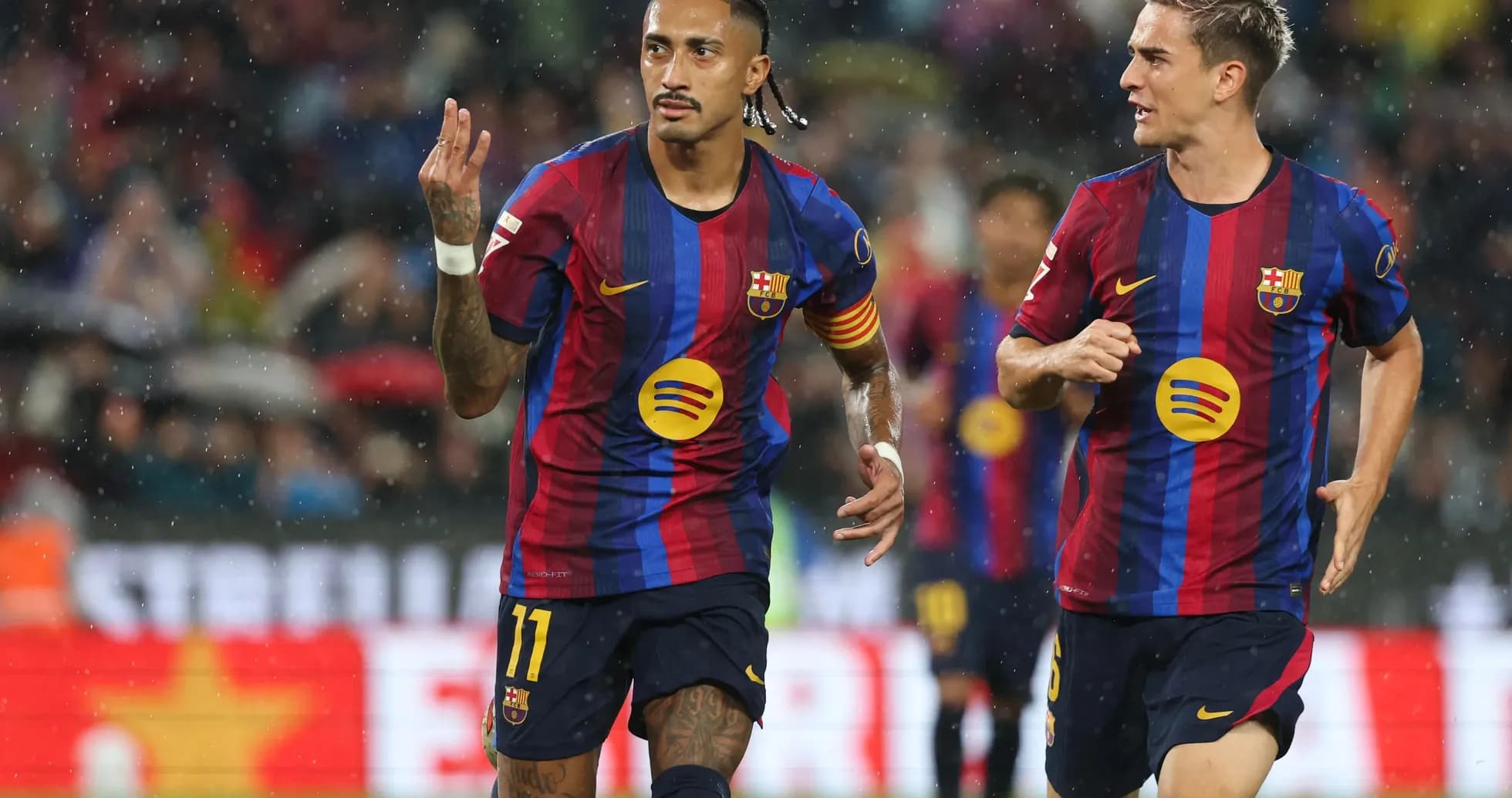
- Raphinha adds another layer of incision. With 11 goals and 3 assists in just 1,299 minutes, plus 41 key passes, he is a high-impact wide option who can start or come from the bench. His 39 dribble attempts (20 successful) and strong passing volume (593 passes at 81% accuracy) make him a dual threat between the lines and on the flank.
- Robert Lewandowski, even with fewer starts (14 lineups, 27 appearances), remains a penalty-box reference with 13 goals and 2 assists. His link play (270 passes at 80% accuracy) and movement between centre-backs provide structure to Barça’s positional play.
Barcelona’s team penalty record in the league is 7/7, but individually Lewandowski has scored 1 and missed 2, while Yamal has scored 3 and missed 1. That nuance matters in a fixture where spot-kicks are a real possibility.
Defensively, the high line is protected by a compact midfield screen in the 4‑2‑3‑1. The card distribution suggests intensity spikes just after half-time (15 yellow cards between 46–60 minutes), a phase where pressing is ramped up and tactical fouls appear.
Real Madrid: Mbappé, Vinícius and the transition threat
Real Madrid’s season profile shows a side that can match Barcelona’s scoring bursts on their day. They have had an eight-game winning streak and have kept 12 clean sheets, failing to score in only three league fixtures.
Their attacking identity is built around two elite forwards:
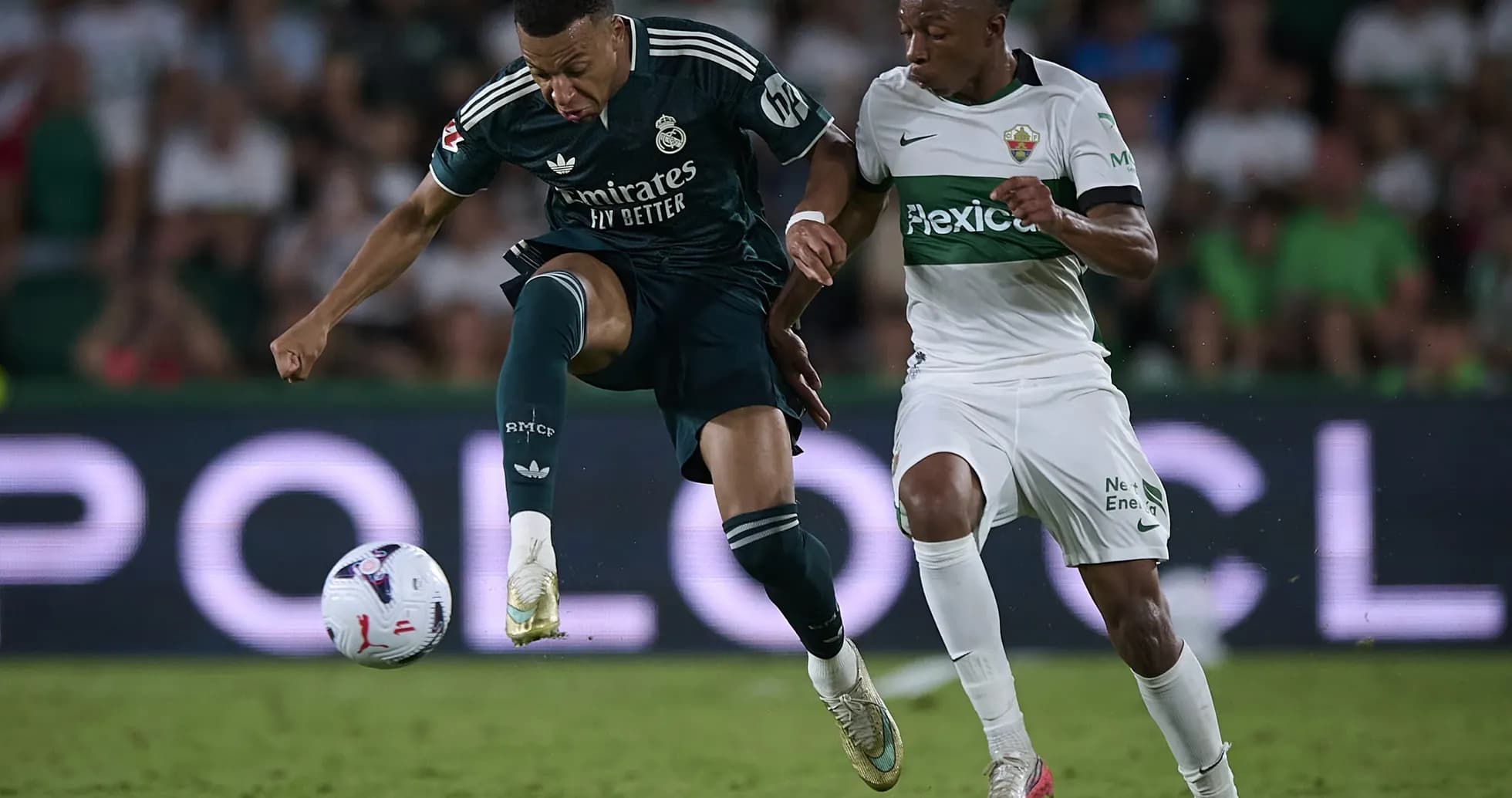
- Kylian Mbappé is La Liga’s top scorer with 24 goals and 4 assists in 28 appearances. He averages over one shot on target per 40 minutes (61 on target from 100 attempts), and his 63 key passes and 140 dribble attempts (76 successful) show he is far more than a pure finisher. Operating from the left or as a central striker in a 4‑4‑2/4‑3‑3, he will look to attack the space behind Barça’s high line, especially on turnovers. From the spot he has scored 8 penalties but missed 1, so while highly reliable, his record is not flawless.
- Vinícius Júnior complements him with 15 goals and 5 assists, 44 shots on target from 71, and 186 dribble attempts (85 successful). His 78 fouls drawn highlight how often he destabilises defensive structures. Whether starting wide left with Mbappé central, or as a second striker in a 4‑4‑2, his ability to carry the ball through pressure is crucial to Real’s counter-attacking plan. He has scored 4 penalties and missed 1.
Real Madrid’s away record (10‑4‑3) and seven away clean sheets indicate they can control games without the ball. The variety of formations – from 4‑4‑2 to 4‑2‑3‑1 and 3‑4‑2‑1 – gives the coach options to mirror Barcelona’s shape or to add an extra defender to manage the wide overloads.
Discipline is a factor: Real Madrid’s red-card distribution includes dismissals in multiple time ranges, including late in matches (two between 91–105 minutes), which could become decisive in a high-emotion Clásico.
Head-to-head: recent competitive history
The last five competitive meetings (excluding friendlies) show a slight Barcelona edge:
- 11 January 2026, King Abdullah Sports City (Super Cup Final) Barcelona 3-2 Real Madrid – Barcelona won.
- 26 October 2025, Estadio Santiago Bernabéu (La Liga) Real Madrid 2-1 Barcelona – Real Madrid won.
- 11 May 2025, Estadi Olímpic Lluís Companys (La Liga) Barcelona 4-3 Real Madrid – Barcelona won.
- 26 April 2025, Estadio Olímpico de Sevilla (Copa del Rey Final) Barcelona 3-2 Real Madrid after extra time (2-2 in 90 minutes) – Barcelona won.
- 12 January 2025, King Abdullah Sports City (Super Cup Final) Real Madrid 2-5 Barcelona – Barcelona won.
Across these five matches, Barcelona have 4 wins, Real Madrid 1, and there have been 0 draws. Every game has produced at least five goals, underlining how volatile and open this rivalry has been in recent seasons.
Key battles
- Barça’s right vs Real’s left defence: Lamine Yamal and an overlapping full-back attacking the channel where Mbappé or Vinícius may not always track back. Real Madrid must decide whether to pin one of their stars deeper or accept overloads and rely on centre-backs to cover.
- Transition control: Barcelona’s rest defence – the positioning of their two pivots and centre-backs when attacking – will be tested by Mbappé and Vinícius running into space. Any loose pass in midfield can immediately become a 2v2 or 3v3.
- Set pieces and penalties: Both teams have strong penalty-takers but with documented misses for Mbappé, Vinícius, Yamal and Lewandowski, the psychological edge from the spot is not clearly with either side.
The verdict
Data and form point towards a high-level, high-scoring contest. Barcelona’s perfect home record, 3.1 goals per game at Camp Nou, and their recent dominance in direct clashes give them a slight statistical advantage. Real Madrid, however, possess perhaps the two most explosive transition forwards in the league and a flexible tactical toolkit that travels well.
With both sides averaging over two goals per game and neither inclined to sit back, another open Clásico is the logical expectation. Barcelona’s collective structure and home invincibility make them marginal favourites, but Real Madrid’s individual firepower is strong enough that a narrow home win or a draw with multiple goals are the most coherent outcomes on the data.