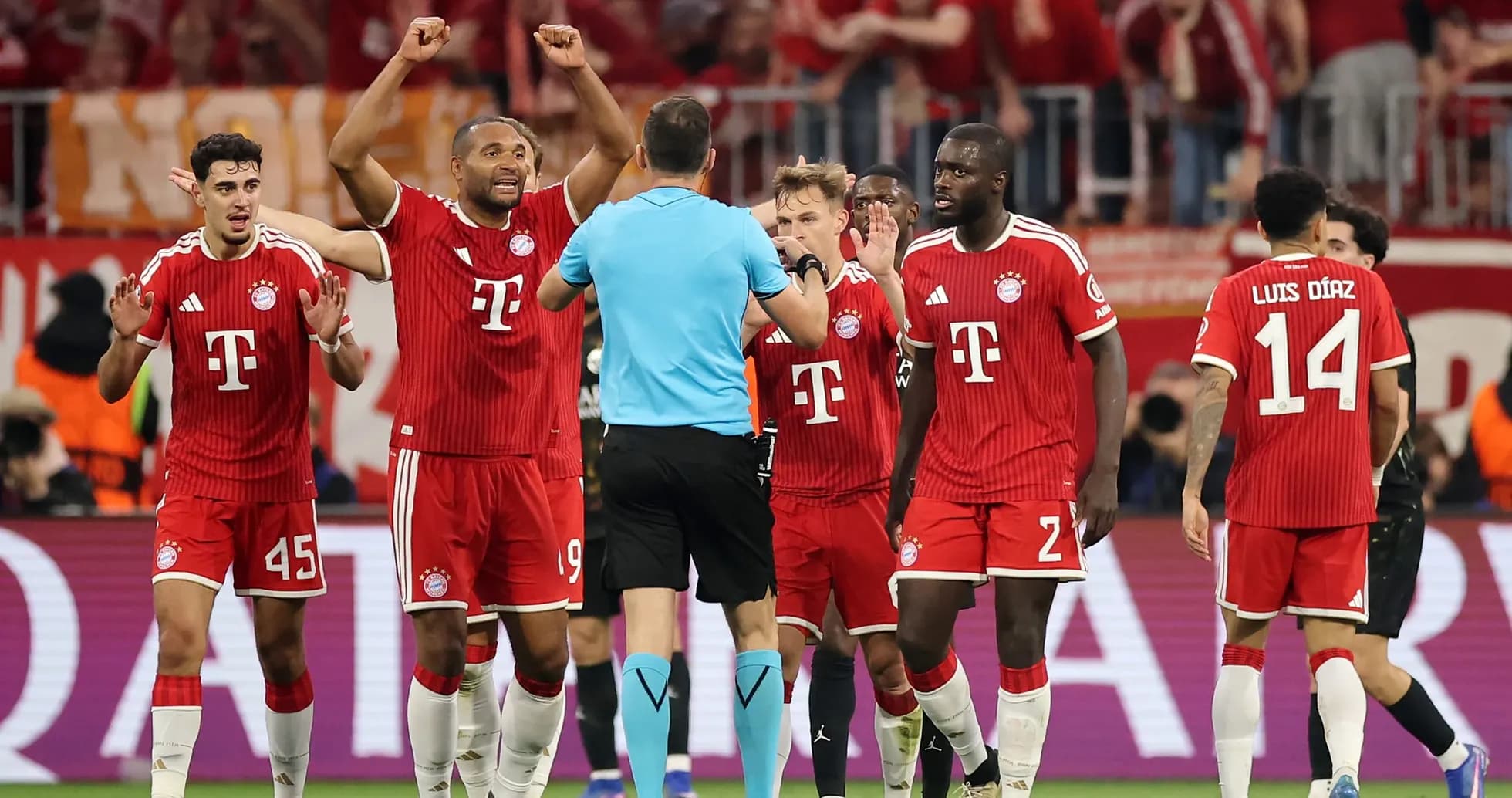
Bayern München vs Paris Saint Germain: Champions League Semi-Final Analysis
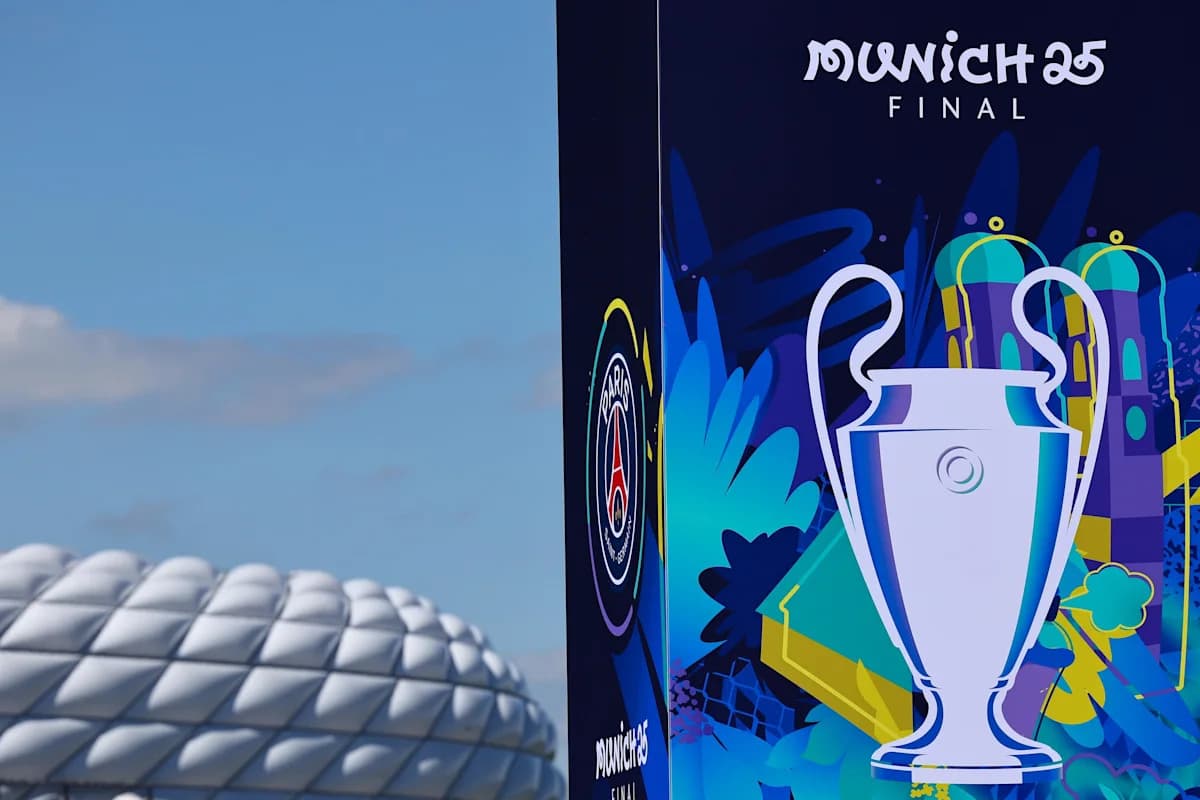
Under the lights of the Allianz Arena, a Champions League semi-final between Bayern München and Paris Saint Germain that finished 1–1 felt less like a conclusion and more like the opening chapter of a two-legged chess match. Following this result, the tie remains perfectly balanced, but the way each side reached that scoreline says a great deal about their seasonal DNA and how the squads are built for the decisive return.
I. The Big Picture – Two heavyweights, one narrow margin
Bayern arrived as a machine of ruthless consistency in Europe. Overall this campaign they have played 14 matches, winning 11, drawing 1 and losing just 2. At home they have been almost flawless: 7 fixtures, 6 wins, 1 draw, 0 defeats, with 21 goals scored and 7 conceded. That 3.0 home goals-for average underlines why the Allianz Arena is usually a red storm.
Paris Saint Germain came in with a different profile: a side that has grown into the tournament. Overall they have played 16 matches, winning 10, drawing 4 and losing 2, with 44 goals scored and 22 conceded. On their travels they have been quietly efficient: 5 wins, 2 draws and 1 defeat in 8 away games, averaging 2.4 away goals while conceding just 1.0. If Bayern’s story is one of overwhelming home pressure, PSG’s is of calculated away control.
The league standings frame the clash: Bayern sit 2nd in the Champions League table snapshot with 21 points and a goal difference of 14 (22 goals for, 8 against), PSG 11th with 14 points and a goal difference of 10 (21 for, 11 against). Both are clearly among the elite, but Bayern’s numbers hint at a slightly sharper edge.
II. Tactical Voids – What was missing, and how it bent the game
The absences list quietly reshaped both coaches’ options. For Bayern, the loss of S. Gnabry (muscle injury) removed one of the competition’s most efficient secondary creators – 5 assists in 11 appearances – and a direct runner who normally rotates with M. Olise and L. Díaz. M. Cardozo, C. Kiala, W. Mike and B. Ndiaye were also unavailable, trimming depth rather than the core XI, but in a semi-final even bench variety matters.
For PSG, the absence of A. Hakimi (thigh injury) was a major tactical void. Hakimi’s 6 assists and relentless verticality usually tilt the right flank, opening lanes for O. Dembele and K. Kvaratskhelia to drift inside. Without him, Enrique Luis had to rely on W. Zaire-Emery as a nominal right-back, subtly reducing the natural overlap threat and forcing more creativity through midfield. L. Chevalier and Q. Ndjantou were also missing, but the structural loss was clearly on that right side.
Discipline, over the season, has been a shadow storyline. Bayern’s yellow-card timing shows a late-game spike: 37.04% of their cautions arrive between 76–90 minutes, with another 11.11% from 91–105. PSG mirror that trend in their own way: 42.86% of their yellows fall between 76–90 and 14.29% from 91–105. In a tie that may be decided by fine margins, both squads are prone to fraying at the edges just as the game stretches.
III. Key Matchups – Hunter vs Shield, Engine Room vs Enforcer
Hunter vs Shield
Harry Kane is the competition’s purest finisher this season. Overall he has 14 Champions League goals in 13 appearances, with 25 shots on target from 36 attempts and 4 penalties scored. He has, however, missed 1 penalty – a reminder that even the most clinical hunter is not infallible from the spot.
He is supported by L. Díaz, who adds 7 goals and 3 assists, and M. Olise with 5 goals and 6 assists. Bayern’s attacking trident behind Kane is not just about volume; it is about variety. Olise’s 34 key passes and 45 successful dribbles, Díaz’s 25 key passes and high passing accuracy, and J. Musiala’s free role between the lines create a constantly shifting front four.
Their challenge is a PSG defensive unit that, on their travels, concedes only 1.0 goal per game. Overall, PSG have allowed 22 goals in 16 matches, an average of 1.4, with a particular vulnerability between 31–45 minutes where 27.27% of their goals against occur. That dovetails ominously with Bayern’s attacking surge between 31–45 and 46–60 minutes, where they score 18.60% of their goals in each window. The intersection is clear: the end of the first half and the start of the second are the minutes where Kane and company are most likely to crack PSG’s shield.
Engine Room – Playmaker vs Enforcer
In midfield, Vitinha is PSG’s quiet conductor. Across the campaign he has 6 goals, 1 assist, 23 key passes and a 93% passing accuracy from 1,553 passes. He is not just a metronome; with 25 tackles and 17 interceptions he doubles as the first line of counter-pressing. Flanked by F. Ruiz and J. Neves, PSG’s 4-3-3 seeks to control tempo rather than simply sit deep.
Opposite him, Joshua Kimmich is Bayern’s organiser and enforcer. He has 30 key passes, 1,117 total passes at 90% accuracy and 15 tackles, but his 4 yellow cards underline his willingness to step into the dark arts when transitions threaten. Alongside A. Pavlovic, he must both shield a back four that can be exposed in the 16–30 and 31–45 minute ranges (25.00% and 20.00% of Bayern’s goals against) and feed the attacking quartet early.
This is where the narrative tightens: PSG’s goals-for distribution peaks at 31–45 minutes (22.73%) and 61–75 minutes (20.45%), exactly when Bayern’s defensive concentration wobbles. D. Doue and Dembele thrive in these broken phases, while Kvaratskhelia, with 10 goals and 6 assists, is the competition’s most complete dual-threat wide forward.
IV. Statistical Prognosis – xG contours and defensive solidity
Even without explicit xG values, the statistical profiles sketch likely expected-goals contours. Bayern’s overall goals-for average of 3.1 against a goals-against average of 1.4 suggests their matches are open, high-event affairs. PSG’s 2.8 goals-for and 1.4 goals-against overall point to a slightly more balanced, but still attack-leaning, game model.
Given Bayern’s perfect record of scoring in every Champions League match (0 failed-to-score games, both home and away) and PSG failing to score only once all campaign, the second leg is overwhelmingly likely to be another multi-goal contest. Bayern’s home clean-sheet count of 2 from 7 contrasts with PSG’s 3 away clean sheets from 8, hinting that if one side is to strangle the game, it might surprisingly be PSG on their travels.
Yet the intersection of Bayern’s late yellow-card surge and PSG’s own late disciplinary spikes suggests a second leg that grows more chaotic as time passes. With Kane’s penalty record (4 scored, 1 missed) and PSG’s own perfect spot-kick conversion (2 scored, 0 missed) lurking in the background, any clumsy late challenge in the box could swing the xG – and the tie – decisively.
Following this 1–1 in Munich, the tactical preview for the return is of two teams whose strengths collide at the same moments: Bayern’s mid-game attacking waves versus PSG’s mid-half defensive frailty, and PSG’s transition-heavy surges against Bayern’s occasional lapses before the interval. The squads are built for drama; the numbers insist that the story of this semi-final is far from finished.