Barcelona vs Real Madrid: A Tactical Clash in La Liga
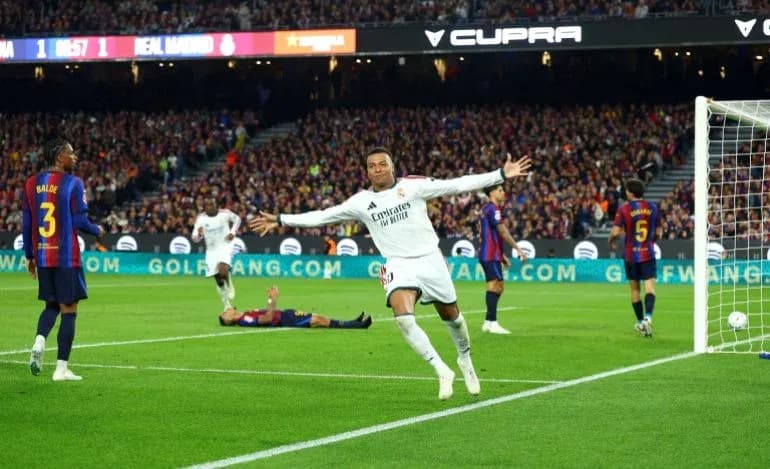
The lights have gone out at Spotify Camp Nou with the scoreboard locked at 1–2, but the story of this clásico was written long before the final whistle. It was a collision between the league’s most explosive attack and its most ruthless counter‑punch, between Hansi Flick’s vertical 4‑3‑3 and Jose Mourinho’s calculated 4‑2‑3‑1. In the end, Real Madrid walked away with the points; Barcelona, still top of La Liga, are left to question how a season built on overwhelming opponents slipped in its first great stress test.
Match Statistics
Heading into this game, Barcelona sat 1st with 27 points from 10 matches, their overall goal difference a staggering +29, built on 40 goals for and 11 against. At home, they had been almost as devastating as on their travels: 18 goals scored and 6 conceded at Spotify Camp Nou across 5 league fixtures, an average of 3.6 goals for and 1.2 against. Real Madrid arrived in Barcelona in 3rd place on 24 points, with an overall goal difference of +15 from 25 scored and 10 conceded. Their away profile was more nuanced: on their travels they had 3 wins and 2 defeats, scoring 8 and conceding 7, averaging 1.6 goals for and 1.4 against.
Barcelona's Lineup
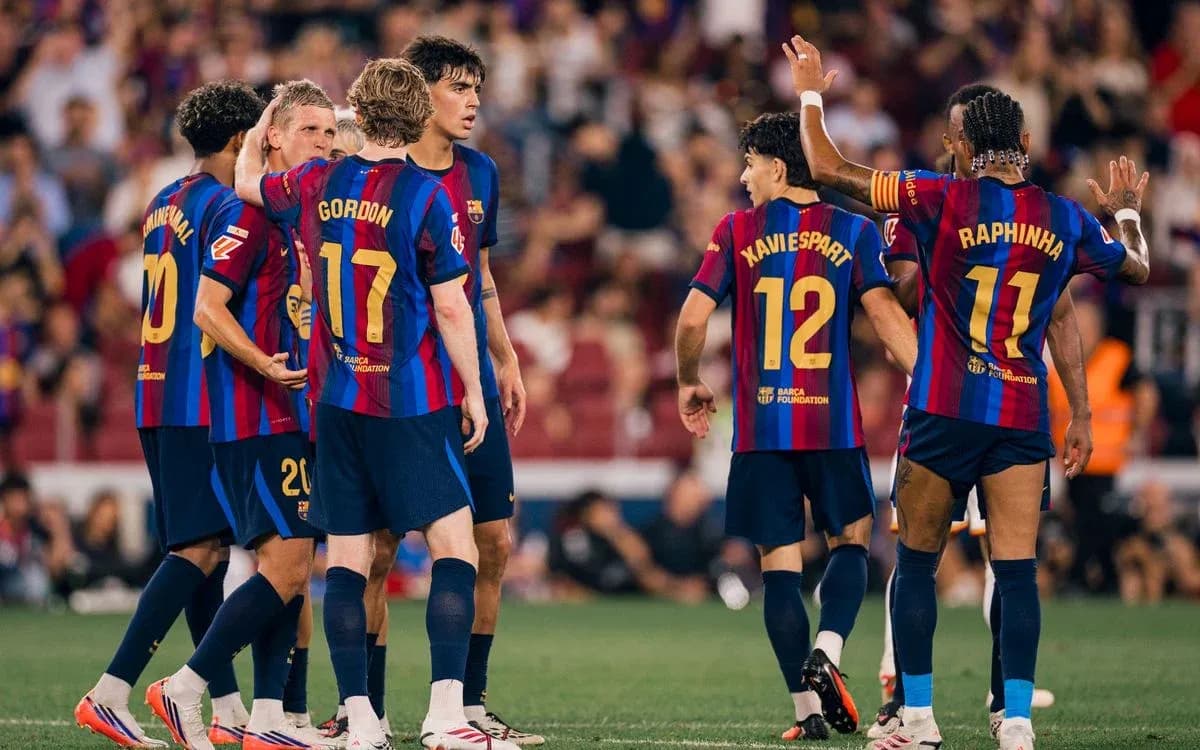
Flick doubled down on the identity that had taken Barcelona to 9 wins from 10 overall: a 4‑3‑3 with J. Garcia in goal and a back four of J. Cancelo, G. Martin, P. Cubarsi and X. Espart. In midfield, Pedri, Rodri and Fermin formed a technically gifted, high‑pressing trio. Ahead of them, Lamine Yamal and Raphinha flanked A. Gordon, three forwards who have turned Barcelona into a whirlwind in the final third.
The absences only heightened the stakes. Without A. Christensen, E. Garcia and J. Kounde, Barcelona’s central defensive resources were thinned, forcing trust in the youthful P. Cubarsi and G. Martin in a match where every duel is magnified. The loss of Dani Olmo removed a creative rotation piece from midfield and half‑spaces, narrowing Flick’s in‑game options.
Real Madrid's Lineup
Real Madrid’s list of absentees was just as consequential. T. Courtois’ illness confirmed A. Lunin as the man between the posts, while F. Mendy’s hip injury and R. Asencio’s broken leg trimmed Mourinho’s defensive depth. In attack, the suspension of Vinicius Junior and the knee injury to Rodrygo stripped away two of Madrid’s most direct wide threats, placing almost the entire attacking burden on K. Mbappe and J. Bellingham.
Mourinho’s response was pure pragmatism. Madrid lined up in a 4‑2‑3‑1: Lunin in goal, a back four of M. Cucurella, D. Huijsen, I. Konate and F. Valverde. Ahead of them, A. Tchouameni and B. Silva formed a double pivot designed to compress central spaces, while A. Guler, J. Bellingham and Y. Diomande operated behind Mbappe.
Barcelona's Offensive DNA
This was not a night for romance; it was a night for details. Barcelona’s offensive DNA is clear from the season numbers: overall they average 4.0 goals per game, have failed to score in none of their 10 league fixtures, and have already produced a 7–2 home win and a 5–0 away demolition. Their structure is built to flood the last line. Lamine Yamal, with 8 goals and 6 assists in 10 appearances, is La Liga’s leading creator and a top‑four scorer, a dual threat who attempts 67 dribbles and has succeeded with 40. On the opposite flank, Raphinha has been even more lethal in front of goal: 13 goals and 3 assists in 9 appearances, converting 17 of 25 shots on target and winning 2 penalties, all while maintaining a rating of 8.49.
A. Gordon’s 4 assists and 1 goal add another layer of incision, his 90% pass accuracy showing he is not just a runner but a secure connector in the final third. Behind them, Fermin’s 4 goals and 3 assists from midfield, plus 16 key passes and 10 tackles, make him the perfect bridge between Flick’s high press and his front three.
Defensive Vulnerabilities
Yet the numbers also hinted at where Madrid could hurt them. Barcelona’s overall goals against average sits at 1.1, and at home it rises slightly to 1.2. They are not fragile, but they are open. Their yellow card distribution shows a clear pattern: 46.67% of their bookings come between 46' and 60', with another 20.00% in added time from 91' to 105'. This is a team that emerges from the break with intensity, sometimes overstepping the line, and then chases late.
Madrid’s disciplinary profile is even more volatile. They have yellow card spikes spread across 46'–60', 61'–75' and 76'–90' (each 18.18%), and a late‑game surge from 91' to 105' at 22.73%. Red cards have already found D. Huijsen and Vinicius Junior, both dismissed once, with those reds arriving in the 46'–60' and 61'–75' windows. Mourinho’s Madrid lives on the edge, especially in the second half.
Key Player Profiles
Overlay that with Mbappe’s and Bellingham’s individual profiles and the “Hunter vs Shield” battle becomes stark. Mbappe has 11 goals and 2 assists from 10 appearances, firing 41 shots with 29 on target and winning 51 of 97 duels. He has already won a penalty but also missed one, a reminder that even his ruthlessness has limits. Bellingham, with 3 goals and 3 assists, is Madrid’s engine and their enforcer: 20 tackles, 3 blocks, 4 interceptions and 77 duels won from 126. He is as likely to break up a Barcelona counter as he is to arrive late in the box.
Against a Barcelona back line missing senior centre‑backs, Mbappe’s runs into the channels between full‑back and centre‑back were always going to be decisive. With Barcelona’s line pushed high to compress Madrid’s build‑up, the space behind P. Cubarsi and G. Martin was the natural fault line. Mourinho’s 4‑2‑3‑1, with A. Guler and Y. Diomande tucking in, created overloads around Rodri and Fermin, forcing Pedri to drop deeper and diluting Barcelona’s ability to progress cleanly.
Engine Room Matchup
In the “Engine Room” matchup, Rodri and Fermin against A. Tchouameni and B. Silva was a clash of philosophies. Barcelona’s pair wanted to step forward, pin Madrid back and feed the front three between the lines. Madrid’s double pivot existed to deny those pockets, to funnel play wide and invite crosses rather than through balls. With Konate — who has already collected 4 yellow cards and blocked 6 shots this season — anchoring the back line, Madrid were content to absorb and clear.
Penalty Sub-Plot
Penalties were always a sub‑plot waiting to surface. Barcelona have been awarded 5 overall, scoring 4 and missing 1, while Madrid have had 3, scoring 2 and missing 1. Lamine Yamal’s record from the spot (1 scored, 1 missed) and Mbappe’s own miss this season underlined that neither side could claim perfection from twelve yards. In a fixture where marginal gains decide everything, that imperfection hung over every VAR check in the box.
Final Thoughts
Statistically, the prognosis before a ball was kicked leaned toward chaos. Barcelona’s overall attacking average of 4.0 goals per match, combined with Madrid’s 2.5, suggested a high‑scoring encounter. Defensively, Barcelona’s 1.1 goals conceded overall and Madrid’s 1.0 hinted that both could be breached but rarely collapse.
The 2–1 scoreline in Madrid’s favour fits Mourinho’s script more than Flick’s. It tells of a match where Barcelona’s volume of attacks met a low block that refused to break, and where Madrid’s efficiency — channelling their season‑long knack for striking decisively, especially through Mbappe and Bellingham — outweighed Barcelona’s fluency. Following this result, the narrative around both squads sharpens: Barcelona remain a juggernaut that can be wounded by elite counter‑punchers; Madrid, even without Vinicius Junior and Rodrygo, have proved they can come into the league leaders’ fortress and bend the game to their terms.