Bayern's Defensive Debate: Pressing Issues Revealed
The debate over Bayern’s defending did not wait for the analysis room. It started on live television.
Tom Bischof, fresh from playing the full 90 minutes in Wolfsburg, did not sugar-coat what he had seen from the record champions in recent weeks.
"Conceding so many goals and facing so many chances is never good," he told Sky. He spoke like someone who had spent too long chasing back. "I've watched a few games from the sidelines recently, and we've simply lacked the basic counter-pressing – that immediate closing down after losing the ball."
He rejected the easy excuse of a tired team at the end of a long season. This was not about heavy legs, he argued, but about distances. "That's why we often have to cover unnecessarily long distances," he said, pointing straight at the structural flaw. When Bayern pressed "high and fast," he insisted, they scored plenty. "Lately, though, we've conceded far too many."
The numbers back up the last part. Five goals shipped in Paris. Three in Mainz. Three more at home to Heidenheim. For Bayern, that is not a wobble; it is a pattern.
But Bischof’s diagnosis of the pressing triggered an immediate counter from the man in charge.
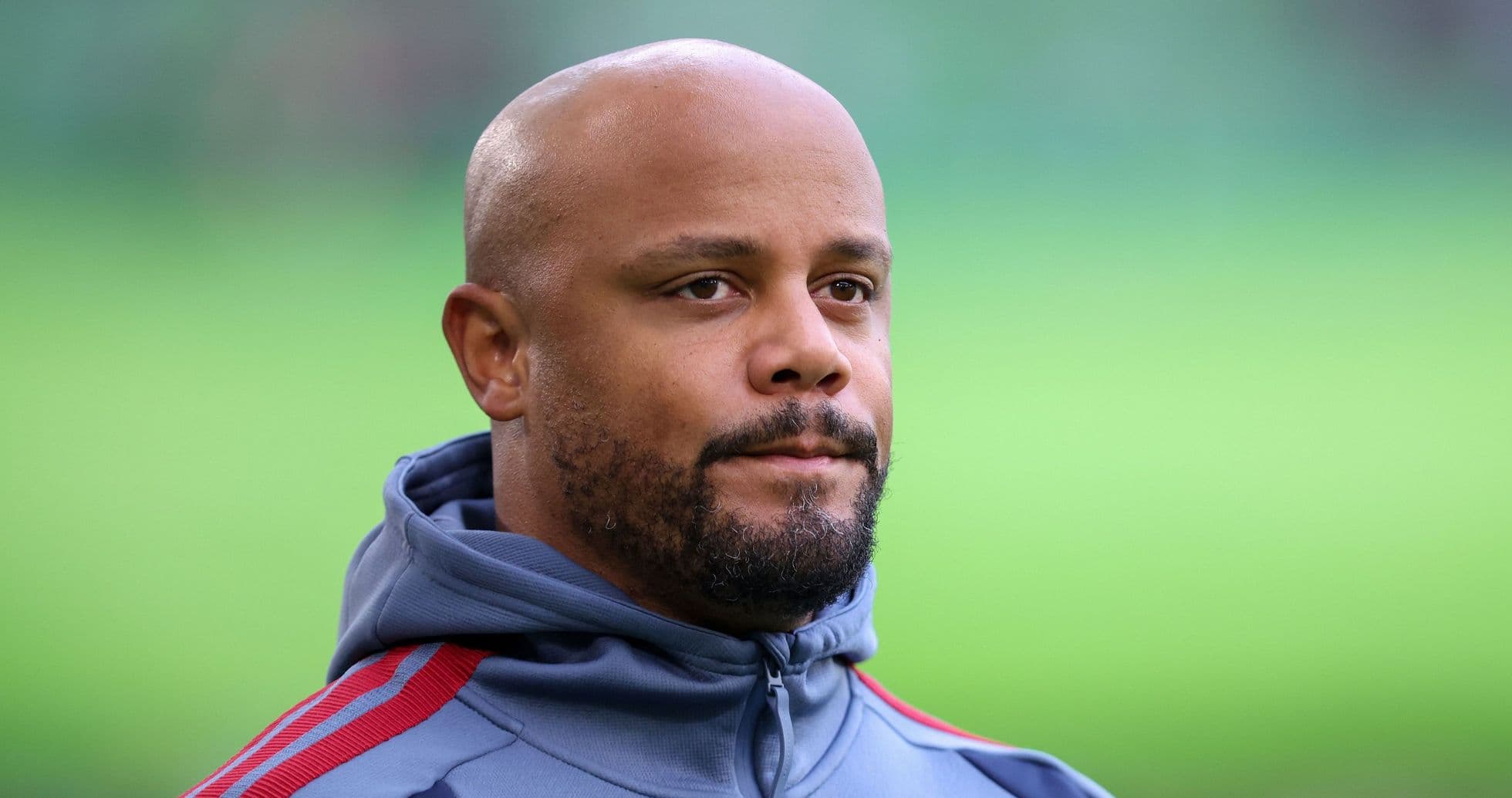
"No, of course not," Vincent Kompany replied on Sky when asked if his young midfielder was right. No room for ambiguity. "He's a young player and he made a mistake in that interview."
Kompany did not question the desire of his players to press. He questioned the premise. He pointed to a first half in Wolfsburg where Bayern repeatedly lost the ball too quickly to build any kind of coherent pressure.
"You can't counter-press a hundred times if you keep losing possession straight away," the 40-year-old said. That, in his eyes, was the core of the problem. "The issue isn't a lack of desire to press; you simply can't win games that way. You don't have to decide games in the first ten or 15 minutes. You can counter-press once, twice, maybe three times, but eventually your legs will give out."
The pattern of the match supported his argument. After the break, Bayern slowed the chaos, held the ball, and finally imposed themselves. Wolfsburg, so lively in the first half, faded as Bayern’s control grew.
Afterwards, Kompany pointed to that shift as the key. The improvement, he said, was "down to our behaviour when in possession." Keep the ball, and the counter-press becomes a weapon, not a survival tool.
Any hint of friction between coach and player was brushed aside with a smile. Kompany handled Bischof’s comments with a mix of authority and warmth. "Tom's a great lad, but I had a bit more perspective straight after the match," he said, adding a wink to show the matter would not grow into a bigger storm.
On the pitch, the night in Wolfsburg still turned Bayern’s way. Harry Kane, usually automatic from the spot, missed his first ever Bundesliga penalty after converting 24 in a row. The kind of moment that can shift a title race did not. Michael Olise stepped up instead, producing a stunning strike that sealed a 1-0 win.
So Bayern left with the points, but also with their internal debate laid bare: a young midfielder calling out the lack of counter-pressing, a head coach insisting the real issue lies with what happens before the ball is lost.
There is no time for a long argument. On the final matchday this Saturday, Bayern host newly promoted 1. FC Köln in Munich, needing a clean, controlled performance. A week later in Berlin, they face defending champions VfB Stuttgart in the DFB Cup final.
By then, everyone will know whose view of Bayern’s identity has truly taken hold.