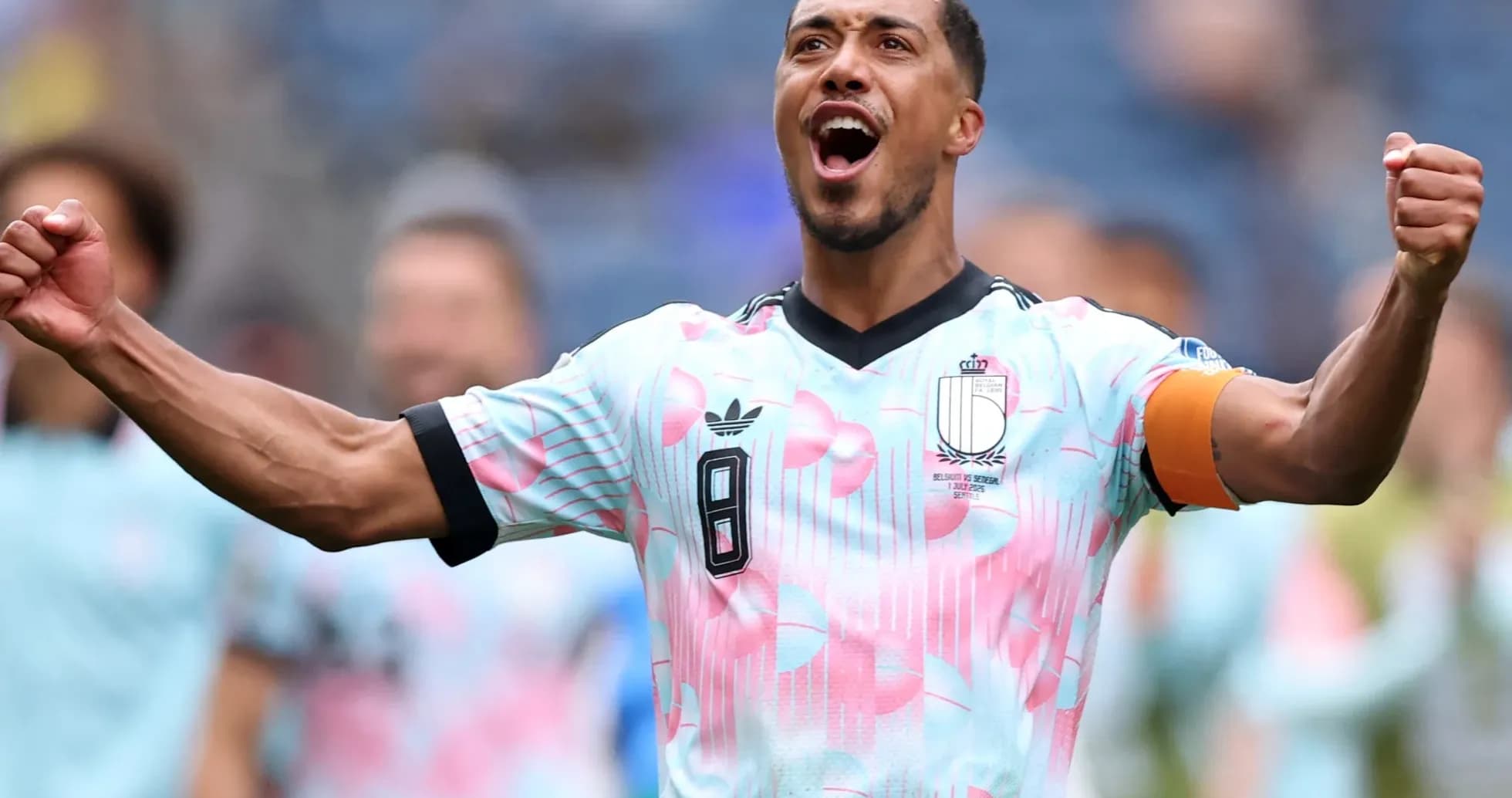
Belgium's Tactical Evolution in 3-2 Win Over Senegal
Belgium’s 3-2 extra‑time win over Senegal at Lumen Field in this World Cup Round of 32 tie was a structural chess match that swung on in‑game adjustments as much as individual quality. Senegal’s 4-3-3 controlled the first hour, exploiting Belgium’s initial 4-2-3-1 spacing, before Rudi Garcia’s bench and a late reconfiguration of roles tilted the contest and ultimately produced the 120+5' winner from Youri Tielemans.
Belgium’s starting 4-2-3-1 was built around Kevin De Bruyne as the central playmaker behind Charles De Ketelaere, with Jérémy Doku and Leandro Trossard nominally wide but both able to drift inside. The double pivot of Tielemans and Hans Vanaken was tasked with progression rather than pure protection, and that imbalance was exposed early. Senegal’s 4-3-3, with Idrissa Gana Gueye anchoring and Habib Diarra and Pape Gueye as more mobile interiors, repeatedly found space between Belgium’s midfield and back four. The opening goal on 25' from Diarra reflected that: Senegal’s midfield line stepped into those half-spaces first and more aggressively, pinning Belgium’s full-backs and forcing Brandon Mechele and Arthur Theate to defend large channels.
Out of possession, Belgium’s first-half press was conservative. De Ketelaere often screened Senegal’s pivot without fully engaging, allowing Senegal’s centre-backs and Idrissa Gana Gueye to circulate under limited pressure. With Ismaïla Sarr and Sadio Mané wide, Senegal could stretch the Belgian back line, while Iliman Ndiaye’s positioning on the right side of the front three helped overload Maxim De Cuyper’s flank. Belgium’s 52% possession did not translate into control; the 22 fouls they committed underline how often they were reacting rather than dictating.
Key Structural Shift
The key structural shift came immediately after half-time. At 46', Romelu Lukaku (IN) came on for Charles De Ketelaere (OUT), changing Belgium’s attacking reference point. Instead of a more fluid false-nine, Belgium now had a fixed target to pin Moussa Niakhaté and Pathé Ismaël Ciss. Initially, however, the change did not fix the defensive issues: on 51', Sarr doubled Senegal’s lead, again capitalising on Belgium’s difficulty defending wide-to-central transitions.
Garcia’s response on 56' was decisive and clearly tactical rather than merely fresh legs. Nicolas Raskin (IN) for De Bruyne (OUT) and Dodi Lukebakio (IN) for Doku (OUT) rebalanced the side. Raskin’s entry shifted Tielemans’ role higher and gave Belgium a more defensively reliable presence in midfield. Without De Bruyne, Belgium moved towards a more direct, vertical approach: Lukaku as a focal point, wide runners attacking second balls, and Tielemans arriving from deeper zones. The structure tilted from a De Bruyne-centric possession game to a Lukaku-centric territorial game.
Senegal, meanwhile, tried to refresh their midfield engine on 66' with Lamine Camara (IN) for Pape Gueye (OUT), then later Pape Matar Sarr (IN) for Diarra (OUT) and Ibrahim Mbaye (IN) for Ndiaye (OUT) at 73'. The intent was to maintain intensity in the press and protect the 0-2 lead. However, these changes subtly reduced Senegal’s ball-carrying threat from midfield. Diarra, scorer of the opener, had been key in driving through Belgium’s lines; his removal, combined with a deeper block, invited Belgium to advance.
Territorial Shift
Belgium’s territorial shift is visible in the shot profile: 19 total shots, with 11 inside the box and 5 blocked. The introduction of Thomas Meunier (IN) for Maxim De Cuyper (OUT) on 78' added a more attacking right-back and better crossing quality. The 86' goal encapsulated the new pattern: Meunier advanced high and wide, delivered the decisive ball, and Lukaku attacked the central space to score. Belgium were now consistently pinning Senegal’s back line, forcing them to defend their own area rather than contesting midfield.
Tielemans’ equaliser on 89', assisted by Trossard, reflected Belgium’s reconfigured midfield hierarchy. With Raskin anchoring and Vanaken withdrawn on 63' for Diego Moreira (OUT for Vanaken (IN)), Tielemans was free to arrive late in the box. Belgium’s passing numbers — 699 passes, 602 accurate (86%) — show that they maintained technical dominance, but the crucial difference after the hour mark was the field position of those passes: more circulation in the final third, more support around Lukaku, and more second-phase pressure after crosses.
Added Time and Decisive Phase
Senegal’s attempts to reset in added time — El Hadji Malick Diouf (IN) for Ismail Jakobs (OUT) and Nicolas Jackson (IN) for Mané (OUT) at 93', followed by Bara Sapoko Ndiaye (IN) for Idrissa Gana Gueye (OUT) at 96' — suggested a move towards fresher legs and direct outlets rather than structured build-up. But with only 48% possession and 12 fouls, they increasingly sat in a mid-to-low block, relying on counter-attacks that became rarer as Belgium’s rest defence improved.
The decisive extra-time phase hinged on Belgium’s ability to sustain pressure and manage transitions. Amadou Onana (IN) for Trossard (OUT) on 109' added height and physicality in midfield, further stabilising the central zone and allowing full-backs to push on. By this stage, Belgium’s 4-2-3-1 often resembled a 2-3-5 in possession, with both full-backs high, Raskin holding, and Tielemans plus Onana stepping into advanced lanes. Senegal’s front line, now including Jackson, struggled to connect with midfield, and their 19 shots were increasingly low-quality efforts compared to their xG of 3.54, suggesting wastefulness in key moments despite parity in shots on goal (5-5).
The winning moment on 120+5' — Tielemans converting from the spot, later confirmed by VAR at 120' as a “Penalty confirmed” event — was the logical outcome of Belgium’s sustained occupation of the box. With Belgium generating an xG of 1.8 from their 19 shots, the penalty nudged their chance quality towards parity with the volume of attacks they produced in the final third. Senegal’s negative goals prevented value (-0.61) highlights that Mory Diaw (Senegal) and his defence underperformed against the quality of chances faced, while Belgium’s own defensive metrics, including the same goals prevented figure, underline how fortunate they were to survive Senegal’s more dangerous opportunities.
Discipline and Goalkeeping
Discipline also tells a tactical story. Brandon Mechele’s 64' yellow card (Foul) for Belgium came as they were still struggling to contain Senegal’s transitions, a symptom of being stretched. Lamine Camara’s 67' yellow card (Foul) for Senegal reflected the flip side: as Belgium advanced, Senegal increasingly had to break up play to slow the momentum.
From a goalkeeper perspective, Thibaut Courtois (Belgium) made 3 saves, matching Senegal’s 5 shots on target in key phases where the game could have slipped away. Mory Diaw (Senegal) also recorded 3 saves, but with Belgium’s late surge and the concession of three goals, the balance of his performance tilted negatively against the underlying metrics.
Overall, Belgium’s comeback was less about sheer dominance and more about a coherent in-game tactical evolution: from a possession-first 4-2-3-1 vulnerable in transition, to a more direct, penalty-box-oriented structure built around Lukaku and late-arriving midfielders, with substitutions that progressively tightened their defensive rest shape. Senegal’s initial control and higher xG underline how close they were to a statement win, but their later shift into a deeper, more reactive posture allowed Belgium’s structural adjustments to take over the match.