Bodo/Glimt Triumphs Over Union St. Gilloise in Extra Time
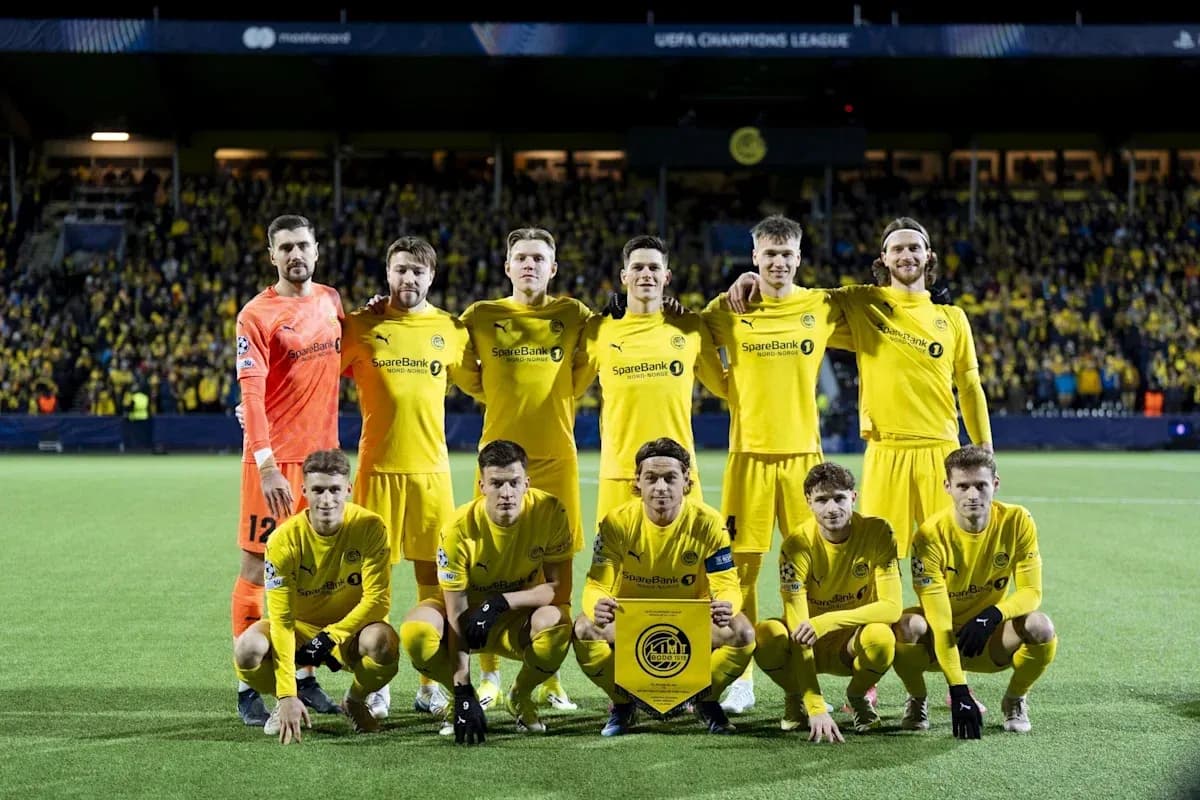
Bodo/Glimt’s 3-2 extra‑time win over Union St. Gilloise at Aspmyra Stadion was the product of a clear territorial and possession dominance being repeatedly stress‑tested by the visitors’ vertical transitions and late‑game resilience. Over 120 minutes, Bodo/Glimt’s 4‑3‑3 structure, built on long, controlled passing sequences, eventually overwhelmed a 3‑5‑2 that was forced deeper and narrower as the match wore on, especially after the late red card.
Out of possession, Union St. Gilloise accepted a low‑block dynamic early. With only 30% of the ball and just 427 total passes (335 accurate, 78%), they focused on compressing central lanes and protecting the back three of N. Havenaar, M. Sylla and Kevin Mac Allister. The wing‑backs, L. Patris and Guilherme Smith, were pinned back for long stretches by Bodo/Glimt’s wide forwards, O. Blomberg and J. Hauge, which effectively turned Union St. Gilloise’s 3‑5‑2 into a 5‑3‑2. Their attacking threat came almost exclusively from fast breaks and direct entries into the box, reflected in 15 shots inside the area from only 19 total attempts.
Bodo/Glimt, by contrast, constructed the game almost entirely on the ball. Their 70% possession, 999 total passes and 889 accurate (89%) underline a patient, circulation‑heavy approach. In the 4‑3‑3, the back four of F. Bjorkan, J. Gundersen, O. L. Bjortuft and F. Sjovold stepped high, allowing the midfield trio of Sondre Auklend, P. Berg and S. Fet to operate between Union St. Gilloise’s lines. The volume and distribution of shots — 23 total, 17 inside the box, 9 on goal — show how often they managed to progress into dangerous central zones rather than settling for speculative efforts from distance.
First Half
The first Bodo/Glimt goal, at 51’, illustrated their positional play. Hauge, starting on the left of the front three, combined from the half‑space and provided the assist for Blomberg, who attacked the inside channel from the opposite flank. This pattern — wide forward moving into the half‑space, opposite winger crashing the box — became a recurring mechanism, stretching Union St. Gilloise’s back line horizontally and creating difficult decisions for the outside centre‑backs.
Union St. Gilloise’s response at 61’, with Guilherme Smith scoring from a move involving D. Olaru, came from their clearest offensive idea: using the forwards to run into the spaces behind Bodo/Glimt’s advanced full‑backs. Whenever Bodo/Glimt’s rest defence was slightly imbalanced, the Belgian side went direct, and their 5 shots on goal from 19 attempts underline that, although they created fewer chances, they were relatively efficient in turning territory into clear looks at goal.
Second Half
The second Bodo/Glimt goal at 76’, finished by Hauge from an A. Helmersen assist, came after a wave of substitutions that refreshed the home side’s front line. Helmersen’s introduction for O. Brynhildsen gave Bodo/Glimt a more direct reference centrally, while J. Kitolano replacing Auklend added legs in midfield to maintain counter‑pressing intensity. The pattern of the goal again highlighted Bodo/Glimt’s superiority in the half‑spaces: Helmersen dropping and combining, Hauge timing his run from the wing into the box against a retreating and increasingly stretched back five.
Union St. Gilloise’s equaliser at 88’, scored by M. Fuseini from a Patris assist, was a classic late transition strike. With Bodo/Glimt pushing for a winner in normal time and committing numbers forward, Union St. Gilloise exploited the flanks through Patris, whose low service into the box found Fuseini. The fact that Union St. Gilloise registered 10 shots off target and 4 blocked shots shows how often these breakaways ended with hurried or pressured finishing, but the equaliser demonstrated their capacity to punish even a single lapse in Bodo/Glimt’s rest defence.
Extra Time
Discipline and game state turned decisively in extra time. Union St. Gilloise accumulated 4 yellow cards and 1 red (to Kamiel Van de Perre for “Foul” after a second yellow for “Foul” at 90+6’), compared with Bodo/Glimt’s 2 yellows. Those bookings, particularly the cluster around 90+6’, reflected rising frustration and strain in Union St. Gilloise’s midfield, who were increasingly late into duels as they chased Bodo/Glimt’s circulation.
In extra time, Bodo/Glimt’s bench management by Kjetil Knutsen was pivotal. The staggered introduction of H. Aleesami, I. Maatta, U. Saltnes and, crucially, Helmersen allowed the home side to maintain both tempo and physical edge. Aleesami for J. Gundersen at 41’ had already rebalanced the left side, and later changes at 103’ and 104’ ensured fresh legs in both full‑back and midfield zones just as Union St. Gilloise were tiring. By the time Helmersen struck the decisive goal at 117’, Bodo/Glimt were systematically pinning a ten‑man opponent in their own third, with Union St. Gilloise’s 3‑5‑2 now effectively a 5‑3‑1 and lacking the outlets to counter.
Goalkeeper involvement aligned with the tactical story. N. Haikin (Bodo/Glimt) faced 5 shots on goal and made 3 saves, operating mostly as a high starting point behind an aggressive defensive line, sweeping long clearances and enabling Bodo/Glimt to keep the game compressed in Union St. Gilloise’s half. V. Chambaere (Union St. Gilloise), with 9 shots on goal against him and 5 saves, was far busier, repeatedly exposed by the volume of entries into his box and forced into several key interventions just to take the tie into extra time.
Set‑piece dynamics also underlined Bodo/Glimt’s territorial control. They earned 10 corner kicks to Union St. Gilloise’s 1, a function of sustained pressure and repeated blocks or last‑ditch clearances from the Belgian back line. While corners did not directly produce goals, they contributed to the cumulative fatigue and constant defensive reorganisation required of Union St. Gilloise, especially once they were reduced to ten men.
Overall, the statistical profile — heavy Bodo/Glimt possession, a huge passing advantage, more shots (23 vs 19) and more on target (9 vs 5), plus the corner disparity — matches what unfolded tactically: a home side dictating structure and rhythm, occasionally vulnerable to direct counters, but ultimately breaking down a resilient, increasingly undermanned 3‑5‑2 through width, half‑space occupation and superior depth from the bench.